
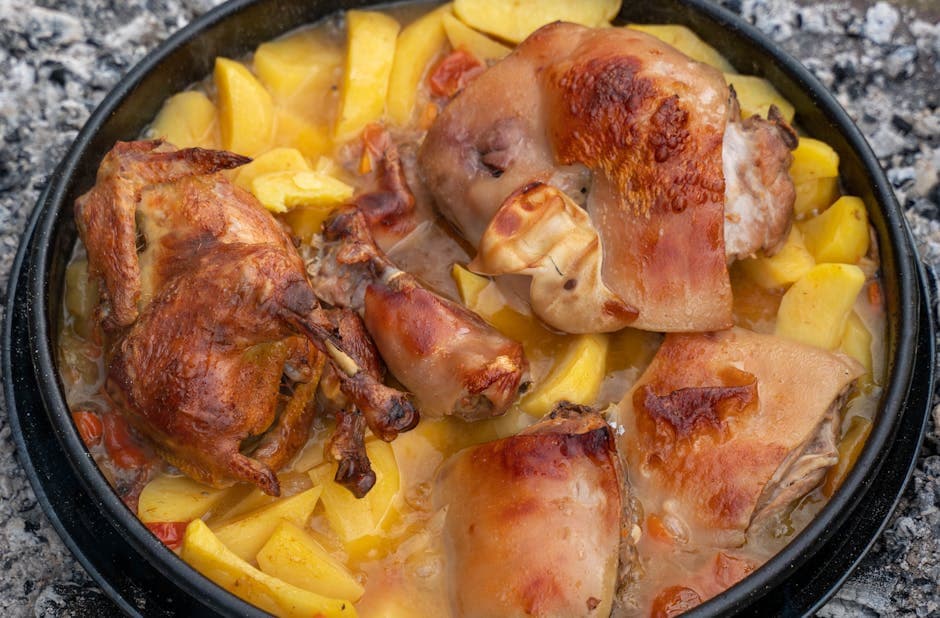
Kedjenou(코트디부아르의 천천히 조리된 닭고기)
코트디부아르의 시그니처 클레이팟 치킨은 야채와 함께 밀봉하여 천천히 조리한 요리로, 액체를 첨가하지 않고 강렬하게 농축된 주스에 담겨 있습니다.
이 레시피 정보
Kedjénou(때때로 kédjénou라고도 함)는 코트디부아르의 국가 요리이자 서아프리카의 훌륭한 로우 앤 슬로우 기술 중 하나입니다. 닭고기 조각을 밀봉된 테라코타 카나리 냄비에 양파, 토마토, 고추, 마늘, 생강, 고추 한 개(물도 추가하지 않고 육수도 넣지 않음)를 겹겹이 쌓은 다음 석탄이나 약한 불에서 천천히 조리하고 몇 분마다 격렬하게 흔들어(숟가락으로 휘젓지 않음) 봉인이 깨지지 않고 모든 것이 계속 움직이도록 합니다. 그 결과 닭고기 자체의 육즙과 야채의 수분만 넣고 끓인 닭고기가 탄생했습니다. 부드럽고 깊은 농축이 이루어졌으며 소스는 옻칠한 것처럼 윤기가 납니다. 전통적으로 발효된 카사바 쿠스쿠스인 attiéké와 함께 제공되는 kedjenou는 Akan과 Baoulé 마을 요리의 영혼이며 이제 Abidjan에서 Bouaké까지 모든 레스토랑 메뉴에 등장합니다.
재료
서브 4
- 1.4 kg뼈 있는 닭고기 조각(허벅지살, 북채살, 가슴살 혼합)
- 2 큰두껍게 썬 노란 양파
- 3 큰잘 익은 토마토, 대충 다진 것
- 2 큰술토마토 페이스트
- 1녹색 피망, 덩어리로 자른다
- 1빨간 피망, 덩어리로 자른다
- 6 쪽마늘, 다진 것
- 2 큰술얇게 썬 신선한 생강
- 1스카치 보닛 고추, 전체(뚫지 마세요)
- 2 장만
- 2 가지신선한 백리향
- 1 cube치킨 부용(Maggi 또는 Jumbo)
- 1.5 작은술좋은 소금
- 1 작은술후추
- 1 작은술갈은 흰 후추
- 2 큰술중성 오일
- 2 큰술신선한 파슬리 또는 바질을 잘게 썰어 마무리합니다.
조리법
- 1
닭고기에 양념을 해주세요
닭고기 조각에 소금, 후추, 부용 큐브, 기름을 넣고 버무립니다. 15분간 기다리세요.
- 2
냄비를 겹겹이 쌓으세요
뚜껑이 두꺼운 냄비(더치 오븐, 테라코타 카나리, 점토 냄비)를 사용하세요. 바닥에 양파와 토마토의 절반을 쌓은 다음 닭고기, 남은 양파, 토마토, 피망, 마늘, 생강, 월계수, 백리향을 겹겹이 쌓습니다. 스카치 보닛 전체를 위에 올려주세요. 토마토 페이스트를 넣고 저어주세요.
- 3
봉인하고 요리하세요
뚜껑을 덮으세요. 뚜껑이 단단히 닫히지 않으면 냄비와 뚜껑 사이에 호일을 깔아주세요. 스토브가 유지할 수 있는 가장 낮은 불(또는 150°C 오븐)에 설정하세요.
액체를 추가하지 않습니다. 닭고기와 야채가 요리되면서 많이 나옵니다.
- 4
7분마다 흔들어주세요
60~75분 동안 요리하세요. 7분마다 손잡이를 잡고 냄비를 들어 올리고 좌우로 세게 흔들어 주세요. 이렇게 하면 밀봉이 깨지거나 야채가 부서지지 않고 모든 것이 재분배됩니다. 절대 숟가락으로 젓지 마세요.
뚜껑을 들어올리고 싶은 충동을 참으세요. 엿볼 때마다 증기가 빠져나가고 농축된 맛이 희석됩니다.
- 5
새를 확인하세요
60분 후 처음으로 뚜껑을 들어올립니다. 닭고기가 뼈에서 쉽게 떨어져야 하며, 냄비 바닥에 걸쭉하고 윤기 나는 소스가 묻어 있어야 합니다. 여전히 액체가 묽어 보인다면 뚜껑을 덮지 않고 15분 더 조리하세요.
- 6
마무리하고 서빙하세요
스카치 보닛을 제거하여 폐기합니다(또는 쪼개어 열을 가할 때까지 저어줍니다). 소금을 조절하세요. 파슬리나 바질을 뿌리고 냄비에 담아 아띠에케, 밥, 푸푸와 함께 서빙하세요.
직접 만들어 보셨나요?
평가를 남기면 다른 분들이 정말 잘 되는 레시피를 찾는 데 도움이 됩니다.
한 번만 로그인하면 방금 선택한 평점을 그대로 저장해 드립니다.
일주일 식단 계획에 필요한 모든 것 — 무료
- 식단 캘린더
- 장보기 목록
- AI 레시피 추천
손 안 대고 요리하기
무료 Bento 앱에서 AI 식단, 단계별 요리 모드, 저장한 레시피를 만나보세요.
전문가의 팁
- →
스카치 보닛을 뚫지 마십시오. 통째로 놔두면 요리에 향기가 납니다. 구멍을 뚫거나 잘게 자르면 접시가 위험할 정도로 뜨거워집니다.
- →
젓지 않고 흔드는 것이 기본적인 케제노우 기술입니다. 야채를 그대로 유지하여 접시에서 식별 가능한 상태로 유지합니다.
- →
점토 냄비가 있는 경우 사용하기 전에 30분 동안 물에 담가 두십시오. 느린 수분 방출은 정확히 kedjenou 원리입니다.
변형
- •
Kedjenou de pintade: 뿔닭으로 만든 오리지널 마을 버전으로 장시간 요리에 적합한 강한 맛이 있습니다.
- •
오크라를 곁들인 케제노우: 마지막 15분 동안 냄비에 전체 오크라 200g을 저어줍니다.
- •
훈제 생선 케제노우: 훈제 틸라피아 또는 고등어 200g을 닭고기와 함께 겹쳐 깊이를 더합니다.
저장
최대 3일 동안 냉장 보관하세요. 요리는 둘째 날에 더 좋아졌습니다. 약한 불로 덮어 재가열하세요. 2개월 동안 잘 얼려요.
역사와 유래
케제누(Kedjenou)는 코트디부아르 중부 및 남부의 아칸족과 바울레족에서 유래되었으며, 전통적으로 뜨거운 석탄에 부분적으로 묻힌 점토 카나리 냄비에 밀봉하여 요리했습니다. 증기를 사용하지 않고 천천히 쪄서 요리에 농축된 맛을 더했습니다. 1960년 독립 이후 국가 상징이 되었으며 현재 전 세계 모든 코트디부아르 레스토랑 메뉴에 등장하고 있습니다.
자주 묻는 질문
슬로우쿠커를 사용해도 되나요?
그렇습니다. 4쿼트 슬로우 쿠커를 4시간 동안 저온에서 조리하는 것은 훌륭한 대안입니다. 슬로우 쿠커에서는 흔들림 단계가 덜 중요합니다. 중간 지점에서 가볍게 저어주세요.
물 추가를 건너뛸 필요가 있나요?
예 - 그것이 kedjenou의 요점입니다. 닭고기와 야채는 농축된 소스를 만들기에 충분한 수분을 방출합니다. 물을 추가하면 일반 닭고기 스튜로 변합니다.
attiéké는 무엇이고 어디서 구입하나요?
Attiéké는 전통적인 케제누 페어링인 발효된 카사바 쿠스쿠스입니다. 서아프리카 식료품점에서 냉동 또는 진공 포장된 제품을 찾아보세요. 약간의 신맛이 없는 일반 찐 쿠스쿠스도 괜찮습니다.
전통적으로 얼마나 덥나요?
미디엄 — 스카치 보닛은 냄비에 향기를 풍기지만 그대로 놔두면 지배적이지 않습니다. 강렬한 열기를 원할 경우 추가하기 전에 칠리를 쪼개세요.
영양성분표
서빙 당 (400g) · 4 총 제공량
시간 요약
더 많은 Ivorian 레시피
이런 것도 좋아하실 거예요
세계 다른 요리에서 찾은 비슷한 음식.
무료 주방 도구
이 페이지와 함께 쓰는 계산기와 단위 변환기 — 가입 없이 이용 가능.
식단 계획으로 옮기기
캘린더에 넣고, 장보기 목록을 만들고, 가진 재료를 관리하세요.
이어서 읽기
이 요리의 배경을 깊이 다룬 긴 글.
커뮤니티
대화에 참여하세요
댓글을 남기고 좋아하는 레시피를 저장하려면 로그인하세요.