
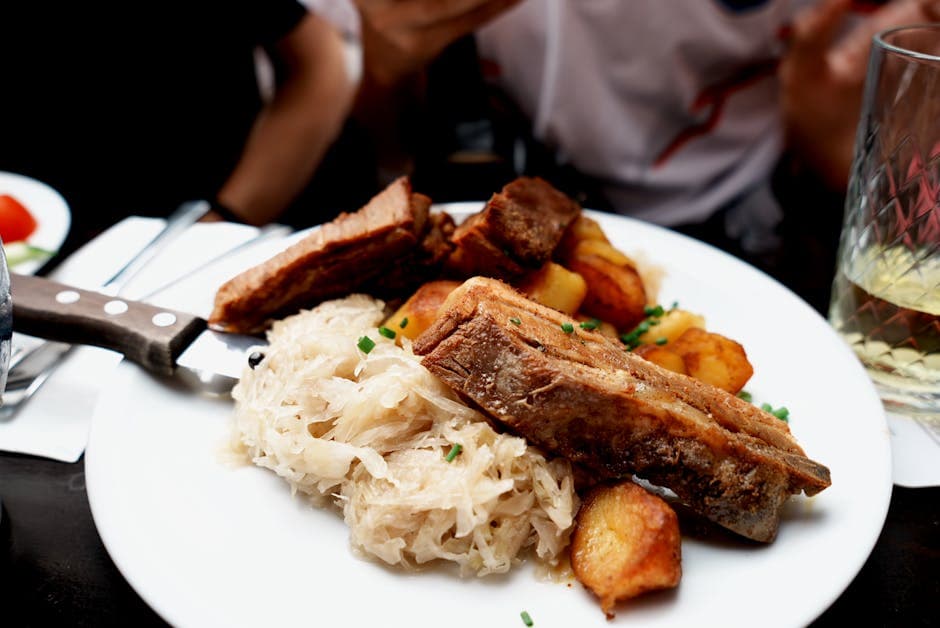
라인란트 자우어브라텐
절인 독일식 냄비 로스트 — 레드와인 식초에 재운 쇠고기와 건포도, 진저브레드로 걸쭉하게 만든 그레이비.
이 레시피 정보
Sauerbraten은 독일의 국민 냄비 구이이며 라인란트 버전이 가장 유명합니다. 쇠고기 우둔살 또는 목살을 적포도주, 식초 및 다양한 향신료(주니퍼, 정향, 올스파이스, 월계수)에 3~4일 동안 절인 다음 포크 텐더가 될 때까지 천천히 끓입니다. 그레이비는 요리의 영혼입니다. 밀가루가 아닌 으깬 Lebkuchen(독일 진저브레드) 또는 Rheinischer Honigkuchen으로 걸쭉해지고 건포도로 달게 느껴지며 매끄러운 버터로 마무리됩니다. 신맛, 달콤함, 깊은 양념이 곁들여진 사우어브라텐(sauerbraten)은 감자 만두(Kartoffelklöße) 위에 얇게 썬 붉은 양배추 더미와 함께 일요일 테이블에 도착합니다. 그것은 참을성 있는 음식입니다. 매리네이드가 바로 작품입니다. 요리가 기다리고 있어요.
재료
서브 6
- 1.5 kg쇠고기 우둔살 구이 또는 목살(전체 1조각)
- 400 ml드라이 레드 와인
- 300 ml레드 와인 식초
- 300 ml물
- 2 큰얇게 썬 양파(마리네이드용)
- 2당근, 얇게 썬 것
- 1 작은얇게 썬 셀러리 줄기
- 10가볍게 으깬 전체 주니퍼베리
- 10정향 전체
- 10올스파이스 열매
- 3월계수 잎
- 1 큰술검은 후추
- 1 작은술겨자씨
- 3 큰술중성 오일
- 2 큰술토마토 페이스트
- 60 gLebkuchen 또는 Pfefferkuchen(독일 진저브레드), 부서짐
- 60 g어두운 건포도
- 1 큰술흑설탕 (필요하다면)
- 30 g차가운 버터
- 소금과 신선한 후추 맛
조리법
- 1
매리네이드를 만들어 보세요
반응하지 않는 큰 용기에 레드 와인, 식초, 물, 얇게 썬 양파, 당근, 셀러리, 주니퍼, 정향, 올스파이스, 월계수 열매, 통후추, 겨자씨를 섞습니다. 쇠고기를 담그십시오. 뚜껑을 덮고 3~4일 동안 냉장 보관하세요. 하루에 한 번씩 고기를 뒤집어 주세요.
- 2
두드려서 말리고 긴장시키세요
매리네이드에서 고기를 꺼내어 가볍게 두드려서 말립니다. 매리네이드를 걸러내고 액체와 조리된 야채 및 향신료를 별도로 보관합니다.
- 3
고기를 갈색으로 굽는다
무거운 더치 오븐에 기름을 넣고 중간 정도 높이로 가열합니다. 총 10분 정도 짙은 갈색이 될 때까지 쇠고기의 모든 면을 굽습니다. 들어내세요.
- 4
브레이징 베이스 만들기
같은 냄비에 걸러낸 야채를 넣습니다. 살짝 갈색이 될 때까지 저으면서 5분간 조리합니다. 토마토 페이스트를 넣고 2분간 조리합니다.
- 5
액체 추가
고기가 거의 잠길 정도로 걸러낸 매리네이드(약 800ml)와 필요한 경우 물 한 컵을 붓습니다. 쇠고기를 냄비에 다시 넣으십시오.
- 6
낮고 천천히 끓이세요
뚜껑을 덮고 가장 약한 불(또는 150°C 오븐)에서 쇠고기가 쉽게 포크로 나올 때까지 2.5~3시간 동안 끓입니다.
- 7
나머지 고기, 스트레인 소스
고기를 따뜻한 접시에 올리고 호일로 덮습니다. 끓인 액체를 깨끗한 냄비에 걸러내고 야채를 눌러 풍미를 추출합니다. 표면 지방을 제거합니다.
- 8
그레이비 만들기
체에 걸러진 액체를 빠르게 끓입니다. 부서진 Lebkuchen과 건포도를 추가합니다. 진저브레드를 녹이도록 저어주세요. 소스가 자연스럽게 걸쭉해질 것입니다. 10분간 끓입니다. 맛: 신맛과 단맛이 균형을 이루어야 합니다. 너무 싱거우면 흑설탕을 추가하세요. 광택을 내기 위해 불을 끄고 차가운 버터를 휘젓습니다.
- 9
썰어서 서빙하세요
쇠고기를 결 반대 방향으로 얇게 썰어주세요. 따뜻한 접시에 담아주세요. 그 위에 그레이비 소스를 듬뿍 올려주세요. Kartoffelklöße(감자 만두) 및 Rotkohl(붉은 양배추 조림)과 함께 제공됩니다.
직접 만들어 보셨나요?
평가를 남기면 다른 분들이 정말 잘 되는 레시피를 찾는 데 도움이 됩니다.
한 번만 로그인하면 방금 선택한 평점을 그대로 저장해 드립니다.
일주일 식단 계획에 필요한 모든 것 — 무료
- 식단 캘린더
- 장보기 목록
- AI 레시피 추천
먹은 음식을 기록하세요
무료 SnapCal 앱에서 식사 사진으로 칼로리와 영양소를 기록하고, 단식 타이머와 물 섭취 기록도 사용하세요.
전문가의 팁
- →
매리네이드를 단축하지 마십시오. 최소 3일은 냄비에 굽는 것이 아니라 소금에 절인 요리를 만드는 것입니다.
- →
찾을 수 있으면 실제 독일 Lebkuchen을 사용하십시오. 그렇지 않으면 으깬 진저스냅 쿠키가 허용되는 대체품입니다.
- →
온도계 대신 포크로 고기를 테스트하십시오. 저항이 없으면 테스트가 완료된 것입니다.
변형
- •
바이에른 사우어브라텐(Bavarian sauerbraten): 진저브레드와 건포도를 생략합니다. 밀가루-물 슬러리로만 걸쭉하게 만듭니다. 더 건조하고 더 소박한 것입니다.
- •
야생 사냥감 사우어브라텐(Wild game sauerbraten): 사슴고기 어깨 대체품; 매리네이드 시간을 48시간으로 줄입니다.
- •
베를린 자우어브라텐(Berliner Sauerbraten): 브레이즈에 흑맥주를 추가합니다.
저장
최대 4일 동안 냉장 보관하세요. Sauerbraten은 둘째 날에는 훨씬 더 좋아진 것으로 유명합니다. 그레이비와 함께 3개월 동안 얼립니다.
역사와 유래
Sauerbraten은 장기간 산성 양념으로 고기를 보존하는 방법으로 적어도 중세 시대로 거슬러 올라갑니다. 건포도와 진저브레드가 포함된 라인 지방 버전은 18세기 가톨릭 라인 지방에서 등장했습니다. 바이에른과 다른 지역은 더 오래되고 단순한 스타일을 유지했습니다.
자주 묻는 질문
매리네이드를 줄여도 되나요?
진공백이나 지퍼락을 사용하고 최소 48시간 동안 보관하세요. 그보다 적으면 맛이 스며들지 않습니다.
레브쿠헨을 구할 수 없으면 어떻게 되나요?
생강 스냅 60g을 으깨거나 호밀 빵가루 30g에 생강 가루 1티스푼, 정향 가루 1/2티스푼을 넣습니다. 충분히 가깝습니다.
영양성분표
서빙 당 (380g) · 6 총 제공량
시간 요약
가이드에 소개됨
이 레시피는 다음과 같은 선별된 가이드에 소개되어 있습니다.
더 많은 독일 레시피
이런 것도 좋아하실 거예요
세계 다른 요리에서 찾은 비슷한 음식.
재료로 찾아보기
같은 핵심 재료로 만드는 다른 레시피.
무료 주방 도구
이 페이지와 함께 쓰는 계산기와 단위 변환기 — 가입 없이 이용 가능.
식단 계획으로 옮기기
캘린더에 넣고, 장보기 목록을 만들고, 가진 재료를 관리하세요.
이어서 읽기
이 요리의 배경을 깊이 다룬 긴 글.
커뮤니티
대화에 참여하세요
댓글을 남기고 좋아하는 레시피를 저장하려면 로그인하세요.