jamaicandinner✨ New
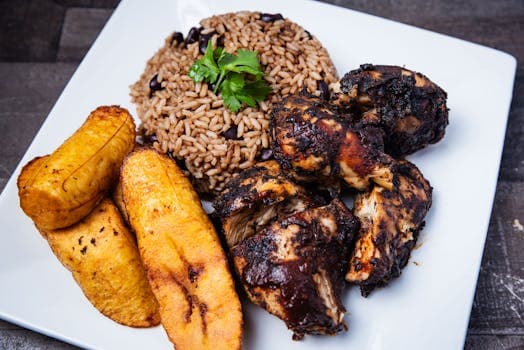
Jerk Chicken (Jamaican Spiced Grilled Chicken)
Jamaica's iconic spiced grilled chicken — marinated in Scotch bonnet, allspice, thyme and soy, cooked over charcoal until smoky and charred.
Prep
20 min
Cook
60 min
Servings
6
Difficulty
Medium
★★★★★
4.8(1,000 ratings)#jamaican#chicken#grilled#spicy#allspice#scotch-bonnet#bbq#caribbean
About This Recipe
Jerk chicken is Jamaica's most famous culinary export — bone-in chicken marinated in a paste of Scotch bonnet chillies, allspice (the most Jamaican of all spices, also called pimento), garlic, ginger, spring onions, thyme, brown sugar, soy sauce and sometimes cinnamon, nutmeg and cloves. The chicken is traditionally slow-cooked over pimento wood charcoal in a covered drum barrel grill (the 'jerk pan') for 2–3 hours until deeply smoky, charred and falling off the bone. Home versions use a grill or oven-broiler combination. The allspice is the non-negotiable element — it is what makes jerk chicken distinctly Jamaican and not simply spiced chicken. Rooted in the everyday cooking of Jamaican kitchens, Jerk Chicken (Jamaican Spiced Grilled Chicken) balances technique and tradition: the whole chicken, cut into pieces (or 1.5 kg pieces) is treated with care, drawing on time-honoured ratios that locals have refined across generations. The dish carries an unmistakable sensory signature — aromas that fill the kitchen as it cooks, layered textures that reveal themselves bite by bite, and a depth of flavour that comes from patient seasoning rather than shortcuts. Whether served as a weeknight dinner or as the centrepiece of a celebratory table, it reflects a regional pantry where local produce, seasoning habits and cooking vessels shape the final result. Home cooks who make this dish often note how forgiving it is once the core method is understood, and how a few small choices — the freshness of the whole chicken, cut into pieces (or 1.5 kg pieces), the order of additions, the resting time at the end — separate a good version from a memorable one. This recipe walks through those choices so the dish arrives with the character it has on its home turf.
Ingredients
Serves 6
- 1.8 kgwhole chicken, cut into pieces (or 1.5 kg pieces)
- 3Scotch bonnet chillies (or habaneros)
- 6spring onions, roughly chopped
- 6garlic cloves
- 30 gfresh ginger, roughly chopped
- 6fresh thyme sprigs
- 2 tbspground allspice (Jamaica pepper)
- 2 tbspbrown sugar
- 3 tbspsoy sauce
- 3 tbspneutral oil
- 2 tbsplime juice
- 0.5 tspground cinnamon
- 0.25 tspground nutmeg
- 1 tspsalt and black pepper
Instructions
- 1
Make jerk marinade
Blend Scotch bonnets, spring onions, garlic, ginger, thyme (leaves only), allspice, brown sugar, soy sauce, oil, lime juice, cinnamon, nutmeg, salt and pepper into a coarse paste.
- 2
Marinate chicken
Score chicken pieces deeply (to the bone). Rub marinade aggressively into all cuts and under the skin. Cover and refrigerate for at least 6 hours, preferably overnight.
- 3
Grill low and slow
Grill over medium-low charcoal or in a covered grill for 45–60 minutes, turning every 15 minutes. The chicken should cook slowly and develop char without burning.
- 4
Finish over high heat
Increase heat to high and grill for the final 5–10 minutes until deeply charred on all sides and cooked through (internal temperature 74°C / 165°F).
- 5
Serve
Rest 5 minutes. Serve with festival (fried dumplings), rice and peas and sliced pickled cucumber.
Pro Tips
- →
Allspice is non-negotiable — use a generous amount. It is the soul of jerk seasoning.
- →
Scoring the chicken deeply allows the marinade to penetrate to the bone.
- →
Low and slow cooking over covered charcoal creates the authentic smoky jerk flavour that cannot be replicated in an oven.
- →
Source the freshest whole chicken, cut into pieces (or 1.5 kg pieces) you can find — it is the flavour anchor of the dish.
- →
Season in layers as you go; tasting at each stage prevents a flat or over-salted final result.
Variations
- •
Jerk pork: marinate pork shoulder in the same jerk paste and roast at 160°C for 3–4 hours.
- •
Jerk fish: marinate firm white fish or red snapper for 30 minutes and grill for 4–5 minutes per side.
- •
Vegetarian: replace the main protein with mushrooms, paneer, tofu or hearty beans for a meat-free version.
- •
Spicier: add fresh chilli, a chilli paste or a pinch of cayenne with the aromatics for a warmer profile.
- •
Lighter: reduce the fat by a third and use stock in its place — flavour stays intact but the dish feels less rich.
Storage
Marinated raw chicken keeps in the fridge for 2 days. Cooked jerk chicken keeps for 4 days.
History & Origin
Jerk cooking originated with the indigenous Taíno people of Jamaica, who cooked preserved meat over pimento wood. The technique was adopted and developed by the Maroons — escaped enslaved Africans who lived in the Jamaican highlands and used smoke and spices to preserve wild boar. Modern jerk emerged in Boston Bay, Portland, Jamaica, which remains the home of authentic jerk.
Frequently Asked Questions
Can I make Jerk Chicken (Jamaican Spiced Grilled Chicken) ahead of time?
Yes — most components hold well in the fridge for a day or two. Reheat gently with a splash of liquid to bring it back to life.
What can I substitute for whole chicken, cut into pieces (or 1.5 kg pieces)?
If whole chicken, cut into pieces (or 1.5 kg pieces) is hard to find, the closest substitutes share its texture and water content. Adjust seasoning slightly since substitutes often carry less character of their own.
Is this recipe authentic to Jamaican cooking?
It follows the most widely accepted home-cook template. Regional variants exist and we note the main ones in the variations section.
Why did my version turn out bland?
Usually under-seasoning or rushing the aromatic stage. Build flavour in layers, taste as you go, and finish with a touch of acid or salt to brighten the dish.
Nutrition Facts
Per serving · 6 servings total
Calories480kcal
Protein42g
Carbohydrates8g
Fat30g
Fiber1g
Protein42g
Carbs8g
Fat30g
Time Summary
Prep time20 min
Cook time60 min
Total time80 min
Have Questions?
Ask our AI cooking assistant anything about this recipe — substitutions, techniques, scaling.
Chat with AI Chef →More Jamaican Recipes
Community
Join the conversation
Sign in to leave a comment and save your favourite recipes