
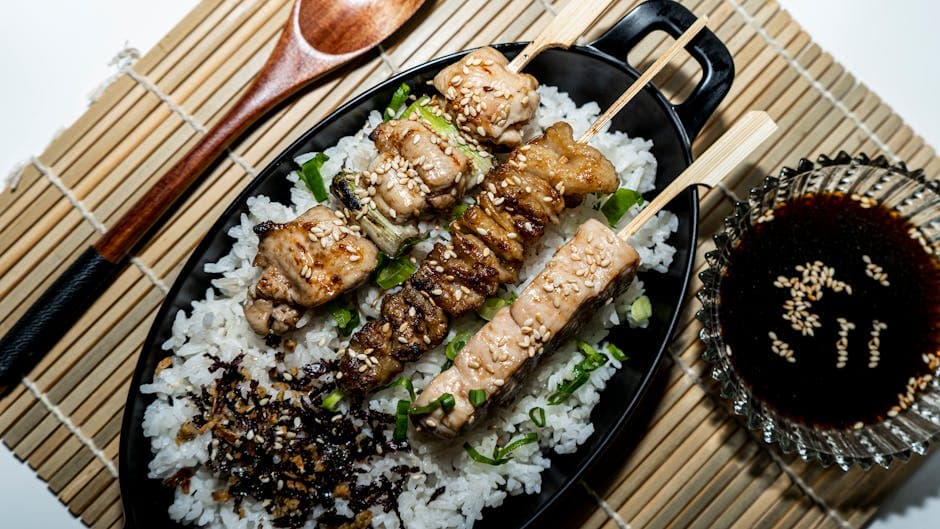
Pollo Yakitori (spiedini alla griglia giapponesi)
Spiedini di pollo alla griglia glassati con salsa dolce-salata di tara: il classico spuntino giapponese izakaya servito direttamente dalla griglia del binchotan.
A proposito di questa ricetta
Yakitori significa semplicemente "uccello alla griglia", ma in Giappone è stato perfezionato nel corso di un secolo fino a diventare uno dei migliori cibi di strada e izakaya del mondo. La versione classica utilizza coscia di pollo e scalogno (negima), infilati su spiedini di bambù e grigliati caldi e veloci su carbone binchotan giapponese di alta qualità, che brucia quasi senza fumo ed emette un intenso calore a infrarossi. Gli spiedini vengono unti ripetutamente con tara - una glassa dolce-salata di soia, mirin, sake e zucchero che si addensa mentre caramella sul pollo - o finiti semplicemente con sale (shio) quando la carne è abbastanza buona da poter stare in piedi da sola. Un vero yakitori-ya può offrire venti o trenta parti dell'uccello, dalla pelle (kawa) al ventriglio (zuri) alle ossa morbide (nankotsu), ciascuna carbonizzata fino al proprio punto ideale. Fatto in casa su una piccola griglia o anche sotto una griglia, lo yakitori è indulgente e veloce: la chiave è il calore intenso, l'imbastitura regolare e la sosta mentre la carne è ancora succosa.
Ingredienti
Serve 4
- 700 gCoscia di pollo disossata con pelle, tagliata a cubetti di 2,5 cm
- 6scalogno (solo le parti bianche e verde chiaro), tagliato a bastoncini di 3 cm
- 12spiedini di bambù corti, immersi in acqua per 30 minuti
- 180 mlSalsa di soia giapponese (Kikkoman o Yamasa)
- 180 mlmirin
- 120 mlamor
- 4 cucchiaiozucchero semolato
- 1scalogno verde, schiacciato
- 1 small piecezenzero, affettato
- 1spicchio d'aglio schiacciato (facoltativo, non tradizionale)
- shichimi togarashi, servire
- sale in scaglie, per spiedini stile shio
Istruzioni
- 1
Fai la tara
Unisci soia, mirin, sake, zucchero, scalogno tritato, zenzero e aglio in una piccola casseruola. Portare a ebollizione a fuoco medio-alto e ridurre di circa un terzo (15-18 minuti) finché la salsa non ricopre un cucchiaio. Filtrare in un bicchiere alto e stretto per immergerlo facilmente. Il recipiente stretto consente di inzuppare l'intero spiedo.
- 2
Infilzare il pollo
Su ogni spiedino alterna cubetti di pollo e bastoncini di scalogno: in genere 3 pezzi di pollo e 2 di scalogno. Imballarli strettamente in modo che cucinino uniformemente; gli spiedini sciolti carbonizzano i bordi e rimangono crudi al centro.
Mantenere pulita la punta dello spiedo lasciando 4 cm scoperti - dà un manico ai commensali.
- 3
Preriscalda la fonte di calore
Accendi una griglia a carbone (binchotan se ce l'hai; il carbone in pezzi funziona) e lascialo incenerire. In alternativa, impostare una griglia da forno al livello più alto con la griglia 10 cm sotto l'elemento. Vuoi un calore intenso: lo yakitori deve colorarsi velocemente.
- 4
Prima scottatura: asciutta
Metti gli spiedini sul fuoco diretto. Rosolare 2 minuti per lato senza salsa: questo fissa la superficie e impedisce alla tara di bruciarsi in seguito. La pelle dovrebbe essere croccante e la carne dovrebbe staccarsi facilmente dalle griglie.
- 5
Primo smalto
Immergere ogni spiedino nella tara, sollevarlo, lasciarlo sgocciolare per 2 secondi, quindi rimetterlo sulla griglia. Cuocere 60–90 secondi per lato finché la glassa non bolle e si scurisce ma non brucia. Osserva attentamente: lo zucchero nella tara può bruciare in 10 secondi.
- 6
Ripetere la smaltatura
Immergere e grigliare altre due volte, costruendo strati laccati. Alla terza glassatura gli spiedini dovranno risultare lucidi come il mogano e il pollo appena cotto (interno 72°C / 162°F).
- 7
Terminare e servire
Togliere dal fuoco, dare un'ultima spazzolata di tara fresca (non utilizzata) per lucidarla e spolverare con shichimi togarashi. Per gli spiedini in stile shio, salta completamente la tara: condisci semplicemente con sale in scaglie prima e dopo la grigliatura.
L'hai preparata?
Dai un voto e aiuta gli altri a trovare le ricette che funzionano davvero.
Accedi con un tocco e salveremo il voto che hai appena scelto.
Tutto ciò che serve per pianificare la settimana — gratis
- Calendario pasti
- Lista della spesa
- Idee ricette con IA
Tieni traccia di ciò che mangi
Fotografa il tuo pasto per registrare calorie e macro, usa i timer del digiuno e monitora l’acqua con l’app gratuita SnapCal.
Suggerimenti professionali
- →
La coscia con l'osso e la pelle non è negoziabile: il petto di pollo si asciuga su una griglia veloce. La pelle è essenziale per la finitura laccata.
- →
Non immergere mai nuovamente gli spiedini nella tara principale dopo aver toccato il pollo: mettere da parte una piccola quantità per la spazzolatura finale. I professionisti mantengono una "tara principale" per anni, ma solo quando non è mai stata contaminata dalla carne cruda.
- →
Se non hai una griglia, una padella di ghisa a fuoco alto più una breve esplosione sotto la griglia alla fine funziona sorprendentemente bene.
- →
Il carbone Binchotan è disponibile online (Korin, Japan Knife Society): costoso ma trasforma lo yakitori. Il legno duro in pezzi è la migliore opzione successiva.
Variazioni
- •
Tsukune: polpette di pollo tritate su spiedini con shiso e tara, servite con tuorlo d'uovo crudo da intingere.
- •
Kawa: solo pelle di pollo, filettata a forma di nastro e grigliata fino a renderla croccante, quindi salata.
- •
Negima con uovo di quaglia: aggiungi un piccolo uovo di quaglia sbollentato tra i pezzi di pollo per uno spiedino più ricco.
- •
Vegetariano: 'yakitori' di tofu e scalogno con la stessa tara: sorprendentemente soddisfacente.
Stoccaggio
Meglio consumarlo appena sfornato. Gli spiedini avanzati conservare in frigorifero per 2 giorni; riscaldare sotto la griglia calda per 90 secondi, mai nel microonde (gomma la carne). La tara si conserva in frigorifero per 3 settimane in un barattolo sigillato.
Storia e origine
Lo Yakitori nella sua forma moderna risale al periodo post-Meiji (fine del XIX secolo), quando il pollo divenne accessibile nelle città giapponesi e i venditori ambulanti iniziarono a grigliare tagli più economici per i lavoratori. Il ristorante yakitori-ya è emerso nella Tokyo del dopoguerra intorno al 1950 e la cucina è stata ulteriormente perfezionata durante il boom economico giapponese degli anni '70 e '80.
Domande frequenti
Posso fare la tara in anticipo?
Sì, la tara migliora effettivamente dopo alcuni giorni man mano che i sapori si fondono. Preparatelo un mese prima e conservatelo in frigorifero in un barattolo sigillato. Tuttavia, non riutilizzare mai la tara che è entrata in contatto con la carne cruda.
Perché il mio yakitori è secco?
O hai usato il petto di pollo (usa la coscia), l'hai grigliato a fuoco troppo basso (lo yakitori ha bisogno di un calore intenso per carbonizzarsi velocemente) o l'hai cotto troppo. Tirare a 72°C / 162°F interni: si trasferirà a 75°C fuori dalla griglia.
Cosa succede se non riesco a trovare Mirin?
Come sostituto, mescola 3 parti di sherry secco con 1 parte di zucchero sciolto in acqua tiepida. Funziona anche il sakè in stile Honjozo in un pizzico. Se puoi, evita di "cucinare il mirin": contiene sciroppo di mais e sale aggiunto.
Posso usare gli spiedini di metallo invece del bambù?
Il metallo funziona per i cuochi casalinghi: non è necessario ammollo e non bruciano. Il bambù conferisce l'aspetto tradizionale e conduce meno calore (quindi il pollo cuoce solo dall'esterno). Entrambi producono ottimi risultati.
Fatti nutrizionali
Per porzione (220g) · 4 porzioni totali
Riepilogo del tempo
Hai domande?
Chiedi al nostro assistente di cucina AI qualsiasi cosa su questa ricetta: sostituzioni, tecniche, ridimensionamento.
Chatta con AI Chef →In evidenza nelle Guide
Questa ricetta è presente nelle seguenti guide curate:
Altre ricette giapponesi
Potrebbe Piacerti Anche
Piatti simili da altre cucine del mondo.
Sfoglia per Ingrediente
Altre ricette costruite attorno agli stessi ingredienti principali.
Strumenti da Cucina Gratuiti
Calcolatori e convertitori pensati per questa pagina — senza registrazione.
Calcolatore di dosi
Dimezza o raddoppia ogni quantità di questa ricetta senza fare calcoli a mente.
Convertitore di misure
Converti tazze, grammi, once e millilitri in entrambe le direzioni.
Convertitore per friggitrice ad aria
Converti tempo e temperatura del forno nelle impostazioni della friggitrice ad aria.
Trasformalo in un Piano
Mettilo in calendario, fai la spesa e tieni traccia di ciò che hai già.
Calendario dei pasti
Metti questa ricetta in un giorno e organizza la settimana intorno a essa.
App lista della spesa
Trasforma questa lista di ingredienti in una lista della spesa raggruppata per reparto.
Importatore di ricette
Salva questa ricetta — e qualsiasi URL di ricetta — in un’unica raccolta ordinata.
Da Leggere Dopo
Approfondimenti sulle idee dietro questo piatto.
Comunità
Partecipa alla conversazione
Accedi per lasciare un commento e salvare le tue ricette preferite