italiandinner🔥 Trending
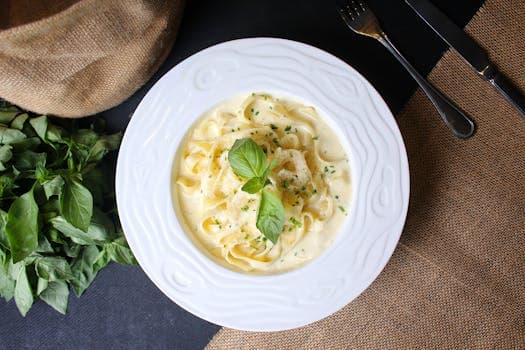
Fettuccine Alfredo Recipe — Silky, Creamy, 4-Ingredient Pasta
The authentic Roman fettuccine Alfredo — silky fettuccine tossed with Parmigiano-Reggiano, butter and pasta water into a luxuriously creamy sauce. No cream, no garlic, just four ingredients and perfect technique.
Prep
5 min
Cook
15 min
Servings
4
Difficulty
Easy
★★★★★
4.8(9,430 ratings)#fettuccine alfredo#italian pasta#easy pasta#butter pasta#roman pasta#4 ingredient pasta
About This Recipe
True fettuccine Alfredo (named after Alfredo di Lelio who invented it in Rome in 1908) contains only three ingredients: butter, Parmigiano-Reggiano and pasta water. The American cream-sauce version is a different dish entirely. The original works through emulsification — hot pasta water, butter and cheese beaten together form a sauce creamier than any cream could achieve.
Ingredients
Serves 4
- 400 gfresh or dried fettuccine
- 100 gunsalted butter(high quality, cubed, at room temperature)
- 120 gParmigiano-Reggiano(finely grated, plus more to serve)
- 1 tspfine salt(for pasta water)
- 1 tspblack pepper(freshly cracked)
Instructions
- 1
Cook pasta in salted water
Boil fettuccine in generously salted water until al dente. Reserve 200ml pasta water before draining.
- 2
Emulsify butter and cheese
Place butter in a warm (not hot) serving bowl or large pan off the heat. Add a splash of pasta water to the butter and stir until melted and creamy.
The butter should melt gently, not fry. A warm bowl off the heat is ideal.
- 3
Add pasta and toss
Add drained fettuccine to the butter. Add half the Parmesan and a splash of pasta water. Toss vigorously — the action creates the emulsion. Add remaining Parmesan, more pasta water as needed, until sauce is glossy and coats every strand.
- 4
Serve immediately
Plate and finish with extra Parmigiano and cracked black pepper.
Pro Tips
- →
Pasta water is the secret — its starch is the emulsifier. Never skip reserving it.
- →
Grate Parmesan extremely finely — coarsely grated cheese clumps instead of melting.
- →
The pasta must be very hot when it hits the butter. Serve instantly.
Variations
- •
With chicken: add pan-seared chicken breast strips — the most popular American version.
- •
With truffle: shave fresh black truffle over the finished dish — the Roman luxury version.
Storage
Best eaten immediately — Alfredo doesn't reheat well. The emulsion breaks and the sauce becomes greasy.
History & Origin
Fettuccine Alfredo was invented by Alfredo di Lelio at his Rome restaurant around 1908. He made it for his wife recovering from childbirth. Silent film stars Mary Pickford and Douglas Fairbanks discovered it on their honeymoon and brought the recipe to America, where it evolved into the cream-sauce version most people know.
Frequently Asked Questions
Does authentic fettuccine Alfredo have cream?
No — the original Roman recipe contains only butter, Parmigiano-Reggiano and pasta water. Cream is an American addition.
Why is my Alfredo sauce gluey?
Either the cheese wasn't fine enough, the pasta was too cold, or there wasn't enough pasta water. Add more hot pasta water and toss vigorously.
What pasta is best for Alfredo?
Fettuccine is traditional. Any long, flat pasta works — tagliatelle, pappardelle, linguine.
Can I make fettuccine Alfredo ahead of time?
Not really — it must be served immediately. The sauce separates as it cools.
Nutrition Facts
Per serving (400g) · 4 servings total
Calories560kcal
Protein18g
Carbohydrates72g
Fat22g
Fiber3g
Protein18g
Carbs72g
Fat22g
Time Summary
Prep time5 min
Cook time15 min
Total time20 min
Have Questions?
Ask our AI cooking assistant anything about this recipe — substitutions, techniques, scaling.
Chat with AI Chef →More Italian Recipes
Community
Join the conversation
Sign in to leave a comment and save your favourite recipes