
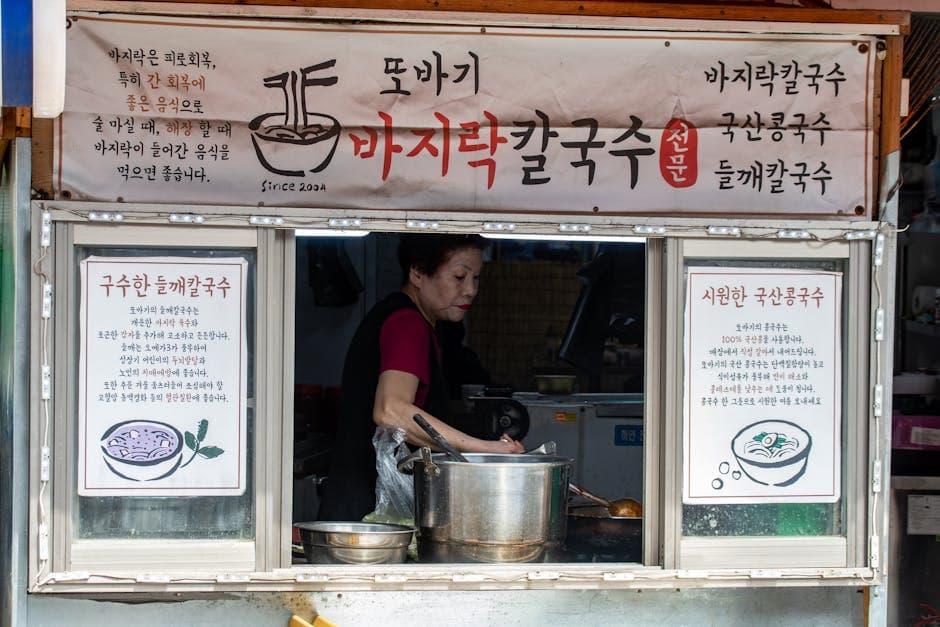
Kalguksu (spaghetti coreani tagliati al coltello)
Spaghetti di grano coreano arrotolati a mano e tagliati a coltello, cotti a fuoco lento in un brodo trasparente di acciughe con zucchine e patate: puro comfort nei giorni di pioggia.
A proposito di questa ricetta
Kalguksu significa letteralmente "tagliatelle al coltello": tagliatelle di grano lunghe e piatte tagliate a mano da un foglio di pasta arrotolata, anziché estruse attraverso una trafila. La tecnica conferisce al kalguksu la sua caratteristica consistenza irregolare, leggermente gommosa e il brodo leggermente torbido che proviene dalla farina residua che cuoce le tagliatelle nella zuppa. Laddove l'udon giapponese è denso ed elastico, il kalguksu è più morbido, più rustico e fatto per essere mangiato nella stessa ora in cui viene arrotolato. Il brodo classico è un semplice anjovi-dasima yuksu: acciughe essiccate e alghe bollite per 20 minuti, mai di più altrimenti diventano amare, quindi filtrate in un delicato liquido ambrato. Morbide zucchine estive (aehobak), qualche fetta di patata e talvolta vongole o pollo condividono la ciotola. Il piatto è il cibo tradizionale coreano dei giorni piovosi: c'è persino un detto secondo cui il suono della pioggia sul tetto sa di kalguksu. Servito con kimchi come contorno e un piattino di salsa di aceto di soia, è uno dei pasti più amati della cucina casalinga coreana: pulito, caldo e costruito sulla consistenza dei noodles che puoi sentire mentre vengono arrotolati e tagliati dalla cucina.
Ingredienti
Serve 4
- 300 gfarina per tutti gli usi, più extra per spolverare
- 150 mlacqua fredda
- 1 cucchiainosale
- 1 cucchiaioolio neutro (per impasti)
- 30 gacciughe grandi essiccate (myeolchi), private della testa e delle interiora
- 10 galghe essiccate (dashima), un pezzo di 10×10 cm
- 1.5 Lacqua (per il brodo)
- 1 medioZucchine coreane (aehobak) o zucchine normali, tagliate a julienne
- 1 piccolopatate, sbucciate e affettate sottilmente
- 3 spicchiaglio, tritato
- 2 cucchiaioZuppa coreana con salsa di soia (guk-ganjang)
- 2 gambiscalogno, affettato sottilmente
- 1 sheetgim arrosto (nori), triturato - per guarnire
Istruzioni
- 1
Prepara l'impasto
Mescolare la farina e il sale in una ciotola. Aggiungere acqua fredda e olio, quindi impastare vigorosamente su una superficie pulita per 8-10 minuti fino a ottenere un composto liscio e abbastanza sodo: l'impasto del kalguksu dovrebbe essere più duro dell'impasto della pasta. Avvolgere nella plastica e far riposare 30 minuti; il glutine si rilasserà e arrotolare diventerà più facile.
- 2
Preparate il brodo di acciughe
Unisci l'acqua fredda, le acciughe essiccate e il dashima in una pentola. Portare lentamente a ebollizione a fuoco medio – non bollire troppo. Lasciare cuocere a fuoco lento per 15 minuti, quindi rimuovere il dashima (diventa amaro se lasciato troppo a lungo). Continuare a cuocere a fuoco lento le acciughe per altri 10 minuti, quindi filtrare. Dovresti avere circa 1,4 litri di brodo ambrato trasparente.
Per prima cosa apri le acciughe per rimuovere le interiora nere: sono quelle che causano amarezza nei brodi bolliti a lungo.
- 3
Stendere la pasta sottile
Dividete a metà l'impasto riposato. Su una superficie abbondantemente infarinata, arrotolare ciascun pezzo in un lungo ovale spesso circa 2 mm, quasi sottilissimo. Infarinare generosamente su entrambi i lati mentre si arrotola per evitare che si attacchi e per addensare il brodo in seguito.
- 4
Piegare e tagliare le tagliatelle
Piega la sfoglia arrotolata in tre come una lettera, spolverando ogni piega con farina. Con un coltello affilato ricavare delle strisce larghe 3 mm. Srotolare delicatamente con le dita, eliminare la farina in eccesso in un setaccio e mettere da parte su un vassoio infarinato. Ripetere l'operazione con il secondo pezzo di impasto.
- 5
Cuocere a fuoco lento il brodo con le verdure
Riporta il brodo filtrato nella pentola, aggiungi le patate a fette e fai sobbollire per 5 minuti. Quindi aggiungere l'aglio, le zucchine e il guk-ganjang. La patata dà corpo al brodo; le zucchine dovranno restare leggermente sode.
- 6
Cuocere le tagliatelle nella zuppa
Immergere le tagliatelle direttamente nel brodo bollente, separandole con le bacchette in modo che non si formino grumi. Cuocere 4-5 minuti fino a quando saranno teneri ma con un leggero morso. La farina che aderisce alle tagliatelle addenserà leggermente il brodo trasformandolo in un liquido torbido e confortante caratteristico del kalguksu fatto in casa.
- 7
Servire immediatamente
Mestolo in ciotole profonde, cospargere gli scalogni affettati e il gim sminuzzato. Servire subito con kimchi e un piccolo piatto di salsa di aceto di soia (2 cucchiai di soia + 1 cucchiaio di aceto + un pizzico di scaglie di peperoncino) per immersione. Kalguksu non aspetta nessuno: i noodles diventano morbidi in pochi minuti.
L'hai preparata?
Dai un voto e aiuta gli altri a trovare le ricette che funzionano davvero.
Accedi con un tocco e salveremo il voto che hai appena scelto.
Tutto ciò che serve per pianificare la settimana — gratis
- Calendario pasti
- Lista della spesa
- Idee ricette con IA
Tieni traccia di ciò che mangi
Fotografa il tuo pasto per registrare calorie e macro, usa i timer del digiuno e monitora l’acqua con l’app gratuita SnapCal.
Suggerimenti professionali
- →
La salsa di soia per zuppa coreana (guk-ganjang) è di colore più chiaro e più salata della soia normale: l'uso della soia scura normale confonderà il brodo chiaro. Sostituire con soia leggera giapponese in un pizzico.
- →
Non lesinare sulla farina durante la stesura e il taglio. Quella farina residua è ciò che conferisce al brodo kalguksu la sua caratteristica leggera torbidezza.
- →
Le Aehobak (zucchine coreane) sono più dolci e sode delle zucchine verdi vendute nei mercati occidentali. Cercalo nei generi alimentari coreani; altrimenti utilizzate le zucchine normali.
- →
Se l’impasto risulta duro da stendere, lasciarlo riposare altri 15 minuti, senza mai aggiungere altra acqua. Pasta dura = tagliatelle gommose.
Variazioni
- •
Bajirak kalguksu: aggiungi 500 g di vongole manila pulite negli ultimi 4 minuti per una versione costiera.
- •
Dak kalguksu: usa il brodo di pollo (fai cuocere a fuoco lento un piccolo pollo intero per 90 minuti) invece del brodo di acciughe, con il pollo sminuzzato nella ciotola.
- •
Janchi kalguksu - stile banchetto, con sottili nastri di frittata, manzo e carne sopra.
- •
Kalguksu piccante (stile kal-guk-su jji-gae): mescola 2 cucchiai di gochujang nel brodo alla fine.
Stoccaggio
Meglio il giorno in cui lo fai. Le tagliatelle tagliate crude possono essere congelate piatte su un vassoio e poi confezionate; cuocere da congelato, aggiungendo 1 minuto in più. La zuppa avanzata si conserva in frigorifero per 2 giorni, ma le tagliatelle si gonfieranno e assorbiranno la maggior parte del brodo: riscaldare con un goccio d'acqua.
Storia e origine
Il Kalguksu è stato un alimento base della cucina casalinga coreana almeno fin dalla dinastia Goryeo (X-XIV secolo), originariamente preparato con grano saraceno nelle regioni settentrionali e grano nel sud. È diventato molto popolare nel periodo successivo alla guerra di Corea, quando gli aiuti statunitensi al grano hanno reso la farina a buon mercato, ed è ora un alimento di conforto consumato in tutto il paese, soprattutto durante le piovose giornate estive.
Domande frequenti
Posso usare le tagliatelle acquistate in negozio?
Sì, i noodles kalguksu essiccati vengono venduti nei generi alimentari coreani (cerca "kalguksu" sull'etichetta). Le fettuccine italiane funzionano in un pizzico ma non rilasceranno la farina nel brodo allo stesso modo.
Perché il mio brodo è torbido e amaro?
Hai bollito il dashima o le acciughe in modo troppo aggressivo. Dashima deve uscire tra 15 minuti; le acciughe necessitano solo di una cottura lenta. La cottura dura estrae i composti amari.
Posso fare l'impasto con la planetaria?
Sì, usa il gancio per impastare per 6 minuti a velocità media. Riposare ancora 30 minuti dopo la miscelazione.
Kalguksu è uguale a udon?
No. L'Udon è più spesso, più elastico e fatto con un impasto più umido e salato. Il Kalguksu è più sottile, più piatto, ha una masticazione più morbida e le tagliatelle rilasciano farina nella zuppa.
Fatti nutrizionali
Per porzione (520g) · 4 porzioni totali
Riepilogo del tempo
Hai domande?
Chiedi al nostro assistente di cucina AI qualsiasi cosa su questa ricetta: sostituzioni, tecniche, ridimensionamento.
Chatta con AI Chef →In evidenza nelle Guide
Questa ricetta è presente nelle seguenti guide curate:
Altre ricette coreane
Potrebbe Piacerti Anche
Piatti simili da altre cucine del mondo.
Sfoglia per Ingrediente
Altre ricette costruite attorno agli stessi ingredienti principali.
Strumenti da Cucina Gratuiti
Calcolatori e convertitori pensati per questa pagina — senza registrazione.
Calcolatore di dosi
Dimezza o raddoppia ogni quantità di questa ricetta senza fare calcoli a mente.
Convertitore di misure
Converti tazze, grammi, once e millilitri in entrambe le direzioni.
Convertitore per friggitrice ad aria
Converti tempo e temperatura del forno nelle impostazioni della friggitrice ad aria.
Trasformalo in un Piano
Mettilo in calendario, fai la spesa e tieni traccia di ciò che hai già.
Calendario dei pasti
Metti questa ricetta in un giorno e organizza la settimana intorno a essa.
App lista della spesa
Trasforma questa lista di ingredienti in una lista della spesa raggruppata per reparto.
Importatore di ricette
Salva questa ricetta — e qualsiasi URL di ricetta — in un’unica raccolta ordinata.
Da Leggere Dopo
Approfondimenti sulle idee dietro questo piatto.
Comunità
Partecipa alla conversazione
Accedi per lasciare un commento e salvare le tue ricette preferite