
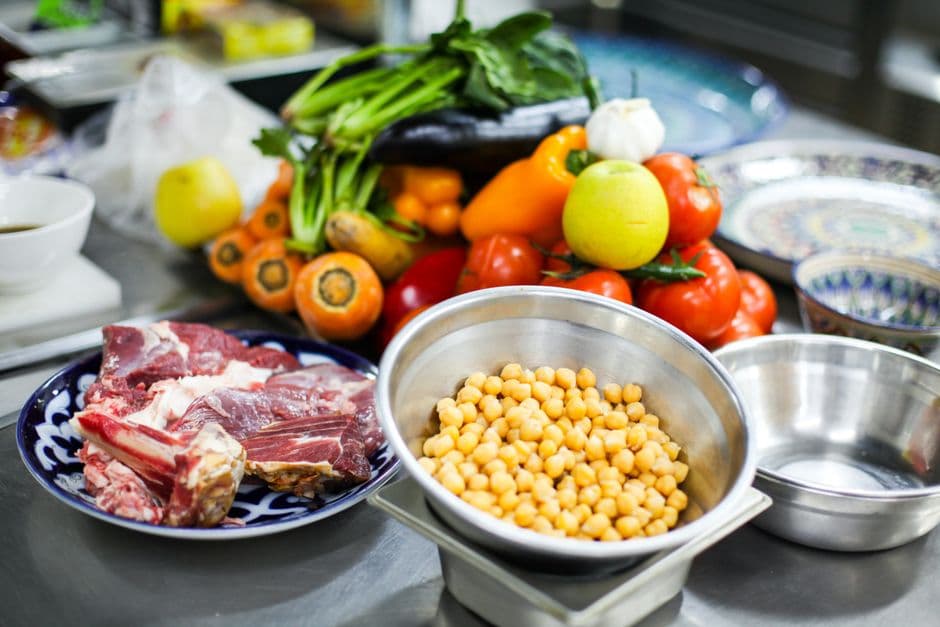
Abgoosht / Dizi (Persian Lamb & Chickpea Stew)
Slow-cooked Persian lamb, chickpea and white bean stew served as a broth and a mashed goosht.
About This Recipe
Abgoosht, also called dizi after the stone crocks it traditionally cooks in, is one of Iran's most beloved comfort foods. Bone-in lamb simmers for hours with chickpeas, white beans, potatoes and tomatoes, scented with turmeric, dried lime (limoo amani) and a whisper of cinnamon. The genius of the dish lies in how it is eaten: the fragrant broth is strained off and sipped with torn sangak bread soaked in it (called tilit), while the remaining meat, beans and potatoes are pounded into a coarse mash (goosht koobideh) and scooped up with more bread, raw onion, pickles and fresh herbs. It is humble, deeply savoury and endlessly satisfying on a cold day.
Ingredients
Serves 4
- 700 gbone-in lamb shank or neck(cut into large pieces)
- 150 gdried chickpeas(soaked overnight)
- 100 gdried white beans(soaked overnight)
- 1 largeonion(quartered)
- 3 mediumpotatoes(peeled)
- 2 mediumtomatoes(quartered)
- 2 tbsptomato paste
- 3 wholedried limes (limoo amani)(pierced)
- 1 tspground turmeric
- 1 smallcinnamon stick
- 1.5 Lwater(or more as needed)
- 1 tspsalt(plus more to taste)
- 0.5 tspblack pepper
Instructions
- 1
Brown the lamb and onion
Heat a little oil in a heavy pot over medium-high. Sear the lamb pieces on all sides until deeply browned, about 6-8 minutes, then add the quartered onion and cook until softened and golden, 3-4 minutes.
A hard sear builds the savoury depth that defines a good abgoosht.
- 2
Add turmeric and beans
Stir in the turmeric and cook 30 seconds until fragrant. Add the drained chickpeas and white beans, then pour in the water. Bring to a boil and skim off any grey foam that rises to the surface.
- 3
Add aromatics and simmer
Drop in the dried limes, cinnamon stick, salt and pepper. Cover, lower the heat and simmer very gently for about 1.5 hours, until the lamb and beans are beginning to turn tender. Top up with hot water if it reduces too far.
Pierce each dried lime with a knife so it releases its sour, fermented perfume without bursting.
- 4
Add tomatoes and paste
Stir in the quartered tomatoes and tomato paste. Continue simmering covered for another 45 minutes, until the meat is falling from the bone and the beans are completely soft.
- 5
Add potatoes
Tuck the whole peeled potatoes into the stew and cook a further 30-35 minutes, until a knife slides through them easily and the broth has turned rich and golden. Taste and adjust salt.
- 6
Strain the broth
Set a colander over a bowl and carefully strain the stew, reserving all the liquid as the soup course. Discard the cinnamon stick and the spent dried limes once they have given their flavour.
Squeeze the soft dried limes against the colander to push out their last drops of sourness before discarding.
- 7
Mash the goosht
Remove the lamb bones. Place the meat, beans, chickpeas, potatoes and onion in a bowl and pound with a masher or pestle into a coarse, spreadable paste. Season generously with salt.
- 8
Serve as two courses
Serve the hot broth first with torn bread soaked in it. Follow with the mashed goosht scooped onto flatbread, alongside raw onion, fresh herbs, pickles and a squeeze of lemon.
Did you make this?
Rate it and help other cooks find the recipes that actually work.
One tap to sign in, and we'll save the rating you just picked.
Everything you need to plan your week — free
- Meal calendar
- Grocery list
- AI recipe ideas
Track what you eat
Snap your meal to log calories and macros, run fasting timers and track water in the free SnapCal app.
Pro Tips
- →
Soak the chickpeas and beans overnight; under-soaked legumes stay chalky even after long cooking.
- →
Cook low and slow — a hard boil makes the lamb tough and clouds the broth.
- →
Use bone-in lamb; the marrow and connective tissue give the broth its body.
- →
If you cannot find dried limes, substitute the zest and juice of one fresh lime added near the end.
- →
Serve with raw onion and torshi pickles, which cut through the richness beautifully.
Variations
- •
Add a handful of yellow split peas in step 2 for a thicker, heartier broth.
- •
Swap lamb for bone-in beef shin for a deeper, beefier flavour.
- •
Stir in a pinch of saffron bloomed in hot water for a more festive version.
- •
Add eggplant, browned separately, in the last hour for a richer southern-Iranian take.
Storage
Keep the broth and mash separately in airtight containers in the fridge for up to 3 days. Reheat the broth gently and warm the mash with a splash of water.
History & Origin
Abgoosht is a centuries-old dish of the Iranian working class, named simply for its 'meat water' (ab = water, goosht = meat). The dizi name comes from the traditional stone or clay crocks in which it was cooked and served, still found in old-style Tehran eateries today.
Frequently Asked Questions
What is the difference between abgoosht and dizi?
They are essentially the same stew. Abgoosht refers to the dish itself, while dizi refers to the individual stone or clay pot it is cooked and served in. In traditional restaurants, ordering dizi means you receive your own little crock and pound the meat yourself with a provided masher.
Why is it served as two separate courses?
Separating the broth from the solids is the heart of the eating ritual. The strained broth is sipped with bread soaked in it (tilit), then the meat, beans and potatoes are mashed into goosht koobideh and eaten with flatbread, onion and herbs. This stretches a modest amount of meat into a generous, two-part meal.
Can I make abgoosht in a pressure cooker?
Yes. Brown the meat and onion first, add everything except the potatoes, and pressure cook on high for about 40 minutes. Release the pressure, add the potatoes, and cook a further 10 minutes. The flavour is slightly less developed than a long stovetop simmer but still excellent.
Nutrition Facts
Per serving (450g / 15.9 oz) · 4 servings total
Time Summary
Have Questions?
Ask our AI cooking assistant anything about this recipe — substitutions, techniques, scaling.
Chat with AI Chef →Featured in Guides
This recipe is featured in the following curated guides:
More Persian Recipes
You Might Also Like
Similar dishes from other cuisines around the world.
Browse by Ingredient
More recipes built around the same core ingredients.
Free Kitchen Tools
Calculators and converters that pair with this page — no signup needed.
Put This Into a Plan
Schedule it, shop for it, and track what you already have.
Read Next
Longer reads that go deeper on the ideas behind this dish.
Community
Join the conversation
Sign in to leave a comment and save your favourite recipes