
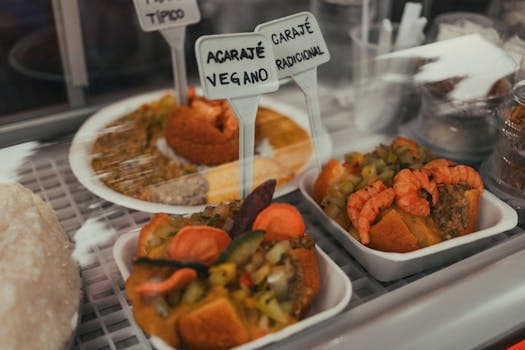
Acarajé
Crispy Bahian black-eyed pea fritters fried in dendê oil, split open and filled with shrimp vatapá and caruru.
About This Recipe
Acarajé is the most iconic street food of Salvador, Bahia, and one of the great fried foods of the world — a fritter made from puréed black-eyed peas seasoned with dried shrimp and onion, fried in dendê (palm oil) until the exterior is deeply golden and crispy while the interior remains soft and almost creamy. Split open and filled with vatapá (a rich paste of bread, coconut milk, peanuts, dried shrimp and dendê) and caruru (okra stew with dried shrimp), it is a complete, extraordinary street food experience. Acarajé is not merely food — it is a sacred offering. It is made and sold by Baianas (women in traditional white lace dress) who are initiated into Candomblé, the Afro-Brazilian religion. In Candomblé, acarajé is the sacred food offered to the deity Exu. UNESCO recognized the cultural practice of Baianas selling acarajé as an Intangible Cultural Heritage of Humanity in 2004. The recipe and method were brought by enslaved Yoruba people from West Africa (where a similar fritter called akara is still made). Making acarajé at home requires soaking and peeling black-eyed peas (labor-intensive but essential) and sourcing dendê oil, dried shrimp and vatapá ingredients. The result is worth every step: a dish with a complexity of flavors and textures — crispy, creamy, spicy, rich, salty — that captures five centuries of culinary fusion in a single bite.
Ingredients
Serves 10
- 2 cupsdried black-eyed peas(soaked overnight)
- ½white onion(roughly chopped)
- ¼ cupdried small shrimp(the tiny salt-dried variety)
- 1 tspsalt
- 3 cupsdendê (red palm oil)(for frying)
- 1 cupmedium shrimp(cooked, peeled, for filling)
- 2 cupsvatapá(see below)
- 1 cupcaruru (okra in dendê)(optional but traditional)
- for vatapá:— ½ cup dried bread + ½ cup coconut milk + ¼ cup ground peanuts + 2 tbsp dendê + dried shrimp + salt(blend to a thick paste)
Instructions
- 1
Peel the peas
Drain soaked peas. Working in batches, rub vigorously between your hands to remove the skins. Place in a large bowl of water — skins float and can be poured off. Repeat until most skins are removed.
- 2
Blend the batter
Blend peeled peas with onion, dried shrimp and salt, adding water tablespoon by tablespoon until a thick, smooth batter forms that holds its shape. Do not add too much water.
The batter should be thick like hummus, not runny. Too much water = flat fritters that spread in the oil.
- 3
Beat the batter
Transfer to a bowl and beat vigorously with a wooden spoon for 5 minutes to incorporate air — this lightens the fritter.
- 4
Fry in dendê
Heat dendê oil in a deep skillet to 350°F. Using two wet spoons, drop spoonfuls of batter into the oil. Fry 3–4 minutes per side until deeply golden. Drain on paper towels.
The oil temperature is critical — too hot and the outside burns before the inside cooks.
- 5
Split and fill
While still warm, split each acarajé partially open. Fill generously with vatapá, a shrimp and caruru. Serve immediately with extra hot sauce (molho de pimenta).
Did you make this?
Rate it and help other cooks find the recipes that actually work.
One tap to sign in, and we'll save the rating you just picked.
Everything you need to plan your week — free
- Meal calendar
- Grocery list
- AI recipe ideas
Track what you eat
Snap your meal to log calories and macros, run fasting timers and track water in the free SnapCal app.
Pro Tips
- →
Removing the pea skins is tedious but essential — skins create a grainy texture and bitter taste.
- →
Beat the batter well to incorporate air — this is what creates the light, crispy exterior.
- →
Vatapá and caruru can be made ahead and refrigerated up to 3 days.
Variations
- •
Abará: the same black-eyed pea batter, wrapped in banana leaves and steamed instead of fried — a sacred variation offered to a different Candomblé deity.
Storage
Eat immediately after frying — acarajé softens quickly. Uncooked batter refrigerates up to 2 days.
History & Origin
Acarajé was brought to Brazil by enslaved Yoruba people from West Africa (present-day Nigeria and Benin), where an almost identical fritter called akara is still made. In Candomblé, acarajé is the sacred food of Exu (a deity of crossroads and transitions). The Baianas who sell acarajé in Bahia are often Candomblé practitioners, and UNESCO designated the acarajé-selling Baianas tradition as Intangible Cultural Heritage in 2004.
Frequently Asked Questions
Can I make acarajé without dendê oil?
You can fry in vegetable oil, but the flavor will be completely different — dendê is half the flavor of acarajé. The deep, earthy, fruity richness of dendê defines the dish.
What is vatapá?
Vatapá is a thick, golden paste made from stale bread or cassava, coconut milk, ground peanuts or cashews, dried shrimp and dendê oil. It's an Afro-Brazilian condiment central to Bahian cooking.
Can I make the batter without a food processor?
A mortar and pestle was the traditional method, but it's slow and labor-intensive. A blender or food processor gets the batter smooth far more quickly.
Can acarajé be baked instead of fried?
Not really — the crisp, deeply golden crust comes specifically from deep frying in hot dendê oil. Baking gives a completely different, drier texture that isn't authentic acarajé.
Nutrition Facts
Per serving (250g / 8.8 oz) · 10 servings total
Time Summary
Have Questions?
Ask our AI cooking assistant anything about this recipe — substitutions, techniques, scaling.
Chat with AI Chef →More Brazilian Recipes
You Might Also Like
Similar dishes from other cuisines around the world.
Browse by Ingredient
More recipes built around the same core ingredients.
Free Kitchen Tools
Calculators and converters that pair with this page — no signup needed.
Put This Into a Plan
Schedule it, shop for it, and track what you already have.
Read Next
Longer reads that go deeper on the ideas behind this dish.
Community
Join the conversation
Sign in to leave a comment and save your favourite recipes