
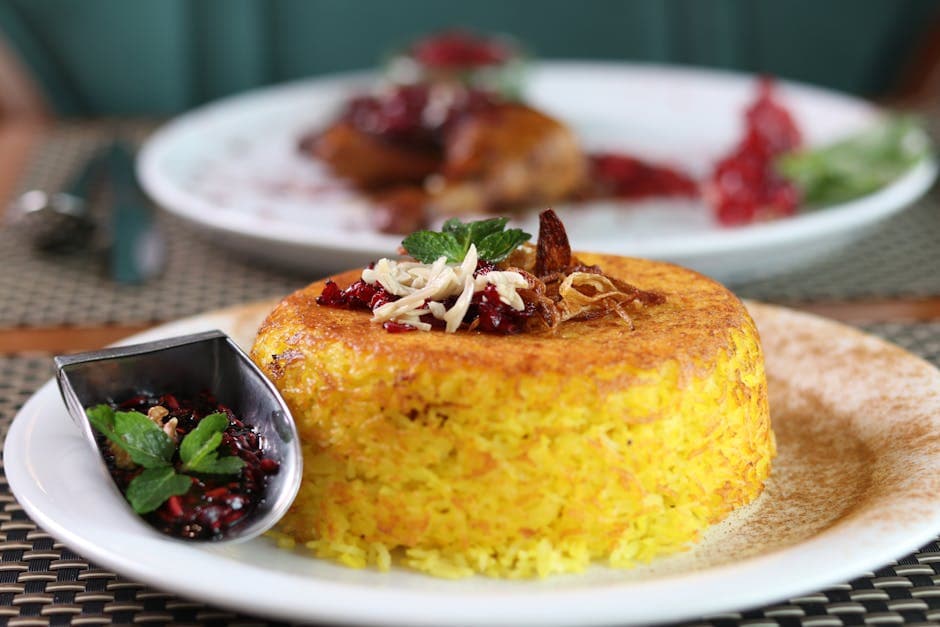
Afghan Sholeh Zard (Saffron Rice Pudding)
Afghanistan's golden saffron rice pudding with rose water and cardamom — a Nowruz and ceremony dessert.
About This Recipe
Sholeh zard (yellow sweet) is a saffron-perfumed rice pudding made for Nowruz (New Year), religious occasions, and offerings. The rice is cooked with an extraordinary amount of saffron until it turns a brilliant golden yellow, then enriched with rose water, cardamom, and almonds. It's topped with a pattern of cinnamon, pistachios, and almonds — each family has their own decorative signature.
Ingredients
Serves 8
- 1 cuplong-grain rice
- 2 literswater
- 1.5 cupssugar
- 1/2 tspsaffron threads, dissolved in 3 tbsp hot water
- 1/4 cupbutter
- 2 tbsprose water
- 1 tspground cardamom
- 1/4 cupslivered almonds
- 2 tbsppistachios, chopped (to decorate)
- 1 tspcinnamon (to decorate)
Instructions
- 1
Cook the rice
Cook rice in water until completely soft and beginning to break down — almost overcooked. This takes 30–40 minutes.
- 2
Add sugar and saffron
Add sugar and saffron water to the rice. Stir continuously over medium heat until the sugar dissolves and the mixture is uniformly golden.
- 3
Add enrichments
Add butter and stir until melted. Add slivered almonds, rose water, and cardamom. Cook, stirring, for 10 more minutes until thick.
- 4
Pour and cool
Pour into a large serving dish or individual bowls. Smooth the top.
- 5
Decorate and serve
When slightly cooled but still soft, decorate with cinnamon (using a spoon to draw patterns), pistachios, and remaining almonds. Cool completely and serve at room temperature or chilled.
Did you make this?
Rate it and help other cooks find the recipes that actually work.
One tap to sign in, and we'll save the rating you just picked.
Everything you need to plan your week — free
- Meal calendar
- Grocery list
- AI recipe ideas
Track what you eat
Snap your meal to log calories and macros, run fasting timers and track water in the free SnapCal app.
Pro Tips
- →
Good saffron gives the distinctive golden color and aroma — use generously.
- →
Stir continuously after adding sugar to prevent sticking.
- →
The decorative pattern is important — it's a form of artistic expression.
- →
Weigh dry ingredients on a scale instead of using cups — grams are the difference between a tender and a tough crumb.
Variations
- •
Add orange blossom water in addition to rose water
- •
Include dried barberries for a tart note
- •
Make with basmati for a more fragrant version
- •
Vegetarian: swap the protein for roasted king oyster mushrooms, smoked tofu or cooked chickpeas — adjust seasoning slightly upward to compensate.
Storage
Refrigerate up to 4 days. Serve at room temperature for best flavor.
History & Origin
Sholeh zard is made across Afghanistan, Iran, and Tajikistan as a ceremonial food for Nowruz and religious observances. In Afghanistan, families make large batches to distribute to neighbors as an act of charity and community. The decoration with cinnamon patterns is considered an art form.
Frequently Asked Questions
How much saffron is correct?
Sholeh zard should be intensely golden — use more saffron than seems necessary. The color is the visual centerpiece of the dish.
Why is the rice overcooked?
The broken-down rice creates the thick, porridge-like texture that characterizes sholeh zard. Perfectly cooked separate rice is wrong for this dish.
Can I make this ahead of time?
Yes — most of the components can be prepared up to a day in advance and refrigerated separately. Reheat gently and assemble just before serving so textures stay distinct.
What can I substitute if I don't have all the ingredients?
Stay close to the role each ingredient plays: swap aromatics for similar ones (shallot for onion, lime for lemon), and keep the fat-acid-salt balance intact. Spice blends can usually be approximated with what's in the cupboard.
Nutrition Facts
Per serving · 8 servings total
Time Summary
Have Questions?
Ask our AI cooking assistant anything about this recipe — substitutions, techniques, scaling.
Chat with AI Chef →Featured in Guides
This recipe is featured in the following curated guides:
More Afghan Recipes
You Might Also Like
Similar dishes from other cuisines around the world.
Browse by Ingredient
More recipes built around the same core ingredients.
Free Kitchen Tools
Calculators and converters that pair with this page — no signup needed.
Put This Into a Plan
Schedule it, shop for it, and track what you already have.
Read Next
Longer reads that go deeper on the ideas behind this dish.
Community
Join the conversation
Sign in to leave a comment and save your favourite recipes