
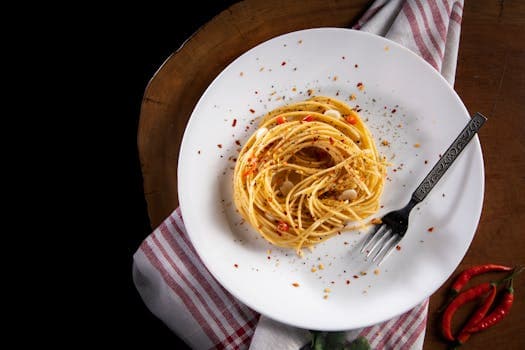
Aglio e Olio Pasta
Classic Roman pasta with garlic, olive oil, and chili flakes.
About This Recipe
Aglio e olio is the ultimate Italian pantry pasta — spaghetti tossed in a fragrant sauce of slowly golden garlic slivers, fruity extra-virgin olive oil, and a kick of red chili flakes, finished with fresh parsley and a shower of Parmesan. Ready in barely ten minutes, it proves that simplicity and satisfaction are not mutually exclusive.
Ingredients
Serves 2
- 200 gspaghetti
- 4 tbspextra-virgin olive oil
- 5 clovesgarlic, thinly sliced
- 0.5 tspred chili flakes
- 2 tbspfresh flat-leaf parsley, chopped
- 30 gParmesan cheese, grated
- 1 tspsalt
- 0.25 tspblack pepper
Instructions
- 1
Cook the pasta
Bring a pot of salted water to a rolling boil. Cook spaghetti until al dente according to package directions. Reserve 120 ml of pasta water before draining.
- 2
Toast the garlic
While pasta cooks, heat olive oil in a large skillet over medium-low heat. Add sliced garlic and cook, stirring often, for 2–3 minutes until pale golden. Add chili flakes and cook 15 seconds.
- 3
Combine
Add drained spaghetti to the skillet. Toss vigorously, adding splashes of reserved pasta water until the sauce emulsifies and clings to the strands.
- 4
Finish and serve
Remove from heat. Toss in chopped parsley, season with salt and pepper, and divide between plates. Top with grated Parmesan and an extra drizzle of olive oil.
Did you make this?
Rate it and help other cooks find the recipes that actually work.
One tap to sign in, and we'll save the rating you just picked.
Everything you need to plan your week — free
- Meal calendar
- Grocery list
- AI recipe ideas
Track what you eat
Snap your meal to log calories and macros, run fasting timers and track water in the free SnapCal app.
Pro Tips
- →
Slice garlic thinly and evenly so it toasts at the same rate.
- →
Keep the heat low — burnt garlic turns bitter and ruins the dish.
- →
Reserve more pasta water than you think you need.
- →
Taste and adjust salt at the very end — flavors concentrate as liquids reduce, and a final pinch of flaky salt sharpens the whole dish.
Variations
- •
Add a handful of toasted breadcrumbs for crunch.
- •
Toss in halved cherry tomatoes and fresh basil for a summery twist.
- •
Vegetarian: swap the protein for roasted king oyster mushrooms, smoked tofu or cooked chickpeas — adjust seasoning slightly upward to compensate.
- •
Spicier: add a finely chopped fresh chile or a teaspoon of crushed Aleppo/Urfa pepper to the aromatics for warm, layered heat instead of a single sharp hit.
Storage
Best eaten immediately. Leftovers can be refrigerated up to 1 day and reheated in a skillet with a splash of water.
History & Origin
Aglio e Olio Pasta is rooted in Italy's regional traditions where simplicity and ingredient quality define excellence. Regional variations are the rule rather than the exception — neighboring villages, families and even individual cooks adapt the dish to what's in the pantry and what's in season, which is why no two versions taste exactly alike and why the recipe has stayed alive for so long.
Frequently Asked Questions
Can I make this ahead of time?
Yes — most of the components can be prepared up to a day in advance and refrigerated separately. Reheat gently and assemble just before serving so textures stay distinct.
What can I substitute if I don't have all the ingredients?
Stay close to the role each ingredient plays: swap aromatics for similar ones (shallot for onion, lime for lemon), and keep the fat-acid-salt balance intact. Spice blends can usually be approximated with what's in the cupboard.
How do I know it's authentic?
Authenticity sits on a spectrum — what matters more is honoring the technique and balance of flavors. If the dish tastes harmonious and respects how cooks in its home region would build it, you're on solid ground.
Why didn't mine turn out as expected?
The two most common issues are under-seasoning and rushing the heat. Taste as you go, season in layers, and give aromatics and proteins the time they need to develop color and depth before moving on.
Nutrition Facts
Per serving (240g / 8.5 oz) · 2 servings total
Time Summary
Have Questions?
Ask our AI cooking assistant anything about this recipe — substitutions, techniques, scaling.
Chat with AI Chef →Featured in Guides
This recipe is featured in the following curated guides:
More Italian Recipes
You Might Also Like
Similar dishes from other cuisines around the world.
Browse by Ingredient
More recipes built around the same core ingredients.
Free Kitchen Tools
Calculators and converters that pair with this page — no signup needed.
Put This Into a Plan
Schedule it, shop for it, and track what you already have.
Read Next
Longer reads that go deeper on the ideas behind this dish.
Community
Join the conversation
Sign in to leave a comment and save your favourite recipes