colombiansoup
Ajiaco Bogotano
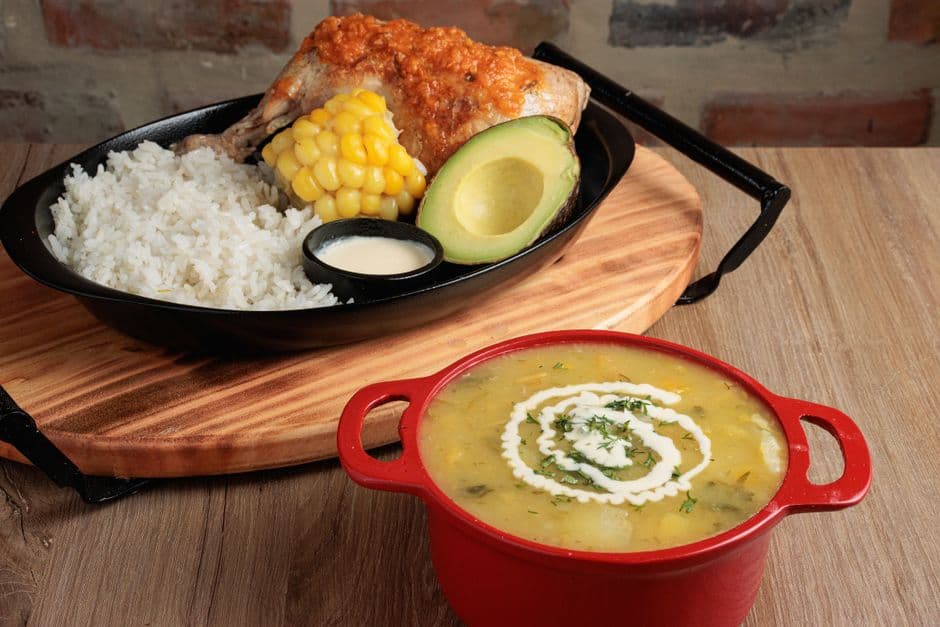
Bogotá's great contribution to the world's soups — a hearty, warming chicken and three-potato stew thickened with guasca herb, served with capers, cream and avocado.
Prep
20 min
Cook
90 min
Servings
6
Difficulty
Medium
★★★★★
4.8(867 ratings)#colombian#soup#chicken#potato#ajiaco#bogota#comfort food#gluten-free
About This Recipe
Ajiaco santafereño (from Santa Fe de Bogotá) is considered the signature dish of Colombia's capital, the food that Bogotanos are most proud of and most homesick for. What makes it unique among the world's chicken soups is the combination of three types of potato: papa criolla (small yellow potatoes native to the Andes that dissolve and thicken the broth), papa pastusa (which holds its shape) and papa capira (which adds body). The essential flavouring is guascas — a dried herb native to the Andes with a faint artichoke-like flavour that cannot be replicated by any substitute. Ajiaco is traditionally served with the chicken still on the bone, bowls of cream, capers and sliced avocado passed at the table.
Ingredients
Serves 6
- 1.5 kgwhole chicken(or bone-in thighs and drumsticks)
- 400 gpapa criolla (small Andean yellow potatoes)(or Yukon Gold; peeled and halved)
- 400 gwaxy potatoes (pastusa-style)(peeled and cut into chunks)
- 300 gfloury potatoes(peeled and cut into chunks)
- 4 stalksspring onion (green onion)(whole)
- 4 sprigsfresh coriander
- 3 tablespoonsdried guascas herb(essential; available at Latin grocery stores)
- 3 clovesgarlic(smashed)
- 1 teaspoonsalt
- 4 tablespoonscapers(to serve)
- 150 mlsingle cream(to serve)
- 2ripe avocados(sliced, to serve)
- 2 cobsfresh corn(each cut into 3 rounds, to serve)
Instructions
- 1
Build the broth
Place the whole chicken (or pieces) in a large pot with the spring onion stalks, fresh coriander, smashed garlic, 2 tablespoons of the guascas and salt. Cover with 2.5 litres of cold water. Bring to a boil, skim any foam, then reduce heat and simmer gently for 40 minutes until the chicken is cooked through and tender.
- 2
Remove and shred the chicken
Remove the chicken from the broth. Discard the spring onion and coriander sprigs. Once cool enough to handle, remove the skin and bones and shred the meat into generous pieces. Set aside.
- 3
Cook the potatoes
Add all three types of potato to the simmering broth along with the remaining guascas and the corn rounds. The papa criolla will begin to dissolve almost immediately and thicken the broth beautifully. Cook for 25–30 minutes over medium heat, stirring occasionally, until the waxy and floury potatoes are completely tender and the broth has become thick and starchy.
The papa criolla is what gives ajiaco its signature velvety thickness. If unavailable, add 2 extra Yukon Golds and mash a few of them into the broth to replicate the effect.
- 4
Return the chicken
Return the shredded chicken to the pot. Stir gently and simmer for 5–10 more minutes to warm through and meld the flavours. Taste and adjust salt.
- 5
Serve
Ladle the ajiaco into deep bowls, making sure each serving gets a round of corn. Pass small bowls of cream, capers and sliced avocado at the table — each diner stirs these into their soup according to taste. Serve with white rice on the side.
Pro Tips
- →
The three different types of potato each serve a different purpose — one thickens, one holds shape, one adds body. All three are worth seeking out.
- →
Dried guascas are available online and at Latin American grocery stores. There is no true substitute.
- →
Ajiaco should be thick — almost like a stew. Add less water if it seems too thin.
- →
Taste and adjust salt at the very end — flavors concentrate as liquids reduce, and a final pinch of flaky salt sharpens the whole dish.
Variations
- •
In some Bogotá restaurants, a slow-poached egg is cracked into each bowl of ajiaco just before serving.
- •
Ajiaco de pollo can also be made with turkey for a richer, more festive version.
- •
Vegetarian: swap the protein for roasted king oyster mushrooms, smoked tofu or cooked chickpeas — adjust seasoning slightly upward to compensate.
- •
Spicier: add a finely chopped fresh chile or a teaspoon of crushed Aleppo/Urfa pepper to the aromatics for warm, layered heat instead of a single sharp hit.
Storage
Refrigerate for up to 3 days. The stew will thicken considerably as it cools — add water or stock when reheating. Freezes for up to 2 months.
History & Origin
Ajiaco santafereño is considered the dish that best reflects the culinary heritage of the Chibcha people, the indigenous inhabitants of the Bogotá plateau, who cultivated dozens of potato varieties in the Andes long before the Spanish arrived. The word 'ajiaco' comes from the Taíno word 'axiaco', referring to dishes made with ají (chillies) — though modern ajiaco is notably mild.
Frequently Asked Questions
What is guascas and where can I buy it?
Guascas (Galinsoga parviflora) is an Andean herb with a mild artichoke-like, slightly herbal flavour. It is sold dried at Latin American grocery stores and online. It is worth sourcing — without it the dish loses its defining character.
Can I make this ahead of time?
Yes — most of the components can be prepared up to a day in advance and refrigerated separately. Reheat gently and assemble just before serving so textures stay distinct.
What can I substitute if I don't have all the ingredients?
Stay close to the role each ingredient plays: swap aromatics for similar ones (shallot for onion, lime for lemon), and keep the fat-acid-salt balance intact. Spice blends can usually be approximated with what's in the cupboard.
How do I know it's authentic?
Authenticity sits on a spectrum — what matters more is honoring the technique and balance of flavors. If the dish tastes harmonious and respects how cooks in its home region would build it, you're on solid ground.
Nutrition Facts
Per serving (480g / 16.9 oz) · 6 servings total
Calories490kcal
Protein36g
Carbohydrates48g
Fat16g
Fiber6g
Protein36g
Carbs48g
Fat16g
Time Summary
Prep time20 min
Cook time90 min
Total time110 min
Have Questions?
Ask our AI cooking assistant anything about this recipe — substitutions, techniques, scaling.
Chat with AI Chef →More Colombian Recipes
Community
Join the conversation
Sign in to leave a comment and save your favourite recipes