
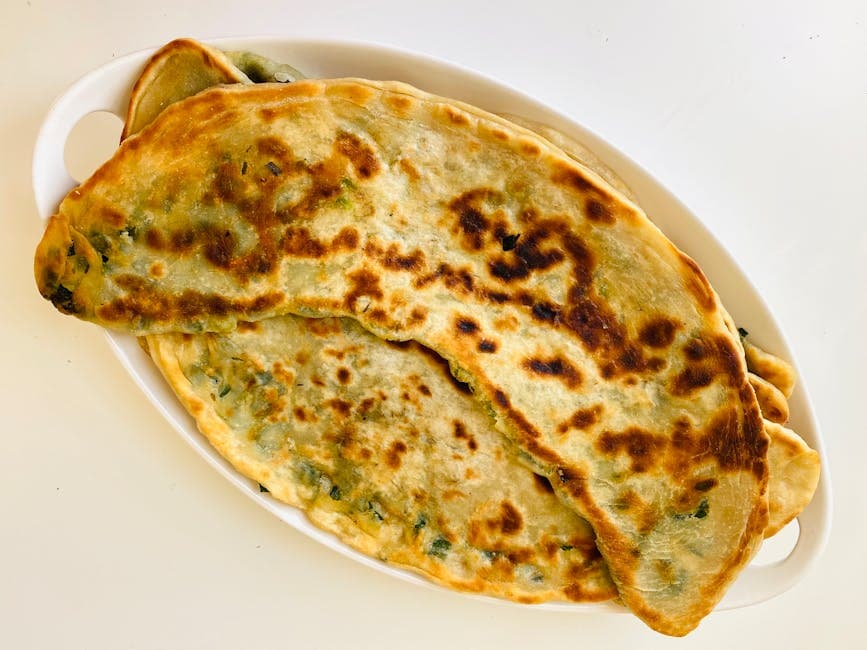
Mhadjeb (Algerian Stuffed Flatbread)
Algerian semolina flatbreads folded around a slow-cooked tomato, onion, and pepper filling — crisp outside, jammy inside.
About This Recipe
Mhadjeb (also written m'hadjeb or mahjouba) is one of the most beloved street foods of Algeria, especially in Algiers and the central plains. A simple semolina dough is stretched paper-thin on an oiled surface, folded around a slow-cooked filling of grated tomato, sautéed onion, and red pepper spiked with cumin and harissa, then folded into a square envelope and griddled on a hot plancha until crackling-crisp on the outside while the filling stays jammy and warm. Sold from carts in markets and at the entrance to bus stations, mhadjeb is the original Algerian fast food — cheap, vegetarian, deeply flavored, and always eaten with one's hands. Home cooks make it during Ramadan in particular, where it accompanies harira at iftar.
Ingredients
Serves 6
- 500 gfine semolina (smida), plus extra for dusting
- 1 tspfine salt
- 300 mlwarm water, approximately
- 120 mlneutral oil, for stretching
- 3 tbspolive oil
- 2 largeyellow onions, finely diced
- 1red bell pepper, finely diced
- 4 largeripe tomatoes, grated (skins discarded)
- 2 tbsptomato paste
- 1 tspground cumin
- 1 tspsweet paprika
- 1 tspharissa paste
- 1 tspfine salt, for the filling
- 0.5 tspblack pepper
- 2 tbspfresh parsley, chopped
Instructions
- 1
Mix the dough
Combine semolina and salt in a large bowl. Add warm water gradually, kneading 8–10 minutes until you have a very soft, sticky dough — softer than bread dough. Cover and rest 30 minutes.
- 2
Cook the filling
Heat olive oil in a wide skillet over medium. Sweat the onions with a pinch of salt for 12 minutes until very soft and pale gold. Add the red pepper and cook 5 more minutes.
- 3
Add tomato
Stir in the grated tomatoes, tomato paste, cumin, paprika, harissa, salt, and pepper. Simmer uncovered 20–25 minutes, stirring often, until the mixture is thick and almost paste-like with no free liquid.
If the filling is wet, the mhadjeb will steam and tear — cook it down further.
- 4
Cool the filling
Stir in the parsley and spread the filling on a plate to cool to room temperature. This is critical — hot filling will melt through the dough.
- 5
Divide and oil
Divide the dough into 8 equal balls. Pour the neutral oil onto a smooth work surface and into a bowl. Roll each ball in oil to coat thoroughly.
- 6
Stretch ultra-thin
Working with one ball at a time, press and stretch the dough on the oiled surface with your palms into a 30 cm square so thin you can almost see through it. Don't worry about small tears — the fold will hide them.
- 7
Fill and fold
Place 2 generous tablespoons of cooled filling in a horizontal strip across the center of the dough. Fold the top third down, the bottom third up, then fold in the sides to form a 12 cm square envelope, filling fully enclosed.
- 8
Griddle
Heat a dry heavy skillet or plancha over medium-high. Cook each mhadjeb 2–3 minutes per side, pressing gently with a spatula, until golden, blistered, and crisp. Serve hot, cut in half on the diagonal.
Did you make this?
Rate it and help other cooks find the recipes that actually work.
One tap to sign in, and we'll save the rating you just picked.
Everything you need to plan your week — free
- Meal calendar
- Grocery list
- AI recipe ideas
Track what you eat
Snap your meal to log calories and macros, run fasting timers and track water in the free SnapCal app.
Pro Tips
- →
Fine semolina labeled 'smida' or 'extra-fine' is essential — coarse semolina won't stretch thin enough and will crack.
- →
The dough should feel almost too sticky to handle — the oil layer on the work surface is what lets you stretch it without tearing.
- →
Grate tomatoes on the large holes of a box grater with the skin facing your palm; you'll be left holding just the skin.
Variations
- •
Mhadjeb with merguez: tuck a few slices of cooked merguez into the filling for a meat version.
- •
Mhadjeb b'jben: add a tablespoon of soft fresh cheese over the filling before folding.
- •
Sweet mhadjeb (rare): skip the filling and fold dough with a teaspoon of honey and orange-blossom water inside.
Storage
Best eaten fresh off the pan. Reheat leftovers wrapped in foil in a 180°C oven for 8 minutes — don't microwave, they go limp.
History & Origin
Mhadjeb has been documented in Algerian home cooking since at least the 19th century, with regional variations from Algiers, Médéa, and Tlemcen. It became urban street food in the mid-20th century, when migration from the countryside brought traditional flatbread cooking onto Algiers' sidewalks. It is closely related to Tunisian malsouka and Moroccan rghaif but uses a softer, oilier dough.
Frequently Asked Questions
What if my dough keeps tearing?
Either the dough is under-rested, or the work surface isn't oiled enough. Rest at least 30 minutes and use generous oil — the dough should glide on the counter without sticking.
Can I make mhadjeb ahead?
You can shape and fold them, then refrigerate for up to 24 hours on a tray dusted with semolina, separated by parchment. Griddle directly from the fridge, adding a minute per side.
Is mhadjeb the same as msemen?
No — msemen is Moroccan and uses a flaky layered dough closer to a paratha. Mhadjeb is Algerian, with a single ultra-thin sheet folded around a wet filling.
Nutrition Facts
Per serving (220g / 7.8 oz) · 6 servings total
Time Summary
Have Questions?
Ask our AI cooking assistant anything about this recipe — substitutions, techniques, scaling.
Chat with AI Chef →Featured in Guides
This recipe is featured in the following curated guides:
More Algerian Recipes
You Might Also Like
Similar dishes from other cuisines around the world.
Browse by Ingredient
More recipes built around the same core ingredients.
Free Kitchen Tools
Calculators and converters that pair with this page — no signup needed.
Put This Into a Plan
Schedule it, shop for it, and track what you already have.
Read Next
Longer reads that go deeper on the ideas behind this dish.
Community
Join the conversation
Sign in to leave a comment and save your favourite recipes