
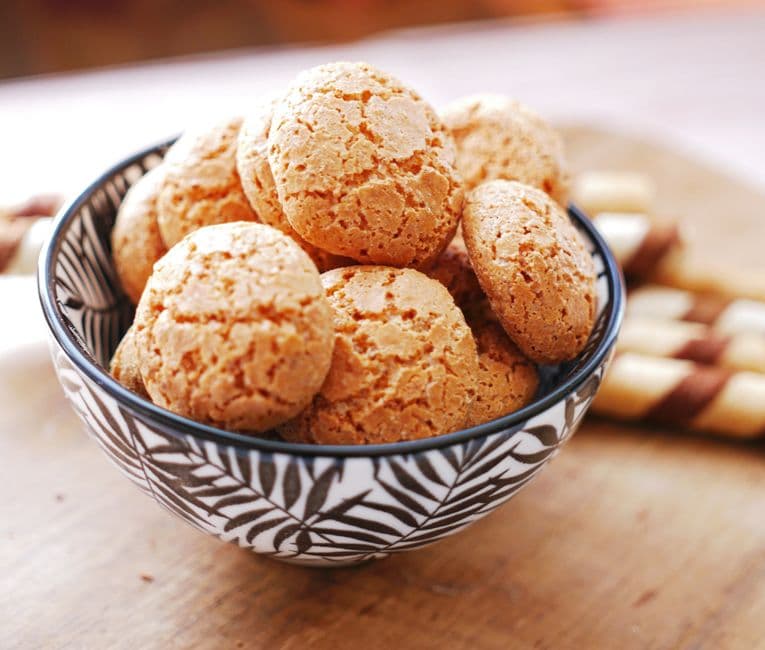
Amaretti
Crisp-edged, chewy-centered Italian almond cookies made with just egg whites, sugar, and ground almonds.
About This Recipe
Amaretti are classic Italian almond macaroons with a delicate crackled top, crisp shell, and soft, marzipan-like interior. Originating in Lombardy and Piedmont, they come in two styles: crunchy amaretti secchi and the softer amaretti morbidi. This recipe leans toward the soft, chewy version built from finely ground almonds, sugar, whipped egg whites, and a defining splash of bitter almond extract that gives them their signature aroma. Naturally gluten-free and dairy-free, they pair beautifully with espresso, vin santo, or dessert wine. The dough is simple but rewards a light hand: overworking deflates the whites and yields dense cookies. Rolled in powdered sugar before baking, they develop the iconic cracked, snowy surface that makes them instantly recognizable on any Italian pastry tray.
Ingredients
Serves 24
- 250 galmond flour (finely ground)
- 200 ggranulated sugar
- 2 largeegg whites(room temperature)
- 1 tspbitter almond extract(or 1/2 tsp pure almond extract)
- 1/4 tspfine sea salt
- 1/2 tsplemon zest(optional)
- 60 gpowdered sugar(for rolling)
- 12 wholeblanched almonds(for topping, optional)
Instructions
- 1
Mix the dry base
Whisk almond flour, granulated sugar, and salt in a large bowl until evenly combined with no lumps. Stir in lemon zest if using. This dry blend ensures the sugar distributes evenly through the delicate dough.
Sift the almond flour if it looks coarse for a smoother cookie.
- 2
Whip the whites
In a clean, grease-free bowl, beat egg whites to soft peaks, about 2 to 3 minutes. They should hold a gentle curl but not be stiff or dry, which keeps the cookies tender rather than meringue-like.
- 3
Fold the dough
Add almond extract to the whites, then gently fold the whipped whites into the almond mixture with a spatula until a sticky, cohesive dough forms. Stop as soon as it comes together to preserve airiness.
If the dough is too wet to scoop, rest it 10 minutes; the almond flour absorbs moisture.
- 4
Portion and roll
Scoop tablespoon-sized portions and roll into smooth balls with lightly dampened hands. Roll each ball generously in powdered sugar until fully coated, which creates the classic cracked, snowy crust.
Don't skimp on the coating; a thick sugar layer gives the prettiest crackle.
- 5
Shape on the tray
Place balls 4 cm apart on a parchment-lined sheet. Press a whole almond on top if desired, or leave plain. They spread only slightly, so spacing can be modest.
- 6
Bake
Bake at 160°C (320°F) for 16 to 18 minutes, until pale gold with cracked tops and set edges. The centers stay soft. Avoid overbaking, which turns them hard and dry.
- 7
Cool fully
Let cookies cool on the tray for 5 minutes, then transfer to a rack. They firm as they cool, developing the chewy interior and crisp shell that define amaretti morbidi.
Did you make this?
Rate it and help other cooks find the recipes that actually work.
One tap to sign in, and we'll save the rating you just picked.
Everything you need to plan your week — free
- Meal calendar
- Grocery list
- AI recipe ideas
Track what you eat
Snap your meal to log calories and macros, run fasting timers and track water in the free SnapCal app.
Pro Tips
- →
Use room-temperature egg whites; they whip to greater volume.
- →
Pure almond extract is potent, so measure carefully to avoid bitterness.
- →
For crunchier amaretti secchi, bake 5 minutes longer at the same temperature.
- →
A thick coating of powdered sugar is what creates the signature crackled top.
- →
Dampen your hands before rolling to keep the sticky dough from clinging.
Variations
- •
Add 1 tbsp cocoa powder for chocolate amaretti.
- •
Replace lemon zest with orange zest for a citrus-forward version.
- •
Press a coffee bean on top and add 1/2 tsp instant espresso for mocha amaretti.
- •
Use a mix of hazelnut and almond flour for a deeper, nuttier flavor.
Storage
Store in an airtight tin at room temperature for up to 2 weeks. They also freeze well for up to 3 months.
History & Origin
Amaretti trace back to the Renaissance courts of northern Italy, with the town of Saronno claiming a famous crisp version. The name comes from amaro, meaning bitter, a nod to the bitter almond flavor at their heart.
Frequently Asked Questions
Why did my amaretti turn out flat and dense?
Usually the egg whites were over-folded or under-whipped, deflating the batter. Whip to soft peaks and fold just until combined. Letting overly wet dough rest before scooping also helps it hold shape during baking.
Are amaretti gluten-free?
Yes, traditional amaretti contain no flour beyond ground almonds, making them naturally gluten-free. Just confirm your almond flour and powdered sugar are processed in a gluten-free facility if serving someone with celiac disease.
Can I make these without bitter almond extract?
You can use regular pure almond extract, which is milder, or add a few drops of amaretto liqueur for similar aroma. The bitter note is traditional but the cookies are still delicious with the standard extract.
What's the difference between soft and crunchy amaretti?
Amaretti morbidi are soft and chewy throughout, while amaretti secchi are dry and crisp like a hard macaroon. The difference is mainly baking time and moisture; longer baking yields the crunchy style.
Nutrition Facts
Per serving (25g / 0.9 oz) · 24 servings total
Time Summary
Have Questions?
Ask our AI cooking assistant anything about this recipe — substitutions, techniques, scaling.
Chat with AI Chef →Featured in Guides
This recipe is featured in the following curated guides:
More Italian Recipes
You Might Also Like
Similar dishes from other cuisines around the world.
Free Kitchen Tools
Calculators and converters that pair with this page — no signup needed.
Put This Into a Plan
Schedule it, shop for it, and track what you already have.
Read Next
Longer reads that go deeper on the ideas behind this dish.
Community
Join the conversation
Sign in to leave a comment and save your favourite recipes