
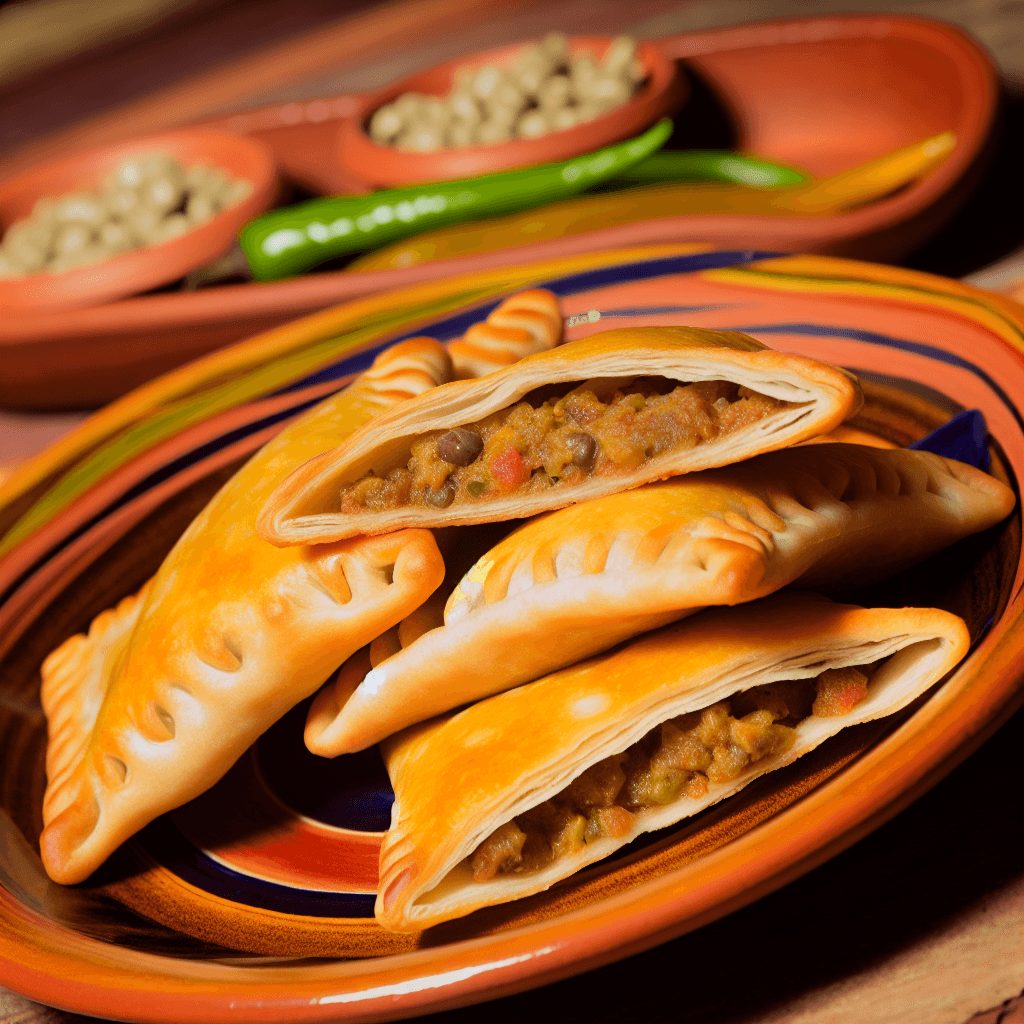
USVI Pates (Fried Turnovers)
Crispy fried pastry pockets filled with spiced conch, chicken, or beef.
About This Recipe
Pates (pronounced pah-TAYS) are the definitive street food of the US Virgin Islands — half-moon fried pastry pockets crispy on the outside, filled with spiced meat, seafood, or saltfish, and utterly irresistible from the very first bite. They are sold from roadside stands, school canteens, church fairs, and festival booths all across St. Thomas, St. John, and St. Croix, wrapped in wax paper and eaten by hand. No island gathering is complete without a pile of freshly fried pates within reach. The pastry is a simple shortcrust — flour, butter or shortening, water, a pinch of salt — rolled thin and cut into circles before filling and sealing. The thinness of the pastry is key: too thick and the ratio of dough to filling is wrong, and the pastry won't cook through before the outside burns; too thin and it tears when crimping. The edges are sealed with a fork, creating the decorative pleated border that is the visual signature of a proper USVI pate. The filled pastry must be cold when it hits the oil — room-temperature dough softens and sometimes opens at the seam. Fillings vary by neighbourhood and family tradition. Spiced minced beef seasoned with island herbs is the most common; minced conch with scotch bonnet and sweet pepper is considered the most traditional; saltfish and onion is beloved for breakfast. The dough absorbs the flavoured juices from the filling during frying, making the inside of the pastry almost as flavourful as the filling itself. Eaten hot from the oil, with the exterior shattering on the first bite to release a cloud of fragrant steam, pates are one of the great pleasures of eating in the Virgin Islands.
Ingredients
Serves 8
- 2 cupsall-purpose flour
- ½ cupcold water
- 3 tbspbutter or shortening
- 300 gground beef or minced conch
- 1 tspgarlic powder
- oilvegetable oil(for frying)
Instructions
- 1
Make the pastry dough
Combine the flour and a pinch of salt in a large bowl. Add the cold butter or shortening in small pieces and rub it into the flour using your fingertips, lifting and crumbling the mixture, until it resembles coarse breadcrumbs with some pea-sized lumps of fat remaining — these lumps create flakiness. Add the cold water one tablespoon at a time, tossing with a fork after each addition, until the dough just begins to hold together when pressed.
Handle the dough as little as possible and keep everything cold — warmth melts the fat and makes the pastry tough and dense rather than flaky and tender.
- 2
Rest the dough
Turn the dough out onto a lightly floured surface and gently press it together into a flat disc — do not knead. Wrap tightly in plastic wrap and refrigerate for at least 15 minutes (up to 1 hour). This resting period allows the gluten to relax, making the dough significantly easier to roll without springing back, and keeps the fat cold for a flakier result.
- 3
Cook the filling
In a skillet over medium-high heat, cook the ground beef or minced conch with the garlic powder, a generous pinch of salt, and black pepper, breaking up the meat as it cooks, for 6–8 minutes until fully cooked through with no pink remaining. The filling should be dry — drain off any excess liquid or fat so it does not make the pastry soggy. Taste and adjust seasoning, then spread on a plate and let cool completely before filling. Warm filling causes the dough to soften and tear.
For a traditional island flavour, add ½ teaspoon of dried thyme, ¼ teaspoon of allspice, and a minced scotch bonnet (seeds removed) to the filling while cooking.
- 4
Roll and cut
On a lightly floured surface, roll the chilled dough to about 3 mm thickness — the equivalent of two stacked coins. Using a round cutter, glass, or bowl, cut circles approximately 12–14 cm in diameter. Re-roll scraps once for additional circles. Work quickly to keep the dough cold; if it becomes warm and sticky, refrigerate for 10 minutes.
- 5
Fill and seal
Place a heaped tablespoon of the cooled filling onto one half of each circle, leaving a 1.5 cm border around the edge clear of filling. Fold the empty half of the dough over the filling to form a half-moon shape. Press the edges firmly together with your fingers to seal, then run a fork around the curved edge, pressing its tines into the dough to create the decorative pleated border that is the visual signature of USVI pates. Crimp firmly — any gap will allow oil to enter and the filling to leak.
Dip the fork in flour occasionally to prevent it from sticking to the dough when crimping.
- 6
Chill before frying
Place the finished pates on a baking sheet lined with parchment paper and refrigerate for at least 10 minutes before frying. This chilling step firms the dough and helps the sealed edges hold during the high-heat fry. Chilled pates also absorb less oil than room-temperature ones.
- 7
Fry until golden
Pour vegetable or canola oil to a depth of at least 5 cm in a heavy-bottomed pot and heat to 180 °C (350 °F). Lower 2–3 pates into the oil using a spider skimmer — never crowd the pot. Fry for 3–4 minutes, turning halfway, until both sides are deep golden brown and the pastry sounds hollow when tapped. Transfer to a wire rack to drain. Serve immediately.
Did you make this?
Rate it and help other cooks find the recipes that actually work.
One tap to sign in, and we'll save the rating you just picked.
Everything you need to plan your week — free
- Meal calendar
- Grocery list
- AI recipe ideas
Cook this hands-free
Get AI meal plans, step-by-step cooking mode, and your saved recipes in the free Bento app.
Pro Tips
- →
Keep the dough and filled pates cold at every stage — warm dough is sticky, tears easily, and produces a greasier, less flaky result. If your kitchen is warm, work in 10-minute windows and refrigerate between steps.
- →
The filling must be completely cooled and as dry as possible before going into the pates — excess moisture creates steam during frying that softens and bursts the seam from the inside.
- →
Crimp the edges aggressively with a fork — a double crimp (pressing twice around the edge) is not excessive. Any weak spot in the seal will open during frying, releasing filling into the oil.
- →
Conch filling is the most traditional and celebrated: dice desalted conch very finely, sauté with scotch bonnet, garlic, and sweet pepper, and cool completely before filling.
- →
For the cleanest professional-looking pates, use a circle cutter slightly larger than you think you need — it gives you more dough edge to work with when crimping, reducing the chance of tearing.
Variations
- •
Saltfish and onion pates: the most traditional breakfast version — fill with flaked desalted saltfish sautéed with onion, scotch bonnet, and a pinch of black pepper. No additional salt needed.
- •
Cheese and beef: add 2 tablespoons of shredded sharp cheddar to the beef filling — the cheese melts inside the hot pate, creating a molten centre that is especially popular with children.
- •
Vegetarian callaloo pates: fill with a spoonful of cooked, thickened callaloo (with the liquid squeezed out) for an island-on-island filling combination.
- •
Baked pates: brush assembled pates with beaten egg and bake on a parchment-lined tray at 200 °C for 20–22 minutes until golden. The texture is drier and less flaky than fried but makes a good option for those avoiding deep frying.
Storage
Pates are best eaten immediately while the pastry is hot and crackling. Leftovers can be refrigerated for up to 2 days and reheated in an air-fryer at 180 °C for 5–6 minutes or in an oven at 190 °C for 8–10 minutes, both of which restore reasonable crispness. Avoid the microwave, which makes the pastry leathery. Assembled but uncooked pates can be frozen on a tray, then transferred to a bag — fry directly from frozen at 175 °C, adding 2–3 extra minutes to the frying time.
History & Origin
Pates reflect the layered French and African culinary heritage of the US Virgin Islands. The islands were colonised by Denmark in the seventeenth century and later influenced by French Caribbean (particularly from Martinique and Guadeloupe) food traditions through trade and migration — the French patty-making tradition of pâté en croûte was adapted by Afro-Caribbean cooks into the fried hand-held form that is distinctly Virgin Islands today. The dish evolved over centuries of island life and now appears at every USVI celebration, from Carnival to Thanksgiving, equally at home at a roadside stand and a family holiday table.
Frequently Asked Questions
Can I bake pates instead of frying them?
Yes — brush assembled pates generously with beaten egg wash (1 egg beaten with 1 tablespoon of water) and bake on a parchment-lined tray at 200 °C for 20–22 minutes, flipping once halfway through. The result is a drier, less flaky, but still very pleasant pastry — noticeably different from the fried original but acceptable for those avoiding deep frying.
Why do my pates keep opening up and leaking during frying?
The two most common causes are insufficiently crimped edges and filling that is too wet or warm. Make sure you press the fork firmly around the entire seam, going around twice if needed. The filling must be completely cool and as dry as possible — drain any cooking liquid thoroughly. Refrigerating the filled pates for 10 minutes before frying is the most reliable fix.
Can I make pates ahead of time?
Yes — assembled, uncooked pates freeze beautifully. Arrange them in a single layer on a parchment-lined tray, freeze until solid (about 1 hour), then transfer to freezer bags. Fry directly from frozen at 175 °C, increasing the frying time by 2–3 minutes per side. The pastry quality is essentially identical to freshly made.
What is the most authentic filling for USVI pates?
Minced conch seasoned with scotch bonnet, garlic, and sweet pepper is considered the most traditional island filling, particularly on St. Thomas. Spiced ground beef is more widely available and equally popular. Saltfish and onion is the classic breakfast variant. All three are sold at authentic roadside pate stands across the territory.
Nutrition Facts
Per serving · 8 servings total
Time Summary
Have Questions?
Ask our AI cooking assistant anything about this recipe — substitutions, techniques, scaling.
Chat with AI Chef →Featured in Guides
This recipe is featured in the following curated guides:
More American-virgin-islands Recipes
You Might Also Like
Similar dishes from other cuisines around the world.
Free Kitchen Tools
Calculators and converters that pair with this page — no signup needed.
Put This Into a Plan
Schedule it, shop for it, and track what you already have.
Read Next
Longer reads that go deeper on the ideas behind this dish.
Community
Join the conversation
Sign in to leave a comment and save your favourite recipes