
Anolini in Brodo
Tiny stuffed pasta from Parma filled with slow-braised beef and parmesan, served in rich capon broth.
About This Recipe
Anolini in brodo is one of the great festive dishes of Parma and Piacenza, small crescent or coin-shaped stuffed pasta floating in a clear, golden capon broth. The hallmark of true anolini is the filling, built not from the braised meat itself but from the dense, flavorful breadcrumb mixture soaked in the juices of a long-cooked beef stracotto. The meat braises for hours with wine and aromatics until meltingly tender, and its concentrated gravy is worked into grated parmesan and breadcrumbs to form an intensely savory paste. Sealed in thin egg pasta and simmered in homemade brodo, these delicate morsels are a Christmas Eve and Sunday tradition across Emilia. Labor-intensive and deeply comforting, anolini in brodo represents the soulful, patient cooking of northern Italy.
Ingredients
Serves 6
- 300 g00 flour
- 3 largeeggs(for the pasta)
- 500 gbeef chuck or brisket(for stracotto)
- 1 cupdry red wine
- 1 eachonion, carrot, celery stalk(chopped)
- 120 gfine breadcrumbs
- 120 gParmigiano-Reggiano(grated)
- 2 Lcapon or beef broth
- 1 pinchgrated nutmeg
- to tastesalt and black pepper
Instructions
- 1
Braise the beef
Brown the beef in oil, add the chopped vegetables and red wine, then braise covered on very low heat for 3 to 4 hours until fork-tender. Reserve the rich, reduced cooking juices, which carry all the flavor.
Low and slow; the dense gravy matters more than the meat itself.
- 2
Make the filling
Combine the breadcrumbs, grated parmesan, nutmeg, and several spoonfuls of the warm braising juices to form a stiff, savory paste. It should be moist but hold its shape when pressed.
Add juices gradually; too much makes the filling too soft to pipe.
- 3
Make the pasta dough
Mound the flour, make a well, and add the eggs. Mix and knead 10 minutes until smooth and elastic, then wrap and rest 30 minutes. Resting relaxes the gluten so the dough rolls thin without tearing.
- 4
Roll and fill
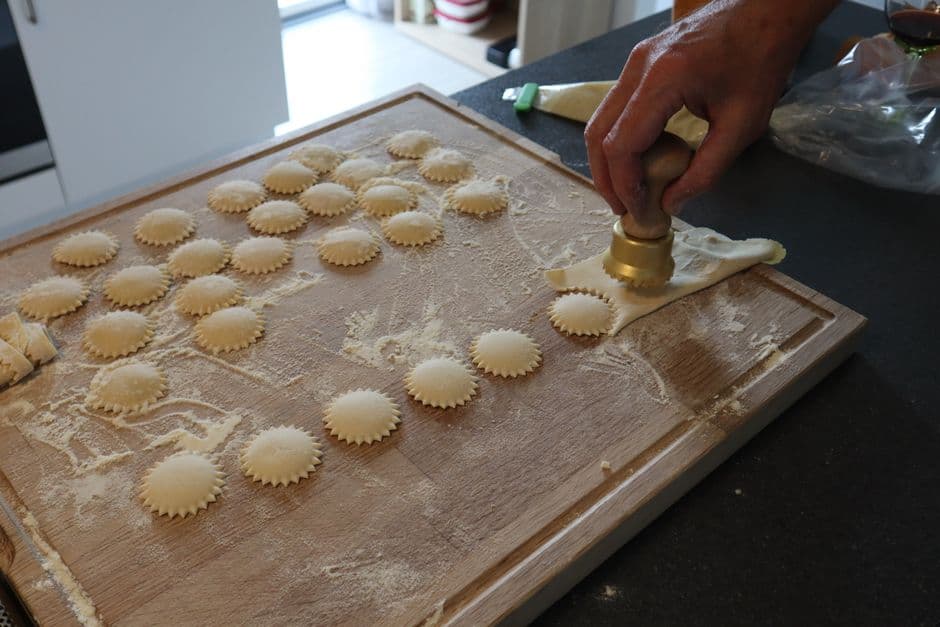
Roll the dough into thin sheets. Pipe small dots of filling in rows, fold the sheet over, press out air around each mound, and cut into small coins or crescents with a fluted cutter.
Seal firmly so the anolini don't burst in the broth.
- 5
Prepare the broth
Bring the capon broth to a gentle simmer and taste for seasoning. A clear, well-flavored brodo is the soul of the dish, so use a good homemade stock rather than cubes.
- 6
Cook the anolini
Drop the anolini into the simmering broth and cook 3 to 4 minutes until they float and the pasta is tender. Cook in batches so the broth stays at a gentle, even simmer.
- 7
Serve
Ladle the anolini and broth into warm bowls and finish with extra grated parmesan. Serve immediately while the broth is steaming and the pasta is delicate and silky.
Did you make this?
Rate it and help other cooks find the recipes that actually work.
One tap to sign in, and we'll save the rating you just picked.
Everything you need to plan your week — free
- Meal calendar
- Grocery list
- AI recipe ideas
Track what you eat
Snap your meal to log calories and macros, run fasting timers and track water in the free SnapCal app.
Pro Tips
- →
The filling's flavor comes from the braising juices, so reduce them well.
- →
Roll the pasta as thin as possible for delicate anolini.
- →
Seal each piece firmly to prevent bursting in the broth.
- →
Use real homemade broth; it defines the whole dish.
- →
Make a big batch and freeze uncooked anolini for later.
Variations
- •
Add a little of the shredded braised beef to the filling, Piacenza-style.
- •
Serve drained anolini with butter and sage instead of broth (asciutti).
- •
Use a capon-and-beef blended broth for extra richness.
- •
Finish with a drizzle of the reduced braising sauce for deeper flavor.
Storage
Freeze uncooked anolini in a single layer, then bag for up to 2 months; cook from frozen in broth. Cooked anolini keep 2 days refrigerated in their broth.
History & Origin
Anolini are a centuries-old specialty of Parma and Piacenza, traditionally served on Christmas Eve and feast days. The two cities famously differ on whether the filling should be pure breadcrumb-and-gravy paste or include the braised meat itself, a debate that endures to this day.
Frequently Asked Questions
Why isn't the braised meat in the filling?
In the classic Parma version, the long-braised beef flavors the filling only through its concentrated juices, which are worked into breadcrumbs and parmesan. The meat itself is often eaten separately. Piacenza's version, by contrast, does include the shredded meat.
Can I make anolini ahead of time?
Yes, they freeze excellently. Arrange the uncooked anolini on a tray in a single layer until frozen solid, then transfer to bags. Cook them directly from frozen in simmering broth, adding a minute or two to the cooking time.
What broth should I use?
Traditional anolini are served in capon broth, prized for its richness, but a good homemade beef or beef-and-chicken broth works well. The broth is central to the dish, so avoid bouillon cubes if you can; clarity and flavor make a real difference.
My anolini keep bursting in the broth. What went wrong?
Bursting usually means the edges weren't sealed tightly or air was trapped inside. Press out air around each mound and crimp firmly. Keeping the broth at a gentle simmer rather than a rolling boil also protects the delicate pasta.
Nutrition Facts
Per serving (350g / 12.3 oz) · 6 servings total
Time Summary
Have Questions?
Ask our AI cooking assistant anything about this recipe — substitutions, techniques, scaling.
Chat with AI Chef →Featured in Guides
This recipe is featured in the following curated guides:
More Italian Recipes
You Might Also Like
Similar dishes from other cuisines around the world.
Browse by Ingredient
More recipes built around the same core ingredients.
Free Kitchen Tools
Calculators and converters that pair with this page — no signup needed.
Put This Into a Plan
Schedule it, shop for it, and track what you already have.
Read Next
Longer reads that go deeper on the ideas behind this dish.
Community
Join the conversation
Sign in to leave a comment and save your favourite recipes