
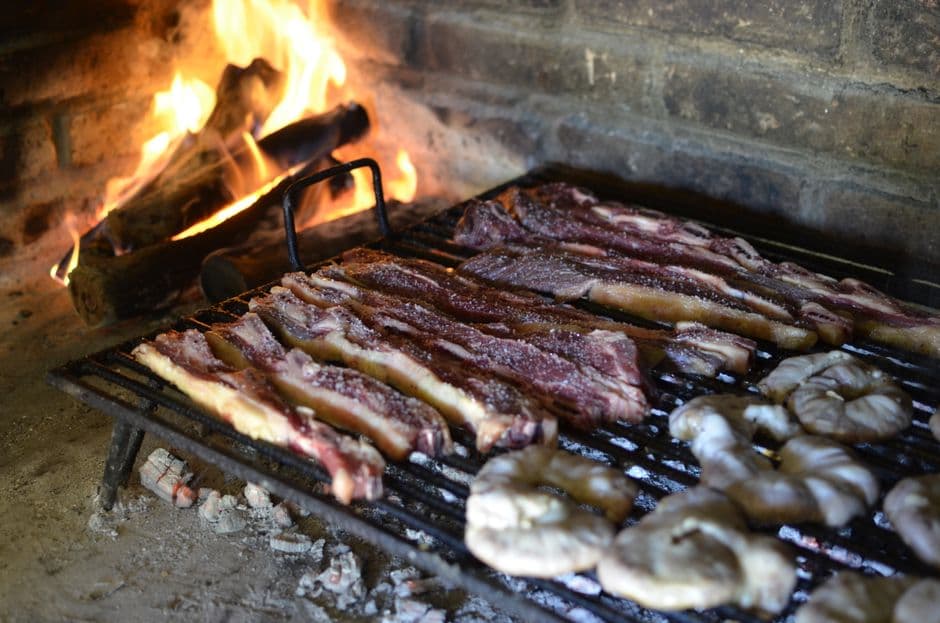
Argentine Asado con Chimichurri
The legendary Argentine grill — beef short ribs, flank steak and chorizo slow-cooked over wood embers, dressed with herbaceous chimichurri sauce.
About This Recipe
Asado is more than a meal in Argentina — it is a Sunday institution, a cultural rite, the centerpiece of family life and the source of national pride. A proper asado runs four hours: wood (quebracho or oak) is burned down to embers in a separate hearth, the embers shoveled under a horizontal parrilla grill, and cuts of beef cooked low and slow until the fat renders and the surfaces crust. The asador — the dedicated grill master, almost always male, often the family patriarch — chooses the cuts, paces the meal, and refuses help in a half-friendly Argentine standoff. Classic asado cuts come out in waves: first the achuras (offal — sweetbreads, blood sausage, chinchulines), then the chorizos and morcillas, then the ribs (asado de tira), and finally the larger steaks (vacío, bife de chorizo, entraña). The defining sauce is chimichurri — a brilliant green sauce of finely chopped flat-leaf parsley, garlic, dried oregano, red pepper flakes, red wine vinegar and olive oil, never blended, never with cilantro. It is spooned over the meat to taste, never marinated. The accompaniment is an undressed leaf salad, a baguette, and a bottle of Mendoza Malbec. This home version uses a charcoal grill and three classic cuts to recreate the spirit of asado without the parrilla setup. Eaten outdoors, slowly, with three generations at the table.
Ingredients
Serves 6
- 1.5 kgbeef short ribs, English-cut crosswise into 4 cm strips (asado de tira)
- 800 gflank steak (vacío) or skirt steak (entraña)
- 6fresh Argentine chorizo or any coarse pork sausage (not Spanish chorizo)
- coarse sea salt (sal parrillera)
- 1 large bunchflat-leaf parsley, leaves only, very finely chopped (about 80 g)
- 6 clovesgarlic, finely minced
- 2 tbspdried oregano (preferably Mediterranean)
- 1 tspred pepper flakes (or 1 fresh aji molido)
- 120 mlred wine vinegar
- 150 mlgood olive oil
- 60 mlwarm water
- 1 tspfine sea salt
- 1/2 tspfreshly ground black pepper
- crusty baguette, sliced, to serve
- simple green leaf salad with oil and vinegar
- 1 bottleArgentine Malbec, room temperature
Instructions
- 1
Make chimichurri first (it improves)
In a glass bowl, combine the finely chopped parsley, minced garlic, dried oregano, red pepper flakes, salt and pepper. Stir in the red wine vinegar and warm water; let sit 5 minutes to soften the dried herbs. Whisk in the olive oil last. Taste — it should be tangy, herbal, gently spicy. Cover and let sit at room temperature 1–24 hours; it gets better with time. Never blend — chimichurri is a chopped sauce, not a puree.
- 2
Build the fire properly
Light a chimney of natural hardwood charcoal — never lighter fluid (it taints the meat). Once fully white-ashed, spread the coals into a thick bed on one side of the grill, leaving the other side empty for indirect cooking. The grill should be hot enough that you can hold your hand 12 cm above the grate for only 3–4 seconds.
- 3
Salt the meats
Pat all the meats very dry. Salt the short ribs and flank steak generously with coarse salt at least 30 minutes before grilling — Argentine asadores often salt 1 hour ahead. Do not season with anything else; the chimichurri provides all the flavor. Leave the chorizos plain.
- 4
Start with chorizos
Place the chorizos over the indirect side of the grill (cooler zone) for 10 minutes, turning occasionally — this melts the fat slowly without bursting the casings. Then move over direct heat 4 minutes per side until darkly caramelized. Pull and slice on the bias for the first round.
- 5
Cook the short ribs slowly
Lay the short rib strips bone-side down over the indirect side. Cover with a piece of foil tented (or close the grill lid). Cook 45 minutes, then flip to meat-side down for 15 minutes — the bone shields the meat from the heat. The ribs should be deeply browned, with rendered fat dripping into the embers (causing flare-ups, which Argentines welcome for flavor).
- 6
Grill the flank steak
Move the flank steak to direct heat. Sear 4 minutes per side for rare to medium-rare (internal 52°C / 125°F). Resist the urge to overcook — Argentine cuts like vacío and entraña are best at jugoso (juicy, medium-rare). Pull and rest 10 minutes.
- 7
Slice and plate
Slice the flank steak against the grain on a thick bias into 1 cm slices. Arrange the short ribs (still on the bone), the sliced flank steak and the chorizos on a large wooden board. Spoon chimichurri generously over the top or pour into a small bowl to pass at the table. Drizzle pan juices over.
- 8
Serve outdoors with reverence
Serve the asado at the table outdoors, with bread, simple salad and Malbec. Eat slowly, in waves — start with chorizo, then ribs, then steak, refilling glasses between cuts. The asado must take at least 90 minutes at the table; rushing an asado is a national insult.
Did you make this?
Rate it and help other cooks find the recipes that actually work.
One tap to sign in, and we'll save the rating you just picked.
Everything you need to plan your week — free
- Meal calendar
- Grocery list
- AI recipe ideas
Track what you eat
Snap your meal to log calories and macros, run fasting timers and track water in the free SnapCal app.
Pro Tips
- →
Real Argentine chimichurri uses parsley only (never cilantro) and is chopped by hand, never blended. The texture is the point — you should see and feel the herbs.
- →
Coarse sea salt (sal parrillera) is the only seasoning the meat needs; the surface salt forms a delicate crust as the meat cooks.
- →
Argentine beef is grass-fed and lean — buy the best grass-fed beef you can find, ideally from a butcher who specializes in South American cuts.
- →
Patience is non-negotiable. An asado is a 4-hour event in Argentina; rushing the fire or flipping the meat too much is the mark of an amateur asador.
Variations
- •
Whole-animal asado al asador: butterfly a whole lamb on a cross-shaped iron rack (cruz de asador) and roast slowly over an open fire 4–6 hours. The Patagonian extreme version.
- •
Sweetbreads and chinchulines: include molleja (sweetbreads) grilled with lemon, and chinchulines (small intestines) grilled until very crispy — the achuras course Argentines insist on.
- •
Add provoleta (grilled provolone): an entire small wheel of provolone seared in a small cast-iron pan over the fire until melted, dusted with oregano and red pepper.
- •
Chimichurri rojo: red chimichurri made with smoked paprika, ají molido and crushed tomato — the Patagonian variation.
Storage
Cooked asado meats refrigerate 2 days; reheat gently in a covered pan with a spoonful of beef stock. Chimichurri keeps refrigerated 2 weeks (flavor peaks at day 3–5) and is delicious on eggs, sandwiches, vegetables. Both meats and chimichurri freeze poorly — they're celebration foods meant to be eaten fresh.
History & Origin
Asado descends from gaucho cooking on the Argentine pampas in the 18th and 19th centuries, where cattle herders cooked fresh-killed beef on improvised iron stakes (asador) driven into the ground beside the fire. The parrilla grill emerged in 20th-century cities, codified the Sunday family asado, and made the asador a uniquely Argentine cultural figure.
Frequently Asked Questions
Can I do this on a gas grill?
You can, but it's not the same. Wood and charcoal smoke is half the flavor. If using gas, add a smoker box with quebracho or oak chips and accept that the result will be 70 percent as good.
What is 'punto' for steak in Argentina?
Argentines cook beef to 'jugoso' (juicy, medium-rare, 52°C) or 'a punto' (medium, 60°C). Well-done is considered a culinary insult to good beef. Pull the meat earlier than you think.
Can I marinate the meat in chimichurri?
No — chimichurri is a finishing sauce, never a marinade in Argentina. The vinegar would mask the beef flavor and toughen the surface. Spoon it on after slicing.
What kind of chorizo should I use?
Argentine fresh chorizo (criollo) — coarse pork, mild paprika, no smoke. Italian sweet sausage is the best widely available substitute. Spanish smoked chorizo is the wrong dish entirely.
Nutrition Facts
Per serving (380g / 13.4 oz) · 6 servings total
Time Summary
Have Questions?
Ask our AI cooking assistant anything about this recipe — substitutions, techniques, scaling.
Chat with AI Chef →More Argentinian Recipes
You Might Also Like
Similar dishes from other cuisines around the world.
Browse by Ingredient
More recipes built around the same core ingredients.
Free Kitchen Tools
Calculators and converters that pair with this page — no signup needed.
Put This Into a Plan
Schedule it, shop for it, and track what you already have.
Read Next
Longer reads that go deeper on the ideas behind this dish.
Community
Join the conversation
Sign in to leave a comment and save your favourite recipes