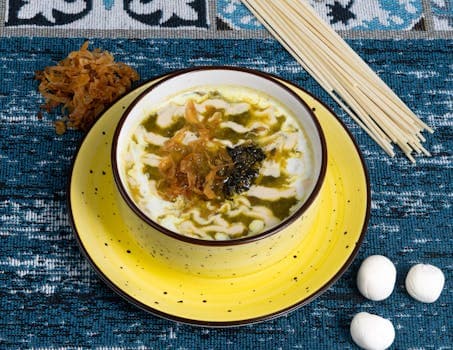
A thick, hearty Persian soup of noodles, legumes and fresh herbs, topped with kashk, caramelised onion and mint oil.
Ash reshteh is one of the most beloved dishes in Persian cuisine β a thick, nourishing soup (ash) loaded with noodles (reshteh), a mix of legumes and an extraordinary quantity of fresh herbs: spinach, parsley, coriander and fenugreek leaves. It is traditionally made to celebrate Nowruz (Persian New Year) and the festival of Yalda, and is believed to bring good fortune. The toppings elevate this soup into something extraordinary: kashk (a thick, tangy whey), caramelised onions, fried dried mint bloomed in butter. Each topping adds a different dimension β creamy, sweet, herby β and they are swirled in just before eating.
Serves 6
Drain legumes. Cook chickpeas and kidney beans in a large pot with plenty of water for 45 minutes. Add lentils and cook further 30 minutes until all are tender.
Meanwhile, fry 2 diced onions in oil with turmeric until golden and soft. Add to the legume pot with noodles, spinach, parsley, coriander and fenugreek. Add water if needed to keep it thick-soup consistency.
Simmer 20β25 minutes until noodles are cooked and soup is thick. Season well with salt.
Fry sliced remaining onion in oil until deep golden-brown and caramelised. In a separate pan, bloom dried mint in melted butter for 30 seconds.
Don't burn the dried mint in butter β 30 seconds is all it needs to bloom.
Ladle soup into bowls. Top each with kashk (or sour cream), caramelised onion, and mint butter. Serve immediately.
The soup should be very thick β it's not a broth-based soup
Kashk is essential for authenticity; sour cream is a reasonable substitute
Don't burn the dried mint in butter β 30 seconds is all it needs to bloom
Taste and adjust salt at the very end β flavors concentrate as liquids reduce, and a final pinch of flaky salt sharpens the whole dish.
Add 200g of diced lamb shoulder to the soup for a more substantial version.
Omit butter and kashk; use olive oil and a drizzle of cashew cream for a vegan version.
Vegetarian: swap the protein for roasted king oyster mushrooms, smoked tofu or cooked chickpeas β adjust seasoning slightly upward to compensate.
Spicier: add a finely chopped fresh chile or a teaspoon of crushed Aleppo/Urfa pepper to the aromatics for warm, layered heat instead of a single sharp hit.
Refrigerate up to 4 days; it thickens further β add water when reheating.
Eaten on Nowruz (Persian New Year) and other celebrations for thousands of years. The noodles (reshteh) symbolise threading the path of life β eating them is believed to bring good fortune.
A thick, sour, concentrated whey product used extensively in Persian cooking. Find it in Middle Eastern stores; full-fat Greek yoghurt is a distant but acceptable substitute.
Yes β most of the components can be prepared up to a day in advance and refrigerated separately. Reheat gently and assemble just before serving so textures stay distinct.
Stay close to the role each ingredient plays: swap aromatics for similar ones (shallot for onion, lime for lemon), and keep the fat-acid-salt balance intact. Spice blends can usually be approximated with what's in the cupboard.
Authenticity sits on a spectrum β what matters more is honoring the technique and balance of flavors. If the dish tastes harmonious and respects how cooks in its home region would build it, you're on solid ground.
Per serving Β· 6 servings total
Ask our AI cooking assistant anything about this recipe β substitutions, techniques, scaling.
Chat with AI Chef βJoin the conversation
Sign in to leave a comment and save your favourite recipes