
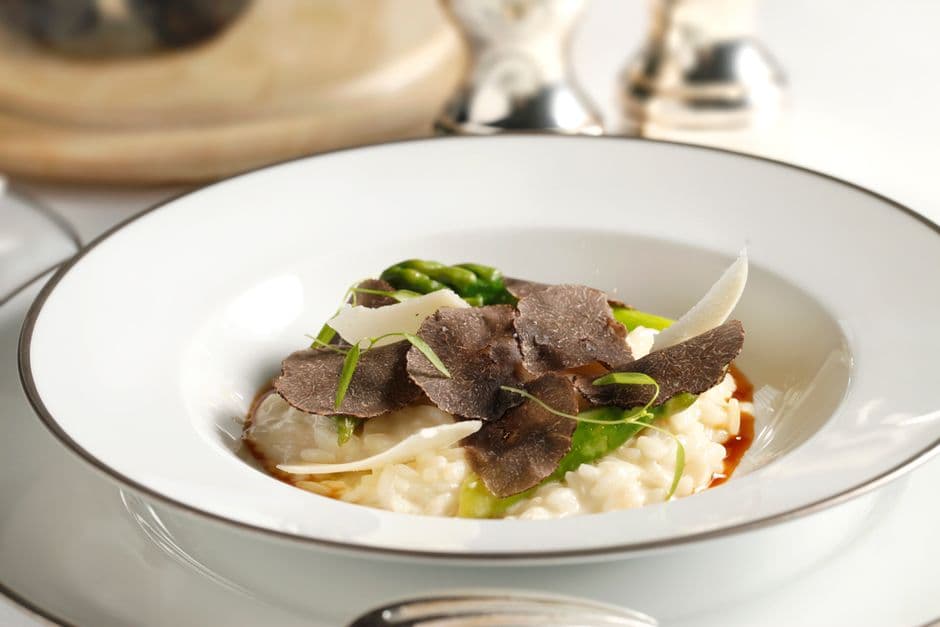
Asparagus Risotto
Creamy Northern Italian risotto with sweet spring asparagus, white wine, and parmesan.
About This Recipe
Asparagus risotto, or risotto agli asparagi, is a classic of Northern Italian spring cooking, where the season's tender asparagus is stirred into a creamy bed of slowly cooked Arborio or Carnaroli rice. The technique is meditative: rice is toasted in butter and onion, deglazed with white wine, then coaxed to creaminess by adding warm stock one ladle at a time while stirring. Cleverly, the woody asparagus ends are simmered into the stock to deepen its flavor, while the tender tips are reserved to fold in at the end for color and bite. A final mantecatura, vigorously beating in cold butter and parmesan off the heat, gives the risotto its signature glossy, all'onda consistency that ripples like a wave. Elegant yet comforting, it's a perfect showcase for spring's first asparagus.
Ingredients
Serves 4
- 320 gArborio or Carnaroli rice
- 500 gasparagus(trimmed)
- 1.2 Lvegetable or chicken stock(hot)
- 1 smallonion or shallot(finely chopped)
- 1/2 cupdry white wine
- 60 gunsalted butter(divided, cold)
- 60 gParmigiano-Reggiano(grated)
- 2 tbspolive oil
- to tastesalt and black pepper
Instructions
- 1
Prep the asparagus
Snap off the woody ends and reserve them. Cut the tender stalks into pieces and keep the tips separate. Drop the woody ends into the simmering stock to infuse it with asparagus flavor.
Don't waste the tough ends; they build a flavorful stock.
- 2
Toast the rice
Soften the onion in olive oil and a little butter over medium heat, then add the rice and toast for 2 minutes, stirring, until the grains are glossy and the edges turn translucent.
Toasting the rice keeps the grains separate and slightly firm.
- 3
Deglaze
Pour in the white wine and stir until it fully evaporates. This adds acidity and removes any raw alcohol while the rice begins to release its starch.
- 4
Add stock gradually
Strain out the asparagus ends, then add the hot stock one ladle at a time, stirring often and letting each addition absorb before adding more. This slow process draws out the creamy starch over about 16 to 18 minutes.
- 5
Add asparagus
Halfway through cooking, stir in the chopped asparagus stalks. Add the delicate tips in the final 4 to 5 minutes so they stay bright green and slightly crisp rather than mushy.
- 6
Check doneness
The risotto is ready when the rice is creamy but still al dente at the center, and the texture is loose and flowing. Adjust with a final splash of stock if it tightens up too much.
- 7
Mantecatura
Off the heat, vigorously beat in the cold butter and grated parmesan until glossy and creamy. Season, cover, and rest 1 minute. Serve immediately, loose and rippling on the plate.
Stirring in cold butter off-heat is what makes risotto luxuriously creamy.
Did you make this?
Rate it and help other cooks find the recipes that actually work.
One tap to sign in, and we'll save the rating you just picked.
Everything you need to plan your week — free
- Meal calendar
- Grocery list
- AI recipe ideas
Track what you eat
Snap your meal to log calories and macros, run fasting timers and track water in the free SnapCal app.
Pro Tips
- →
Keep the stock hot; cold stock interrupts the cooking and texture.
- →
Simmer the woody asparagus ends in the stock for extra flavor.
- →
Add the tips late so they stay green and crisp.
- →
Beat in cold butter off the heat for the creamiest finish.
- →
Serve immediately; risotto stiffens quickly as it sits.
Variations
- •
Stir in lemon zest and peas for an extra-bright spring version.
- •
Add sauteed shrimp for a seafood risotto.
- •
Blend some cooked asparagus into a puree for a greener color and flavor.
- •
Finish with a spoonful of mascarpone for added richness.
Storage
Best eaten fresh. Leftovers keep 2 days refrigerated; reheat with extra stock, or form into arancini and fry.
History & Origin
Risotto is a hallmark of Northern Italy, particularly the rice-growing regions of Lombardy, Piedmont, and the Veneto. Pairing it with asparagus is a classic seasonal expression, celebrating the brief spring window when the vegetable is at its sweetest.
Frequently Asked Questions
What rice is best for risotto?
Short-grain Italian rices high in starch, such as Carnaroli, Arborio, or Vialone Nano, are ideal. Carnaroli is prized for holding its bite while releasing creaminess. Avoid long-grain or rinsed rice, since the surface starch is exactly what makes risotto creamy.
Why is my risotto gluey or mushy?
Overstirring, too much heat, or overcooking can break down the grains into a paste. Stir often but not constantly, keep a gentle simmer, and stop cooking while the rice is still al dente. Adding stock gradually, not all at once, also helps.
Can I make asparagus risotto vegetarian or vegan?
Yes. Use vegetable stock to keep it vegetarian. For a vegan version, replace the butter with good olive oil or vegan butter and skip the parmesan or use a plant-based alternative, leaning on the asparagus stock and lemon for flavor.
How do I keep the asparagus bright green?
Add the tender tips only in the last few minutes of cooking so they stay vivid and slightly crisp. Overcooking turns asparagus drab and soft. For an even brighter dish, you can blanch the tips separately and fold them in at the very end.
Nutrition Facts
Per serving (350g / 12.3 oz) · 4 servings total
Time Summary
Have Questions?
Ask our AI cooking assistant anything about this recipe — substitutions, techniques, scaling.
Chat with AI Chef →Featured in Guides
This recipe is featured in the following curated guides:
More Italian Recipes
You Might Also Like
Similar dishes from other cuisines around the world.
Browse by Ingredient
More recipes built around the same core ingredients.
Free Kitchen Tools
Calculators and converters that pair with this page — no signup needed.
Put This Into a Plan
Schedule it, shop for it, and track what you already have.
Read Next
Longer reads that go deeper on the ideas behind this dish.
Community
Join the conversation
Sign in to leave a comment and save your favourite recipes