
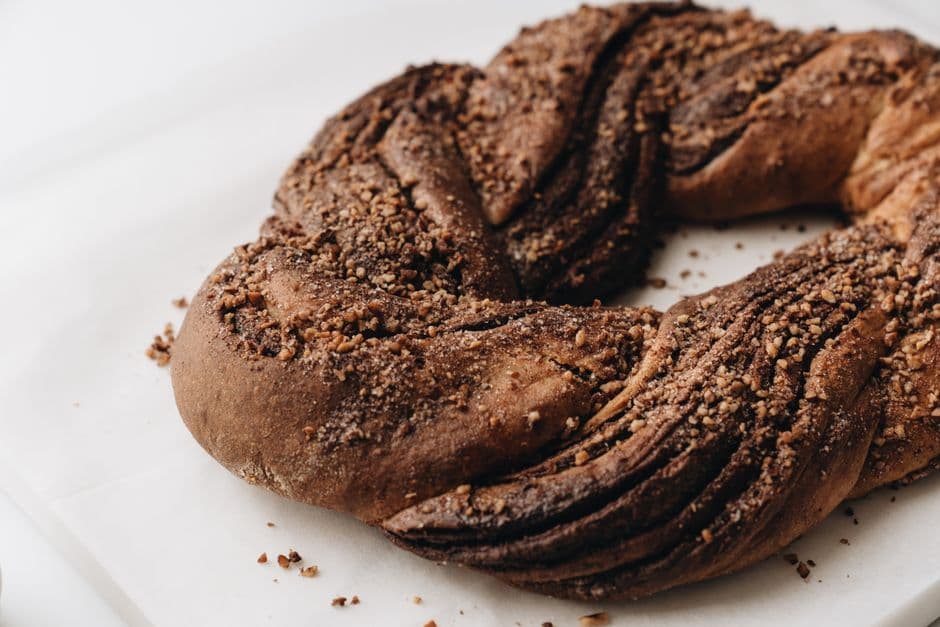
Chocolate Babka
Rich, buttery Eastern European yeast bread swirled with chocolate and baked into a glossy braided loaf.
About This Recipe
Babka is a sweet, enriched yeast bread of Eastern European Jewish origin, famous for its dramatic swirls of chocolate or cinnamon running through a tender, buttery crumb. The dough is laminated with butter-like richness, rolled thin, spread generously with a dark chocolate filling, then rolled, cut lengthwise, and twisted into a braid that reveals layered ribbons of dough and filling when sliced. Baked until deep golden and often brushed with a sugar syrup for shine, babka is at once breakfast bread and dessert. Its name comes from the Slavic word for grandmother, and the loaf likely evolved from leftover challah dough rolled with sweet fillings. Patient proofing and a high butter content make babka indulgent and time-consuming, but the showstopping marbled interior rewards the effort.
Ingredients
Serves 10
- 500 gbread flour
- 100 ggranulated sugar
- 7 ginstant yeast
- 2 largeeggs(plus 1 yolk)
- 120 mlwarm milk
- 120 gunsalted butter(softened, for dough)
- 1/2 tspfine salt
- 150 gdark chocolate(for filling)
- 80 gbutter(for filling)
- 40 gcocoa powder
- 100 gsugar(for filling and syrup)
Instructions
- 1
Make the dough
Mix flour, sugar, yeast, salt, eggs, yolk, and warm milk until a shaggy dough forms, then knead 8 minutes. Add the softened butter gradually, kneading until smooth, glossy, and elastic, about 10 more minutes.
The dough is very soft; resist adding too much extra flour.
- 2
First rise
Cover the dough and let it rise until doubled, about 1.5 to 2 hours. For best flavor and easier rolling, chill it in the refrigerator for at least 1 hour or overnight after it rises.
- 3
Make the filling
Melt the dark chocolate and butter together, then stir in the cocoa powder and sugar to form a spreadable paste. Let it cool slightly so it's thick enough to spread without soaking into the dough.
- 4
Roll and fill
Roll the chilled dough into a large rectangle about 5 mm thick. Spread the chocolate filling evenly to the edges, leaving a small border, then roll it tightly into a log from the long side.
A tight roll gives more defined swirls in the finished loaf.
- 5
Cut and braid
Slice the log in half lengthwise to expose the layers, then twist the two halves over each other into a braid with the cut sides facing up. Tuck the ends under and place in a lined loaf pan.
- 6
Second rise
Cover loosely and let the shaped babka proof for 45 to 60 minutes until visibly puffy and nearly filling the pan. Heat the oven to 180°C (350°F) toward the end of proofing.
- 7
Bake and syrup
Bake 30 to 35 minutes until deep golden and set, tenting with foil if it browns too fast. While warm, brush generously with a simple sugar syrup for shine and moisture, then cool before slicing.
The syrup soak keeps the loaf moist and gives it a bakery sheen.
Did you make this?
Rate it and help other cooks find the recipes that actually work.
One tap to sign in, and we'll save the rating you just picked.
Everything you need to plan your week — free
- Meal calendar
- Grocery list
- AI recipe ideas
Track what you eat
Snap your meal to log calories and macros, run fasting timers and track water in the free SnapCal app.
Pro Tips
- →
Chill the dough before rolling; cold dough is far easier to handle.
- →
Spread the filling to the edges so every slice has chocolate.
- →
Roll the log tightly for cleaner, more defined swirls.
- →
Brush with sugar syrup while warm for shine and moisture.
- →
Don't skip the long proofs; babka needs time for a tender crumb.
Variations
- •
Swap the filling for cinnamon-sugar to make classic cinnamon babka.
- •
Add a layer of Nutella or hazelnut spread for extra richness.
- •
Sprinkle a streusel crumb topping before baking.
- •
Fold chopped toasted pecans or chocolate chips into the filling.
Storage
Wrap tightly and keep at room temperature up to 3 days, or freeze up to 2 months. Warm slices briefly to revive the soft, buttery crumb.
History & Origin
Babka emerged in the Jewish communities of Eastern Europe, particularly Poland and Ukraine, likely from leftover challah dough rolled with sweet fillings. Its name derives from the Slavic word for grandmother. Jewish immigrants later popularized chocolate babka in cities like New York.
Frequently Asked Questions
Why is my babka dough so sticky?
Babka dough is deliberately rich and soft because of its high butter and egg content, and stickiness is normal. Resist adding lots of flour, which makes it dense. Instead, knead thoroughly and chill the dough; cold butter firms it up and makes it easy to roll.
Can I make babka without a stand mixer?
Yes, but be prepared for a workout. Kneading the buttery dough by hand takes patience, especially when incorporating the softened butter. Using the slap-and-fold technique helps develop the gluten. Chilling the dough afterward makes the rolling and shaping far more manageable.
What does the sugar syrup do?
Brushing warm babka with simple syrup keeps the loaf moist, adds sweetness, and gives the crust an attractive glossy sheen. It's a traditional finishing step that helps the bread stay fresh longer and gives it that polished, bakery-quality appearance.
Can I prepare babka in advance?
Yes, the dough actually benefits from an overnight rest in the refrigerator, which deepens flavor and firms the butter. You can also fully assemble the shaped loaf, refrigerate it overnight, then let it come to room temperature and proof before baking the next day.
Nutrition Facts
Per serving (100g / 3.5 oz) · 10 servings total
Time Summary
Have Questions?
Ask our AI cooking assistant anything about this recipe — substitutions, techniques, scaling.
Chat with AI Chef →Featured in Guides
This recipe is featured in the following curated guides:
More Polish Recipes
You Might Also Like
Similar dishes from other cuisines around the world.
Browse by Ingredient
More recipes built around the same core ingredients.
Free Kitchen Tools
Calculators and converters that pair with this page — no signup needed.
Put This Into a Plan
Schedule it, shop for it, and track what you already have.
Read Next
Longer reads that go deeper on the ideas behind this dish.
Community
Join the conversation
Sign in to leave a comment and save your favourite recipes