
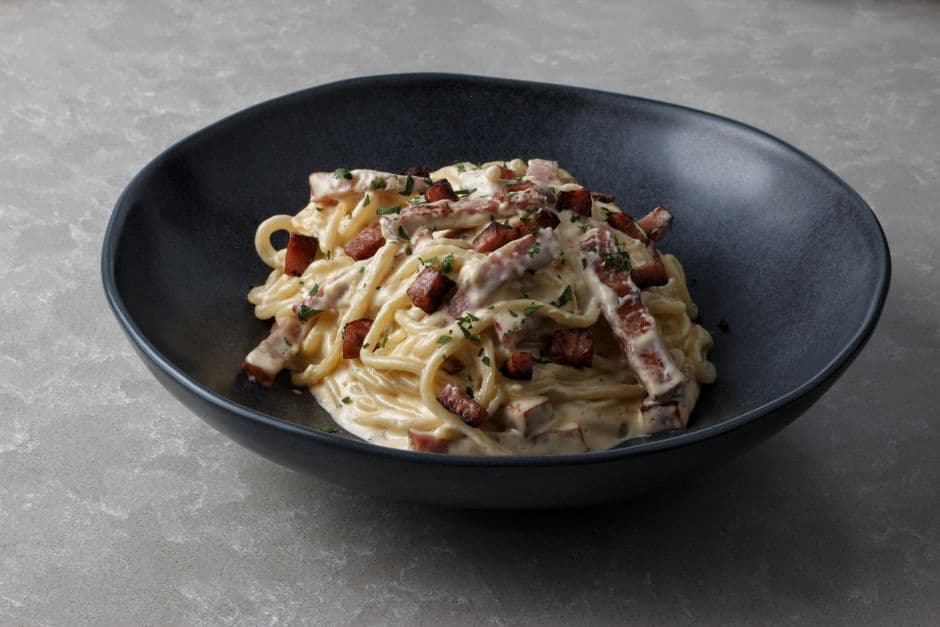
Bacon Carbonara
Silky Roman pasta with eggs, pecorino, black pepper, and crisp bacon, made entirely without cream.
About This Recipe
Carbonara is one of Rome's most iconic pasta dishes: spaghetti coated in a glossy, creamy sauce made from nothing but eggs, hard cheese, cured pork, and black pepper. Crucially, authentic carbonara contains no cream whatsoever, its silkiness comes from emulsifying beaten eggs and grated pecorino with hot, starchy pasta water off the heat. Traditionally made with guanciale (cured pork jowl), this everyday version uses crisp bacon, rendering its fat to flavor the pasta. The key technique is temperature control: the egg-and-cheese mixture must be combined with the hot pasta away from direct heat so it thickens into a velvety sauce rather than scrambling. Sharp pecorino and a generous hit of freshly cracked black pepper give carbonara its signature savory bite. Fast, rich, and deeply satisfying, it's Roman comfort food at its purest.
Ingredients
Serves 4
- 400 gspaghetti
- 200 gbacon(or guanciale, diced)
- 4 largeegg yolks(plus 1 whole egg)
- 80 gPecorino Romano(finely grated)
- 30 gParmigiano-Reggiano(grated, optional)
- 2 tspblack pepper(freshly cracked)
- to tastesalt for the pasta water
Instructions
- 1
Boil the pasta
Cook the spaghetti in well-salted boiling water until al dente. The starchy water is essential to the sauce, so reserve a generous cup before draining. Don't oversalt, since the bacon and cheese are salty.
Reserve more pasta water than you think you'll need.
- 2
Crisp the bacon
While the pasta cooks, fry the diced bacon in a cold, dry skillet over medium heat until the fat renders and the pieces are golden and crisp, about 6 to 8 minutes. Leave the rendered fat in the pan.
Starting in a cold pan renders the fat without burning the meat.
- 3
Make the egg mixture
In a bowl, whisk the egg yolks, whole egg, grated pecorino and parmesan, and plenty of black pepper into a thick paste. This raw mixture becomes the creamy sauce, with no cream needed.
- 4
Temper the eggs
Slowly whisk a few tablespoons of hot pasta water into the egg-and-cheese mixture. This gently warms it and loosens it into a pourable sauce, reducing the risk of scrambling when it meets the pasta.
Add the water gradually while whisking constantly.
- 5
Combine off the heat
Drain the pasta and add it to the skillet with the bacon, off the heat. Pour in the egg mixture and toss vigorously, adding splashes of pasta water until a glossy, creamy sauce coats every strand.
Keep the pan off direct heat so the eggs thicken but don't scramble.
- 6
Adjust and serve
If the sauce is too thick, loosen it with more hot pasta water; if too loose, toss over very low residual heat for a few seconds. Serve immediately with extra pecorino and cracked black pepper on top.
Did you make this?
Rate it and help other cooks find the recipes that actually work.
One tap to sign in, and we'll save the rating you just picked.
Everything you need to plan your week — free
- Meal calendar
- Grocery list
- AI recipe ideas
Track what you eat
Snap your meal to log calories and macros, run fasting timers and track water in the free SnapCal app.
Pro Tips
- →
Never use cream; real carbonara is made only with eggs and cheese.
- →
Combine the eggs with the pasta off the heat to avoid scrambling.
- →
Reserve plenty of starchy pasta water to control the sauce.
- →
Use mostly yolks for the richest, silkiest texture.
- →
Grate the cheese finely so it melts smoothly into the sauce.
Variations
- •
Use traditional guanciale instead of bacon for the authentic Roman flavor.
- •
Add a handful of fresh peas for color and sweetness.
- •
Swap pecorino for a mix of pecorino and parmesan for a milder edge.
- •
Use rigatoni or bucatini instead of spaghetti.
Storage
Carbonara is best eaten immediately and doesn't store well, as reheating tends to scramble the egg sauce. If needed, refrigerate up to 1 day and reheat very gently with a splash of water.
History & Origin
Carbonara emerged in mid-20th-century Rome, with debated origins ranging from Roman charcoal workers to American soldiers' bacon and eggs after World War II. Despite many modern adaptations, traditional Italian carbonara has never included cream, relying solely on eggs, cheese, and pork fat.
Frequently Asked Questions
Does authentic carbonara contain cream?
No. Real Roman carbonara never uses cream. Its signature silky texture comes entirely from emulsifying beaten eggs and grated pecorino with hot, starchy pasta water. Adding cream is a common shortcut abroad, but Italians consider it inauthentic and unnecessary for a creamy result.
How do I keep the eggs from scrambling?
Combine the egg-and-cheese mixture with the pasta off the heat, away from a hot burner. Temper the eggs first with a little hot pasta water, then toss everything quickly. The residual heat of the pasta gently thickens the sauce without cooking the eggs into curds.
What's the difference between bacon and guanciale here?
Guanciale, cured pork jowl, is the traditional choice and has a richer, more delicate fat and deeper flavor. Bacon is smokier and easier to find, making a delicious everyday substitute. Pancetta is another good option that sits flavor-wise between the two.
Why is my carbonara dry or clumpy?
It usually means there wasn't enough pasta water or the sauce overheated and the cheese seized. Add hot pasta water gradually while tossing to build a smooth emulsion, and keep the pan off direct heat. Finely grated cheese also melts more evenly.
Nutrition Facts
Per serving (300g / 10.6 oz) · 4 servings total
Time Summary
Have Questions?
Ask our AI cooking assistant anything about this recipe — substitutions, techniques, scaling.
Chat with AI Chef →Featured in Guides
This recipe is featured in the following curated guides:
More Italian Recipes
You Might Also Like
Similar dishes from other cuisines around the world.
Browse by Ingredient
More recipes built around the same core ingredients.
Free Kitchen Tools
Calculators and converters that pair with this page — no signup needed.
Put This Into a Plan
Schedule it, shop for it, and track what you already have.
Read Next
Longer reads that go deeper on the ideas behind this dish.
Community
Join the conversation
Sign in to leave a comment and save your favourite recipes