
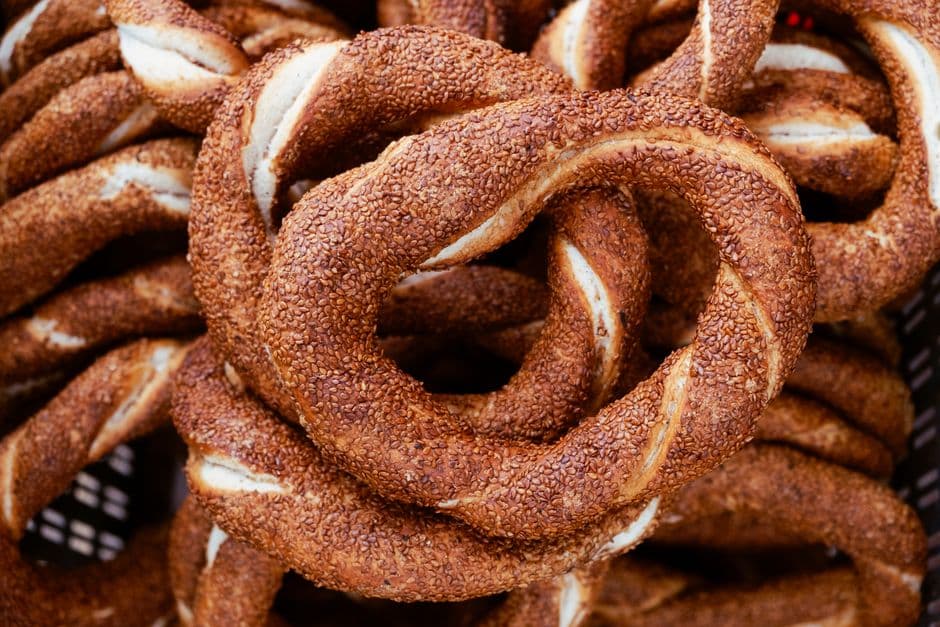
Simit-Style Sesame Bagel
Chewy, golden sesame-coated bread rings inspired by the iconic Turkish simit — boiled in molasses water for a glossy crust and distinctive sweet-savory flavor.
About This Recipe
While the New York bagel gets all the press, Turkey has its own magnificent ring bread: the simit (also called gevrek in some regions), which has fed Istanbul's streets for centuries. This recipe takes the bagel format and infuses it with the quintessential simit technique — dipping the shaped rings in a grape molasses (pekmez) and water solution before coating them in sesame seeds and baking at high heat. The molasses bath is the key to the characteristic flavor and the deep golden color of a proper simit. Without it, you get a plain roll; with it, you get a complex, lightly sweet, nutty crust that shatters slightly at first bite. The dough itself is simple — bread flour, yeast, salt, and water — but it must be kneaded until it passes the windowpane test to develop the gluten structure that gives the ring its satisfying chew. Shaping requires a bit of practice: the dough is rolled into long ropes, formed into rings, pressed together firmly, then given their molasses dip before being packed generously with sesame seeds. Baking at 220°C on a preheated surface gives the bottom immediate oven spring. The result, eaten still warm with white cheese (beyaz peynir), is one of the great simple pleasures of Turkish breakfast culture.
Ingredients
Serves 8
- 500 gbread flour (strong flour)
- 7 ginstant yeast
- 1.5 tspsalt
- 1 tspsugar
- 300 mlwarm water
- 2 tbspgrape molasses (pekmez)(or pomegranate molasses)
- 2 tbspwater(for the dipping solution)
- 200 gsesame seeds
Instructions
- 1
Make the Dough
Combine flour, yeast, sugar, and salt in a large bowl. Add the warm water gradually and mix until a shaggy dough forms. Turn out onto an unfloured surface and knead vigorously for 10 minutes until smooth, elastic, and passing the windowpane test — stretch a small piece; it should become translucent without tearing.
Resist adding more flour even if the dough feels sticky at first — a wetter dough produces a chewier crumb.
- 2
First Rise
Place the dough in a lightly oiled bowl, cover with a damp cloth, and leave in a warm spot (25-28°C) for 1 hour until doubled in size. If your kitchen is cool, place the bowl inside a cold oven with just the oven light on.
- 3
Shape the Rings
Punch down the dough and divide into 8 equal pieces (about 100g each). Roll each piece into a 50cm rope of even thickness. Form each rope into a ring, overlapping the ends by 3cm and pressing firmly together. The joint must be secure or the ring will split during baking.
- 4
Prepare the Molasses Dip
Whisk the grape molasses with 2 tablespoons of water in a wide shallow bowl until combined. Pour the sesame seeds onto a large plate. Preheat oven to 220°C (fan 200°C) and place a baking tray inside to heat up.
- 5
Dip and Coat
Working with one ring at a time, dip both sides briefly in the molasses solution — about 3 seconds per side. Lift out, let the excess drip off for a moment, then press both sides firmly into the sesame seeds until fully coated. The seeds should adhere in a dense, even layer.
Press the sesame seeds firmly — they should stick completely, not fall off. If they do fall off, the molasses dip is too watery.
- 6
Bake
Carefully slide the sesame-coated rings onto the preheated baking tray. Bake at 220°C for 18-22 minutes until deeply golden brown all over. The rings should sound hollow when tapped on the bottom. Cool on a wire rack for at least 5 minutes before eating.
Did you make this?
Rate it and help other cooks find the recipes that actually work.
One tap to sign in, and we'll save the rating you just picked.
Everything you need to plan your week — free
- Meal calendar
- Grocery list
- AI recipe ideas
Track what you eat
Snap your meal to log calories and macros, run fasting timers and track water in the free SnapCal app.
Pro Tips
- →
Grape molasses (üzüm pekmezi) gives the most authentic flavor — find it at Turkish or Middle Eastern grocers. Pomegranate molasses works as a substitute.
- →
Toast the sesame seeds in a dry pan for 2 minutes before use to intensify their nutty flavor.
- →
Preheat the baking tray in the oven — placing rings on a cold tray yields a soft rather than crispy bottom.
- →
Fresh simit is best eaten within 2 hours of baking; the crust softens significantly overnight.
- →
For extra chew, replace 20% of the bread flour with semolina flour.
Variations
- •
Nigella seed simit: replace half the sesame seeds with nigella (çörek otu) seeds for a slightly bitter, onion-like flavor.
- •
Cheese-filled: flatten the rope slightly, lay a strip of white cheese along the center, fold the dough over, seal, then shape into a ring.
- •
Wholemeal version: substitute 150g of the bread flour with whole wheat flour for a nuttier, denser ring.
- •
Mini simit for mezze: make 16 small rings (50g each) as cocktail-sized snacks.
Storage
Store simit at room temperature in a paper bag (not plastic) for up to 1 day — plastic traps moisture and makes the crust soggy. To refresh day-old simit, run under cold water briefly and bake at 180°C for 5 minutes. Simit can be frozen baked; reheat from frozen at 180°C for 10 minutes.
History & Origin
Simit has been sold on the streets of Istanbul since at least the 16th century — Ottoman records from 1525 document simitçi (simit sellers) operating around the Grand Bazaar. The ring shape may derive from Byzantine bread traditions. In Istanbul it is eaten daily by millions as a street breakfast with tea; in Izmir the same bread is called gevrek. The word simit itself likely comes from the Arabic samid, meaning fine white flour.
Frequently Asked Questions
Why do my sesame seeds fall off after baking?
The molasses dipping solution is likely too thin. The mixture should be syrupy enough to act as a glue — if your molasses is very liquid, reduce the added water. Also press the rings firmly into the seeds rather than just resting them on top.
Can I make these without grape molasses?
Yes. A mixture of 1 tablespoon pomegranate molasses or honey with 2 tablespoons water gives a similar sticky coating. Plain water alone will not hold the seeds properly and the crust will lack that characteristic sweet-savory depth.
How do I know when the simit is done?
The rings should be a deep amber-brown, not just golden. Tap the bottom — it should sound hollow. If the tops are browning faster than the bottoms, rotate the tray halfway through baking.
Can I make the dough the night before?
Yes — after shaping the rings, place them on a tray, cover with cling film, and refrigerate overnight for a slow cold fermentation. Dip in molasses and coat with seeds directly from the fridge, then bake adding 3-5 minutes to the baking time.
Nutrition Facts
Per serving (120g / 4.2 oz) · 8 servings total
Time Summary
Have Questions?
Ask our AI cooking assistant anything about this recipe — substitutions, techniques, scaling.
Chat with AI Chef →Featured in Guides
This recipe is featured in the following curated guides:
More Turkish Recipes
You Might Also Like
Similar dishes from other cuisines around the world.
Free Kitchen Tools
Calculators and converters that pair with this page — no signup needed.
Put This Into a Plan
Schedule it, shop for it, and track what you already have.
Read Next
Longer reads that go deeper on the ideas behind this dish.
Community
Join the conversation
Sign in to leave a comment and save your favourite recipes