
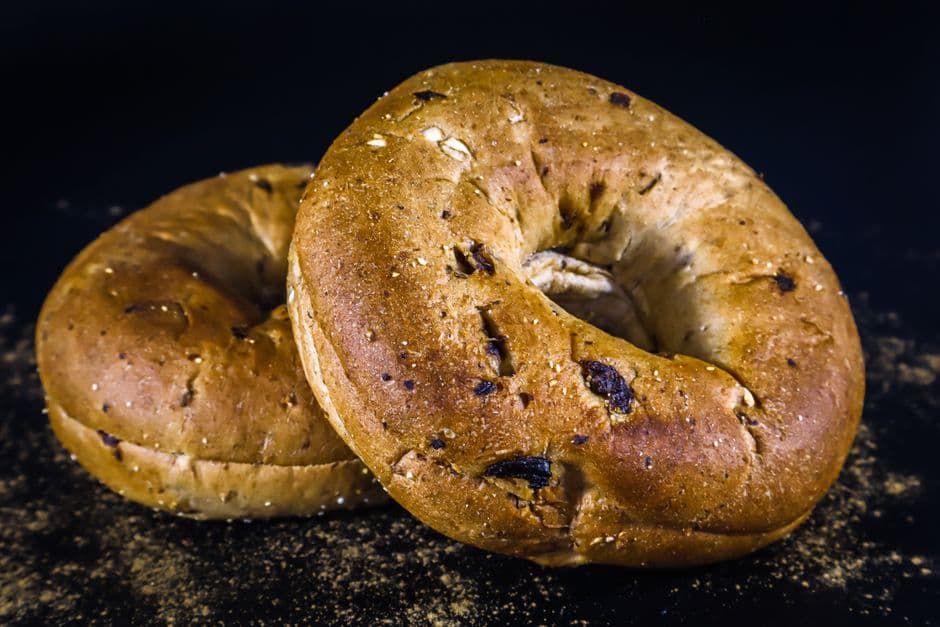
Bagels
Chewy, boiled-then-baked rolls with a shiny crust, the classic New York-style breakfast bread.
About This Recipe
Bagels are dense, chewy ring-shaped rolls distinguished by one essential step: they're boiled before baking. This brief bath in water, often sweetened with malt or honey, gelatinizes the surface starch, giving bagels their signature glossy, chewy crust and tight, satisfying crumb. Brought to America by Eastern European Jewish immigrants, the bagel became a New York icon, traditionally split, toasted, and topped with cream cheese and lox. Making them at home requires a stiff, low-hydration dough kneaded until smooth and elastic, then shaped into rings, proofed, boiled, and baked until deep golden. The dough's high protein content and the boiling step are what separate a true bagel from an ordinary bread roll. Topped with sesame, poppy seeds, or everything seasoning, fresh homemade bagels are far superior to store-bought.
Ingredients
Serves 8
- 500 gbread flour(high protein)
- 300 mlwarm water
- 7 ginstant yeast
- 2 tspsalt
- 1 tbspbarley malt syrup(or honey)
- 2 tbspmalt syrup or honey(for the boiling water)
- 1 tbspbaking soda(for the boiling water)
- 1 eachegg(for egg wash)
- to tastesesame or poppy seeds(for topping)
Instructions
- 1
Make a stiff dough
Mix the flour, yeast, salt, malt syrup, and warm water into a firm, fairly dry dough. Bagel dough is intentionally low in hydration, which gives the dense, chewy texture, so it will feel stiffer than bread dough.
Add water sparingly; a too-wet dough yields soft, breadlike bagels.
- 2
Knead well
Knead the dough for 10 to 12 minutes until very smooth and elastic. This stiff dough takes effort, but thorough kneading develops the strong gluten network that gives bagels their characteristic chew.
- 3
First rise
Place the dough in a lightly oiled bowl, cover, and let it rise for about 1 hour until noticeably puffed, though it won't double as dramatically as softer doughs because of its density.
- 4
Shape the rings
Divide the dough into 8 pieces, roll each into a ball, then poke a hole through the center and stretch it into a ring with a generous hole. The hole shrinks during proofing and boiling, so make it wide.
A large hole keeps the bagels from closing up into rolls.
- 5
Proof and chill
Let the shaped bagels proof 20 to 30 minutes, then ideally refrigerate them for several hours or overnight. A cold proof develops flavor and firms the dough for easier handling and a chewier crust.
- 6
Boil
Bring a large pot of water with malt syrup and baking soda to a boil. Boil the bagels 60 to 90 seconds per side; longer boiling gives a thicker, chewier crust. Lift out and drain briefly.
The baking soda boost gives a deeper color and chewier crust.
- 7
Top and bake
Brush the boiled bagels with egg wash and dip or sprinkle with seeds. Bake at 220°C (425°F) for 18 to 22 minutes until deep golden brown. Cool on a rack before slicing and toasting.
Bake until well-browned; pale bagels taste underdone.
Did you make this?
Rate it and help other cooks find the recipes that actually work.
One tap to sign in, and we'll save the rating you just picked.
Everything you need to plan your week — free
- Meal calendar
- Grocery list
- AI recipe ideas
Track what you eat
Snap your meal to log calories and macros, run fasting timers and track water in the free SnapCal app.
Pro Tips
- →
Keep the dough stiff and low-hydration for authentic chew.
- →
Boil the bagels to set the crust; it's the defining step.
- →
Make a generous hole; it shrinks during boiling and baking.
- →
A cold overnight proof improves flavor and texture.
- →
Bake until deeply golden for the best crust.
Variations
- •
Sprinkle with everything bagel seasoning for a classic topping.
- •
Add cinnamon and raisins to the dough for sweet breakfast bagels.
- •
Knead in grated cheddar and top with more cheese before baking.
- •
Add onion flakes or garlic powder for savory varieties.
Storage
Best fresh the same day. Store cut and frozen in bags up to 2 months, toasting directly from frozen. At room temperature they stale quickly, so freezing is preferred.
History & Origin
Bagels originated among Jewish communities in Poland and were brought to North America by Eastern European immigrants in the late 19th and early 20th centuries. New York's hard-water bagels became legendary, traditionally eaten with cream cheese and smoked salmon.
Frequently Asked Questions
Why do you boil bagels before baking?
Boiling gelatinizes the starches on the surface, setting the crust before baking. This gives bagels their signature shiny, chewy exterior and dense interior. Skipping this step results in something closer to a bread roll, lacking the distinctive bagel texture and bite.
What does the malt syrup do?
Barley malt syrup adds the characteristic slightly sweet, malty bagel flavor and helps the crust brown deeply. Added to both the dough and the boiling water, it's a traditional ingredient. Honey is a reasonable substitute, though the flavor is slightly different.
Why are my bagels dense and flat instead of chewy?
This often comes from over-proofing, under-kneading, or too much water in the dough. Bagel dough should be stiff and well-developed. Make sure to knead thoroughly, keep hydration low, and don't let the shaped bagels over-rise before boiling and baking.
Can I make bagels without barley malt syrup?
Yes, honey or even brown sugar can stand in, both in the dough and the boiling water. The flavor and color will differ slightly, since malt gives a distinctive taste, but you'll still get a perfectly chewy, well-browned homemade bagel.
Nutrition Facts
Per serving (110g / 3.9 oz) · 8 servings total
Time Summary
Have Questions?
Ask our AI cooking assistant anything about this recipe — substitutions, techniques, scaling.
Chat with AI Chef →Featured in Guides
This recipe is featured in the following curated guides:
More American Recipes
You Might Also Like
Similar dishes from other cuisines around the world.
Free Kitchen Tools
Calculators and converters that pair with this page — no signup needed.
Put This Into a Plan
Schedule it, shop for it, and track what you already have.
Read Next
Longer reads that go deeper on the ideas behind this dish.
Community
Join the conversation
Sign in to leave a comment and save your favourite recipes