
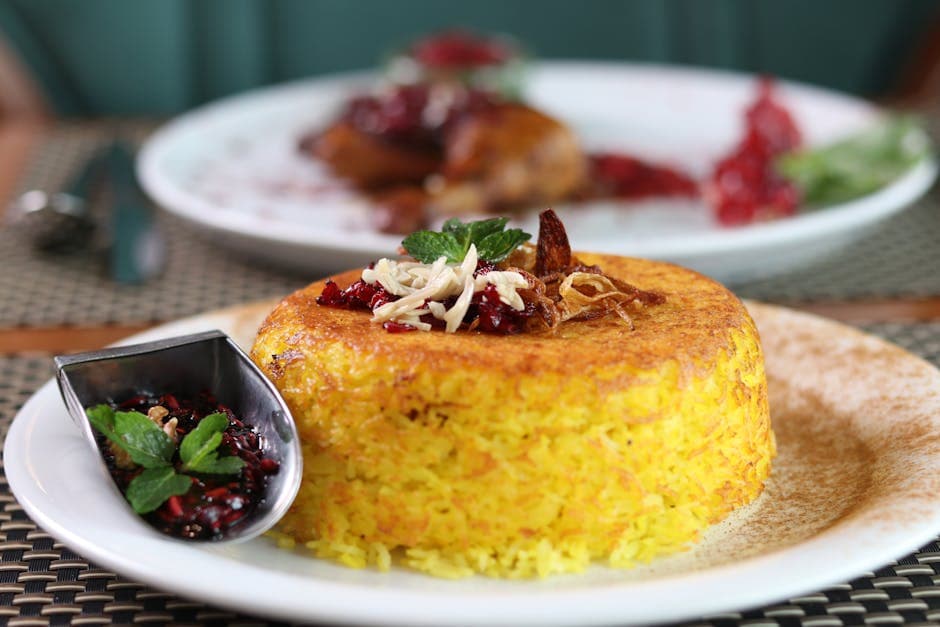
Baghali Polo
Persian dill and fava bean rice — the ultimate spring celebration dish.
About This Recipe
Baghali Polo is springtime on a platter — saffron-streaked basmati layered with sweet fava beans and an extravagant quantity of fresh dill, steamed polo-style until every grain stands separate and perfumed. It is the rice of celebrations: served at Nowruz tables and weddings across Iran, almost always crowned with slow-braised lamb shank (mahicheh), whose juices seep into the green-and-gold rice. The dish demonstrates the Persian genius for polo — rice as a composed dish rather than a side — and the towel-wrapped dam-steaming that produces both fluffy grains and a coveted tahdig crust. The green of dill and gold of saffron are read as symbols of renewal and prosperity.
Ingredients
Serves 6
- 3 cupsbasmati rice
- 2 cupsfava beans or edamame, peeled
- 2 cupsfresh dill, chopped
- 1 pinchsaffron, bloomed in hot water
- 4 tbspbutter or ghee
- 2 tspsalt
Instructions
- 1
Parboil rice
Rinse the basmati until the water runs clear and soak it in salted water for 1 hour. Boil in generously salted water for about 6 minutes until the grains are tender outside but still firm at the center, adding the fava beans for the final 2 minutes. Drain together.
Bite-test a grain: it should bend, not snap, with a thin white core remaining.
- 2
Make tahdig
Melt half the butter in a heavy non-stick pot over medium heat and swirl in a spoonful of saffron water. Spread a thin, even layer of the rice-bean mixture across the bottom and press lightly — this becomes the golden tahdig crust.
- 3
Layer
Gently toss the remaining rice and favas with the chopped dill, then mound the mixture over the base in a loose pyramid so steam can circulate. Poke 5–6 holes to the bottom with a spoon handle, dot with the remaining butter, drizzle with saffron water, and cover with a towel-wrapped lid.
Fold the dill through with a light hand — compacting the rice now means dense, sticky polo later.
- 4
Steam
Cook on medium-high for 5 minutes until steam rises and you hear a gentle sizzle, then reduce to the lowest heat and steam 45 minutes undisturbed. Rest off the heat 5 minutes, then either flip the whole pot onto a platter or spoon out the rice and break the tahdig into golden shards around it.
Did you make this?
Rate it and help other cooks find the recipes that actually work.
One tap to sign in, and we'll save the rating you just picked.
Everything you need to plan your week — free
- Meal calendar
- Grocery list
- AI recipe ideas
Track what you eat
Snap your meal to log calories and macros, run fasting timers and track water in the free SnapCal app.
Pro Tips
- →
Fresh dill makes an enormous difference — its volume looks excessive but cooks down into delicate perfume.
- →
Serve with slow-braised lamb shank (mahicheh) for the classic celebratory pairing.
- →
Double-peel fava beans (pod and inner skin) for the most tender, sweetest result.
- →
The towel-wrapped lid is essential: it traps condensation so the grains steam fluffy and separate.
- →
Bloom the saffron in hot — not boiling — water for at least 10 minutes to extract full color and aroma.
Variations
- •
Add sliced green garlic in spring, the traditional touch in northern Iran.
- •
Use frozen edamame or baby lima beans when fresh fava beans are out of season.
- •
Serve with saffron chicken instead of lamb shank for a lighter pairing.
- •
Make a vegetarian centerpiece by topping the polo with crispy fried onions and toasted nuts.
Storage
Refrigerate up to 2 days in a sealed container; the dill aroma fades after that. Reheat gently in a covered pan with a splash of water to revive the steam-fluffed texture — the tahdig itself does not store well.
History & Origin
Baghali Polo belongs to the grand Safavid-era tradition of polo, when Persian court kitchens codified rice cookery into an art and herbed rices became markers of refinement. Fava beans are among the oldest cultivated crops of the Iranian plateau, and their pairing with spring dill made this the natural dish of Nowruz, the Persian New Year at the spring equinox. Its green and gold colors are read as emblems of renewal, and the pairing with lamb shank remains Iran's quintessential festive plate.
Frequently Asked Questions
Can I use dried dill?
Fresh dill is strongly preferred — its bright, grassy perfume defines the dish. In Iran, cooks who must use dried dill (shevid khoshk) rehydrate it briefly and use about a third of the volume, but the result is noticeably flatter. If you can only find dried, supplement with fresh parsley for lift.
Do I have to peel the fava beans twice?
For the best texture, yes: remove both the pod and the pale, leathery skin around each bean, leaving only the bright green interior. The inner skin turns chewy and slightly bitter when steamed. Frozen, already double-peeled favas from Persian or Middle Eastern grocers save enormous time.
What meat goes with baghali polo?
The iconic partner is mahicheh — lamb shank braised slowly with onion, turmeric, and saffron until it slips off the bone — served on top of the rice with its juices. Saffron-braised chicken is the common weeknight alternative, and the polo is also satisfying on its own with yogurt.
Why did my rice come out sticky?
Usually over-parboiling or skipping the rinse and soak. The grains must go into the steaming pot slightly underdone with surface starch washed away, then finish by steam alone. Also avoid pressing the rice down when mounding — the pyramid shape and steam holes keep the grains light and separate.
Nutrition Facts
Per serving (400g / 14.1 oz) · 6 servings total
Time Summary
Have Questions?
Ask our AI cooking assistant anything about this recipe — substitutions, techniques, scaling.
Chat with AI Chef →Featured in Guides
This recipe is featured in the following curated guides:
More Persian Recipes
You Might Also Like
Similar dishes from other cuisines around the world.
Browse by Ingredient
More recipes built around the same core ingredients.
Free Kitchen Tools
Calculators and converters that pair with this page — no signup needed.
Put This Into a Plan
Schedule it, shop for it, and track what you already have.
Read Next
Longer reads that go deeper on the ideas behind this dish.
Community
Join the conversation
Sign in to leave a comment and save your favourite recipes