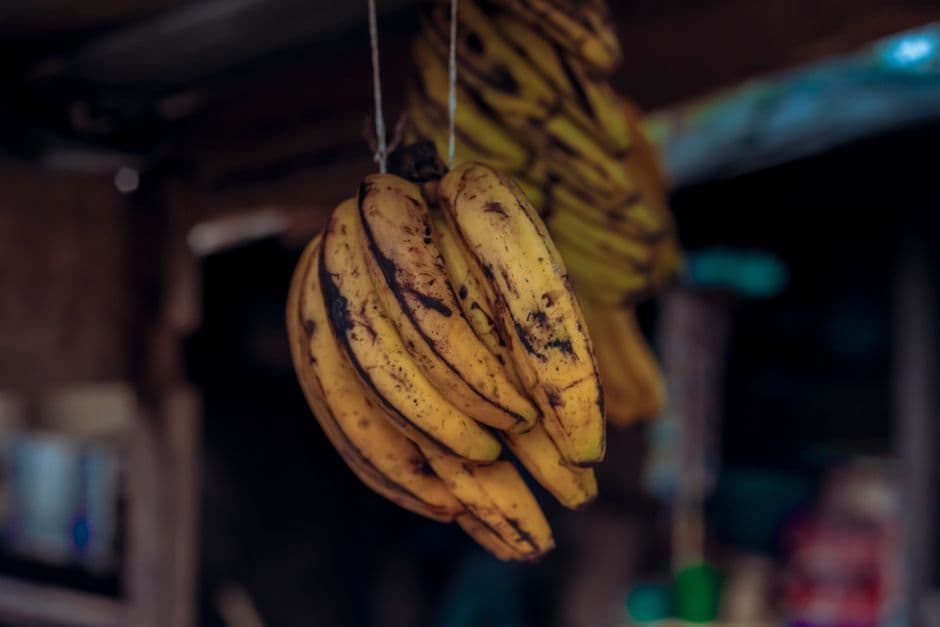
Banana Frita com Feijão translates simply as fried plantain with beans. Street vendors across Bissau fry thick slices of ripe plantain in palm oil until golden-crisp, then serve them next to a warm mound of seasoned black-eyed peas. The contrast of sweet caramelised plantain with savoury, slightly spicy beans makes this a satisfying snack or light lunch.
Serves 4
Heat 1 tbsp oil in a small pan. Fry onion until soft, add black-eyed peas and chilli, season with salt, and cook 5 minutes. Keep warm.
Heat remaining oil in a wide pan over medium-high heat. Fry plantain slices in batches for 3 minutes per side until deep golden-brown.
Drain fried plantains on paper towels and sprinkle with a pinch of salt.
Arrange plantains on plates alongside the spiced beans.
Use very ripe (almost black) plantains for maximum sweetness and easier caramelisation.
A squeeze of lime over the beans brightens the dish.
Taste and adjust salt at the very end — flavors concentrate as liquids reduce, and a final pinch of flaky salt sharpens the whole dish.
Mise en place pays for itself: chop, measure and pre-mix everything before the heat goes on, especially for any step that moves fast.
Add diced tomato to the beans.
Serve with a fried egg for extra protein.
Vegetarian: swap the protein for roasted king oyster mushrooms, smoked tofu or cooked chickpeas — adjust seasoning slightly upward to compensate.
Spicier: add a finely chopped fresh chile or a teaspoon of crushed Aleppo/Urfa pepper to the aromatics for warm, layered heat instead of a single sharp hit.
Beans keep refrigerated 3 days. Fry plantains fresh for best texture.
Plantains and legumes form the backbone of Guinea-Bissauan subsistence cooking. This pairing appears across West Africa but takes on a distinct Crioulo character in the country's capital markets.
Yes — brush with oil and bake at 200 °C for 20 minutes, flipping halfway.
Yes — most of the components can be prepared up to a day in advance and refrigerated separately. Reheat gently and assemble just before serving so textures stay distinct.
Stay close to the role each ingredient plays: swap aromatics for similar ones (shallot for onion, lime for lemon), and keep the fat-acid-salt balance intact. Spice blends can usually be approximated with what's in the cupboard.
Authenticity sits on a spectrum — what matters more is honoring the technique and balance of flavors. If the dish tastes harmonious and respects how cooks in its home region would build it, you're on solid ground.
Per serving (300g / 10.6 oz) · 4 servings total
Ask our AI cooking assistant anything about this recipe — substitutions, techniques, scaling.
Chat with AI Chef →Join the conversation
Sign in to leave a comment and save your favourite recipes
Have feedback or need help?
We read every email and reply within 1–2 business days.
© 2026 MyCookingCalendar. All rights reserved.