
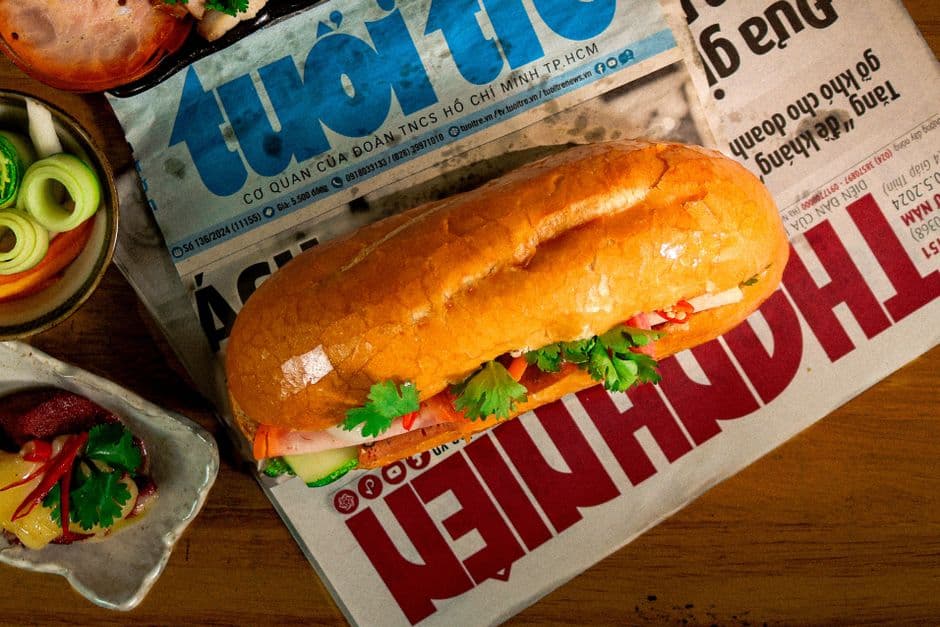
Banh Mi Thit Nuong
Vietnam's legendary sandwich — a crispy baguette filled with caramelised lemongrass pork, house-made pickled daikon and carrot, fresh cucumber, coriander and chilli.
About This Recipe
Banh Mi (bánh mì) is one of the great culinary legacies of French colonial Vietnam: the Vietnamese baguette, lighter and crispier than its French counterpart, became the canvas for an explosion of local flavour. Banh Mi Thit Nuong — the grilled pork version — layers caramelised, lemongrass-marinated pork with the contrasting textures and flavours that make a great banh mi: tangy quick-pickled daikon and carrot (do chua), cool cucumber slices, a smear of savoury paté or mayonnaise, fresh coriander leaves and sliced bird's eye chilli. The result is a sandwich of extraordinary complexity — sweet, sour, savoury, spicy, fresh and crunchy — all achieved in under 30 minutes once the pork is marinated. Street vendors across Vietnam sell hundreds per day from converted motorbikes; the best ones in Ho Chi Minh City have queues stretching around the block.
Ingredients
Serves 4
- 500 gpork shoulder or pork belly(thinly sliced)
- 4Vietnamese baguettes or light French baguettes
- 2 stalkslemongrass(white part only, finely minced)
- 3 tablespoonsfish sauce
- 2 tablespoonshoney or sugar
- 3 clovesgarlic(minced)
- 1 tablespoonvegetable oil
- 150 gdaikon radish(julienned)
- 150 gcarrot(julienned)
- 4 tablespoonsrice vinegar
- 2 tablespoonssugar(for pickling)
- 1 teaspoonsalt(for pickling)
- 4 tablespoonsmayonnaise or pork paté
- 1 mediumcucumber(thinly sliced)
- 1 bunchfresh coriander
- 2bird's eye chillies(sliced)
Instructions
- 1
Quick-pickle the vegetables
Combine the julienned daikon and carrot in a bowl. Add rice vinegar, sugar and salt. Toss well and leave to pickle for at least 20 minutes (or up to several hours). The vegetables should soften slightly and turn tangy-sweet.
Do chua (pickled daikon and carrot) is essential to banh mi — the acidity cuts through the richness of the pork and mayonnaise.
- 2
Marinate the pork
Mix together the minced lemongrass, fish sauce, honey, garlic and vegetable oil. Toss with the sliced pork and leave to marinate for at least 15 minutes, or overnight in the fridge for best results.
- 3
Grill the pork
Heat a grill pan or barbecue to very high heat. Cook the pork slices in a single layer for 2–3 minutes per side until charred and caramelised at the edges. The sugar in the marinade should form a golden crust. Work in batches if necessary.
- 4
Warm the baguettes
Warm the baguettes in a 180°C oven for 5 minutes or under the grill until the crust is crisp. Split lengthwise without cutting all the way through.
- 5
Assemble
Spread each baguette with a generous layer of mayonnaise (or a thin smear of pork paté followed by mayonnaise). Layer in the grilled pork, a handful of drained pickled vegetables, cucumber slices, fresh coriander and sliced chilli. Close firmly and serve immediately while the bread is still crisp.
Did you make this?
Rate it and help other cooks find the recipes that actually work.
One tap to sign in, and we'll save the rating you just picked.
Everything you need to plan your week — free
- Meal calendar
- Grocery list
- AI recipe ideas
Track what you eat
Snap your meal to log calories and macros, run fasting timers and track water in the free SnapCal app.
Pro Tips
- →
A Vietnamese baguette uses rice flour in the dough, making it lighter and crispier than a French baguette — worth seeking out at Vietnamese bakeries.
- →
The pork is best grilled directly over charcoal for that authentic smoky char.
- →
Make the pickled vegetables the night before — they improve with time.
- →
Taste and adjust salt at the very end — flavors concentrate as liquids reduce, and a final pinch of flaky salt sharpens the whole dish.
Variations
- •
Banh Mi Dac Biet (special) uses a combination of Vietnamese charcuterie including cha lua (steamed pork roll) and head cheese.
- •
A tofu version makes an excellent vegetarian banh mi — marinate firm tofu in the same lemongrass mixture.
- •
Vegetarian: swap the protein for roasted king oyster mushrooms, smoked tofu or cooked chickpeas — adjust seasoning slightly upward to compensate.
- •
Spicier: add a finely chopped fresh chile or a teaspoon of crushed Aleppo/Urfa pepper to the aromatics for warm, layered heat instead of a single sharp hit.
Storage
The grilled pork keeps in the fridge for 3 days. Pickled vegetables keep for 2 weeks refrigerated. Assemble sandwiches fresh.
History & Origin
The baguette arrived in Vietnam with French colonists in the mid-nineteenth century. Vietnamese bakers adapted the recipe with local rice flour, and by the 1950s, the distinctly Vietnamese banh mi sandwich had emerged in Saigon (now Ho Chi Minh City). It spread worldwide with the Vietnamese diaspora following 1975.
Frequently Asked Questions
Can I use regular French baguette?
Yes, though a standard French baguette is denser and chewier than the Vietnamese version. Look for Vietnamese baguettes at Asian bakeries — they are worth the extra effort.
Can I make this ahead of time?
Yes — most of the components can be prepared up to a day in advance and refrigerated separately. Reheat gently and assemble just before serving so textures stay distinct.
What can I substitute if I don't have all the ingredients?
Stay close to the role each ingredient plays: swap aromatics for similar ones (shallot for onion, lime for lemon), and keep the fat-acid-salt balance intact. Spice blends can usually be approximated with what's in the cupboard.
How do I know it's authentic?
Authenticity sits on a spectrum — what matters more is honoring the technique and balance of flavors. If the dish tastes harmonious and respects how cooks in its home region would build it, you're on solid ground.
Nutrition Facts
Per serving (380g / 13.4 oz) · 4 servings total
Time Summary
Have Questions?
Ask our AI cooking assistant anything about this recipe — substitutions, techniques, scaling.
Chat with AI Chef →Featured in Guides
This recipe is featured in the following curated guides:
More Vietnamese Recipes
You Might Also Like
Similar dishes from other cuisines around the world.
Browse by Ingredient
More recipes built around the same core ingredients.
Free Kitchen Tools
Calculators and converters that pair with this page — no signup needed.
Put This Into a Plan
Schedule it, shop for it, and track what you already have.
Read Next
Longer reads that go deeper on the ideas behind this dish.
Community
Join the conversation
Sign in to leave a comment and save your favourite recipes