
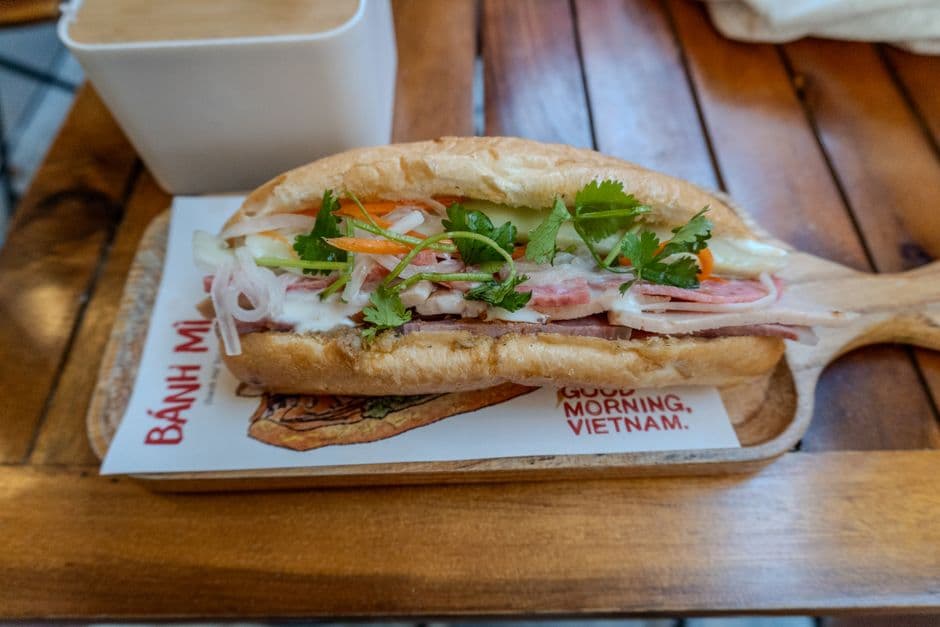
Bánh Mì Ốp La (Vietnamese Skillet Eggs with Pâté, Baguette & Pickles)
Saigon's beloved breakfast — sunny fried eggs sizzling in a small cast-iron skillet alongside pork pâté, Vietnamese sausage and a baguette to mop up the runny yolks.
About This Recipe
Bánh mì ốp la — literally 'sunny-side-up egg bread' — is the breakfast that powers Saigon. From dawn until mid-morning, sidewalk stalls and humble cafés across Ho Chi Minh City fire up small individual cast-iron skillets, fry two eggs sunny-side-up directly in the pan, and slide them, still sizzling, onto a customer's table alongside a fresh baguette, slices of cold pork pâté, a chunk of chả lụa (Vietnamese silky pork sausage), pickled daikon and carrot, fresh cilantro, sliced cucumber and a small bottle of Maggi seasoning sauce. The customer eats it all family-style: tearing the baguette open to receive the egg whole, drizzling the yolk with Maggi until it pools into the bread, layering the pâté and sausage into a custom sandwich, scooping the pickles on top. It is a deconstructed bánh mì breakfast — bánh mì without the assembly, served hot from the pan rather than cold from the cart — and it is the Vietnamese answer to the full English: ample, savory, satisfying, designed to fuel a hard day. The technique is straightforward but the details matter: the eggs must be cooked in a cast-iron mini-pan that arrives still hot at the table so the eggs continue to sizzle for the first 30 seconds of eating; the yolks must be liquid; the pâté must be cold; the baguette must be fresh enough to crackle when torn. Maggi seasoning sauce — a hydrolyzed-vegetable umami liquid introduced to Vietnam in the French colonial period — is the non-negotiable finishing condiment, adding the signature savory depth that defines the dish.
Ingredients
Serves 2
- 4 largefresh eggs, room temperature
- 2 tbspneutral oil for the skillet
- 100 gsmooth pork pâté or chicken liver pâté, sliced cold
- 150 gchả lụa (Vietnamese silky pork sausage), sliced 5 mm(or French ham or thick mortadella as substitute)
- 2 smallfresh Vietnamese baguettes (or 30 cm of a thin French baguette)
- 120 gdo chua (pickled carrot and daikon, drained)
- 1 smallcucumber, sliced into batons
- 1 small bunchfresh cilantro, including stems
- 2Thai bird chilies, sliced thin (optional, for heat)
- 2 tbspMaggi seasoning sauce(non-negotiable Vietnamese-French condiment)
- salt and freshly cracked black pepper
Instructions
- 1
Set up the plate
Arrange each plate ahead of time with the sliced cold pâté, sliced chả lụa, do chua pickles, cucumber batons and a small handful of fresh cilantro. The accompaniments are all cold or room-temperature; only the eggs and skillet arrive hot. Set the table with small bowls of Maggi seasoning and chili for individual seasoning.
- 2
Slice the baguette
Cut a long slit lengthwise down each baguette without cutting all the way through — open it like a book. Warm them in a 180°C oven for 3 to 4 minutes to crisp the crust and warm the crumb. The baguette must be very fresh; stale bread is the death of this breakfast.
- 3
Heat the skillets
Place two small cast-iron pans (15 cm individual skillets are ideal) over medium-high heat for 60 seconds until very hot. Add 1 tablespoon of oil to each and swirl to coat. The oil should shimmer and almost smoke. The hot, well-oiled cast iron is what gives the eggs their crispy lacy edges that are the hallmark of bánh mì ốp la.
- 4
Crack in the eggs
Crack 2 eggs gently into each hot skillet — they should sizzle dramatically and the whites should start setting within 5 seconds. Tilt each pan slightly and spoon the hot oil over the whites with a metal spoon to set the tops without overcooking the yolks. Cook 90 seconds to 2 minutes for sunny-side-up with crispy lacy edges and bright runny yolks.
- 5
Season in the pan
Sprinkle each pan with a small pinch of salt and a generous twist of black pepper. The eggs should look intensely glossy, the whites lacy and brown at the edges, the yolks high and trembling. Do not flip — sunny-side-up with intact yolks is the entire point.
- 6
Bring the sizzling skillet to the table
Set each hot skillet directly onto a wooden trivet or folded kitchen towel on each plate, next to the cold accompaniments. The eggs should still be sizzling audibly when they reach the diner. This is the signature drama of bánh mì ốp la — the hot pan continues cooking the eggs slightly for the first minute at the table.
- 7
Drizzle with Maggi
Immediately, while the eggs are still hot, drizzle a generous teaspoon of Maggi seasoning over the yolks of each pair. The Maggi will sizzle and instantly turn the yolks a darker amber, adding the deep umami savor that defines the dish. Some diners also add a few drops of soy sauce or fish sauce; both are acceptable but Maggi is canonical.
- 8
Eat together
Tear off a chunk of warm baguette. Use it to scoop up an egg, letting the yolk soak into the bread. Layer in slices of cold pâté, chả lụa, a pile of pickles, cucumber and fresh cilantro. Eat it as a built-by-hand sandwich, alternating with bites of plain egg-and-baguette. Wash down with strong Vietnamese drip coffee with condensed milk (cà phê sữa đá) for the complete Saigon breakfast experience.
Did you make this?
Rate it and help other cooks find the recipes that actually work.
One tap to sign in, and we'll save the rating you just picked.
Everything you need to plan your week — free
- Meal calendar
- Grocery list
- AI recipe ideas
Track what you eat
Snap your meal to log calories and macros, run fasting timers and track water in the free SnapCal app.
Pro Tips
- →
A hot pan is everything. The eggs must hit screaming hot oiled cast iron and develop those signature crispy brown lace edges — the texture that distinguishes bánh mì ốp la from any ordinary fried egg.
- →
Maggi seasoning sauce is the soul of the dish. Vietnamese-French fusion at its purest. Do not substitute soy sauce; Maggi is sweeter, more umami-laden, and uniquely Vietnamese-coded. Sold in tall thin yellow-label bottles at any Asian grocer.
- →
Bring the skillet to the table still sizzling — the drama and the continued cooking are both part of the experience. Use a folded kitchen towel as a trivet to protect the table.
- →
A truly fresh Vietnamese baguette is light, airy and crisp-shelled — much lighter than a French baguette. If you can find a Vietnamese bakery, source from there. Otherwise, a thin French baguette baked the same day works.
Variations
- •
Bánh mì ốp la with xíu mại: add 2 to 3 Vietnamese-style pork meatballs simmered in tomato sauce to the plate — a Saigon street favorite.
- •
Replace eggs with scrambled eggs (bánh mì trứng chiên) for a softer, less dramatic version — popular at home for kids.
- •
Add cured Chinese sausage (lạp xưởng) sliced thin and crisped in the skillet first before adding the eggs — a Cholon (Chinatown Saigon) variation.
- •
Vegan version: skip eggs, pâté and sausage; load the plate with seasoned tofu scramble, pan-fried mushroom pâté, vegan ham and extra pickles.
Storage
Bánh mì ốp la is strictly fresh-cooked — the eggs lose their texture instantly when reheated, and the joy of the sizzling pan cannot be reproduced. Pâté refrigerates 5 days; chả lụa keeps 5 days refrigerated; pickled vegetables last 2 weeks in the fridge. Assemble the components fresh each morning.
History & Origin
Bánh mì ốp la emerged in the French colonial period in Vietnam (roughly 1880-1954), when French baguettes, eggs, pâté and Maggi seasoning sauce were combined with Vietnamese pickled vegetables, fresh herbs and rice-paddy chilies to create a distinctly Vietnamese breakfast. The dish became especially popular in Saigon (now Ho Chi Minh City) after the 1950s, when sidewalk cafés institutionalized the small cast-iron egg pan as the signature serving vessel. Today bánh mì ốp la is one of the most-eaten breakfasts in southern Vietnam, served at thousands of street stalls and cafés, and a fixture of Vietnamese diaspora cafés in cities from Garden Grove to Sydney.
Frequently Asked Questions
What is Maggi seasoning sauce?
A hydrolyzed-vegetable-protein savory liquid invented in Switzerland in 1886, sold in tall yellow-labeled bottles. It is intensely umami, slightly sweet, and tastes like a cross between soy sauce and beef broth. Vietnam adopted it deeply during the French colonial period and it is now considered a defining Vietnamese condiment, despite its European origins.
Can I use chicken liver pâté?
Yes — French-style smooth chicken liver pâté is a perfect substitute for pork pâté. Chunky country pâté also works but the smoother spread is more traditional. Most supermarkets carry suitable pâté in the deli section.
What is chả lụa?
A Vietnamese pork sausage made by pounding pork into an extremely fine, almost gelatinous paste, wrapping it in banana leaves and steaming. It has a smooth, slightly springy texture and mild flavor. Sold pre-cooked in Vietnamese groceries; if unavailable, substitute thick-sliced mortadella, French ham, or a mild bologna.
How do I make crispy lace edges on the eggs?
Two requirements: very hot oiled cast iron, and enough oil that it shallow-fries the egg whites rather than just lubricating them. Spoon the hot oil over the whites as they cook. The egg should hit the pan with an immediate aggressive sizzle and the edges should brown within 30 seconds.
Nutrition Facts
Per serving (480g / 16.9 oz) · 2 servings total
Time Summary
Have Questions?
Ask our AI cooking assistant anything about this recipe — substitutions, techniques, scaling.
Chat with AI Chef →Featured in Guides
This recipe is featured in the following curated guides:
More Vietnamese Recipes
You Might Also Like
Similar dishes from other cuisines around the world.
Browse by Ingredient
More recipes built around the same core ingredients.
Free Kitchen Tools
Calculators and converters that pair with this page — no signup needed.
Put This Into a Plan
Schedule it, shop for it, and track what you already have.
Read Next
Longer reads that go deeper on the ideas behind this dish.
Community
Join the conversation
Sign in to leave a comment and save your favourite recipes