
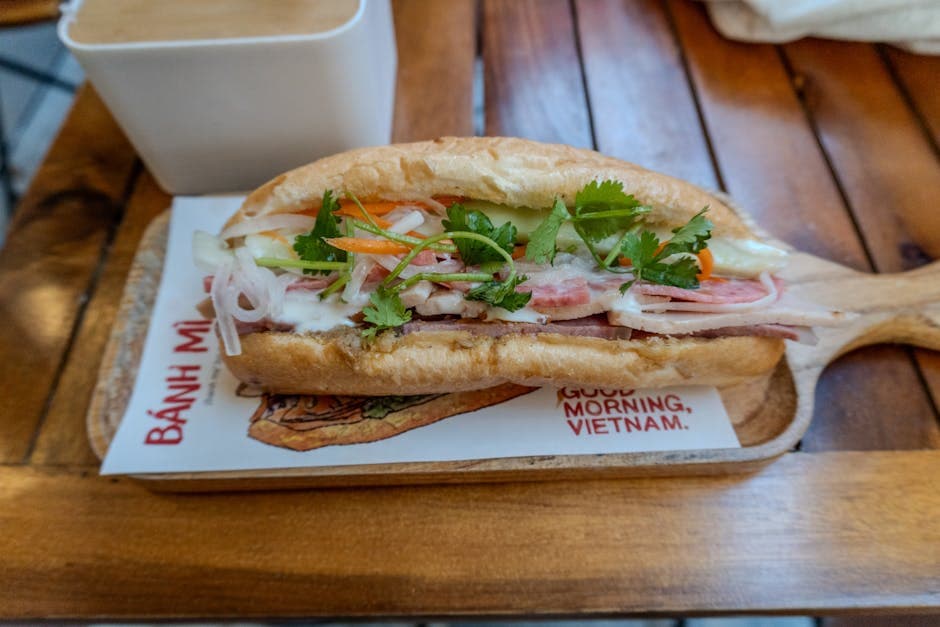
Bánh Mì Thịt (Vietnamese Pork Sandwich)
Vietnam's iconic French-Vietnamese sandwich — crusty baguette, pâté, char siu pork, pickled vegetables, cilantro, and chili.
About This Recipe
Bánh mì thịt is Vietnam's most celebrated culinary export — a fusion of French colonial baguette and Vietnamese ingredients that captures the country's history in every bite. The bread is crisp-shelled and airy-crumbed (much lighter than the French version), the spread is pork pâté and mayonnaise, the proteins layered are char siu-style roasted pork plus a slice of Vietnamese ham, the crunch comes from a do chua salad of pickled daikon and carrot, the herb is a generous handful of cilantro, the heat is a few rings of fresh red chili, and the final note is a splash of Maggi seasoning. Each bite hits sweet, sour, salty, herbal, hot, fatty, and crunchy at once. Born in Saigon street stalls in the 1950s, the sandwich now has dedicated bánh mì shops worldwide.
Ingredients
Serves 4
- 500 gpork shoulder, in one piece
- 3 tbsphoisin sauce
- 2 tbsphoney
- 2 tbsplight soy sauce
- 1 tbspShaoxing rice wine or sherry
- 1 tbspfive-spice powder
- 4 clovesgarlic, minced
- 1 tspred food coloring (optional, for traditional pink)
- 1 largecarrot, julienned
- 200 gdaikon radish, julienned
- 120 mlrice vinegar
- 60 gsugar
- 1 tspsalt
- 4 smallVietnamese-style baguettes (banh mi rolls) or short crusty rolls
- 60 ggood pâté (pork or chicken liver)
- 4 tbspgood mayonnaise
- 100 gVietnamese ham (cha lua) or thinly sliced ham
- 1 largecucumber, sliced into long thin strips
- 1 large bunchfresh cilantro
- 2Thai chilies, thinly sliced (optional)
- 1 tbspMaggi seasoning or light soy sauce
Instructions
- 1
Marinate the pork
Whisk hoisin, honey, soy, rice wine, five-spice, garlic, and food coloring (if using). Coat pork shoulder. Marinate at least 4 hours, ideally overnight.
- 2
Make pickled vegetables (do chua)
Combine carrot and daikon in a bowl. Whisk vinegar, sugar, and salt with 120 ml warm water until dissolved. Pour over the vegetables. Refrigerate at least 1 hour — longer is better. Keeps 2 weeks in the jar.
- 3
Roast the pork
Roast in a 200°C oven for 35-45 minutes, basting twice with the marinade, until the internal temperature reaches 70°C and the surface is sticky and slightly charred. Rest 15 minutes, then slice thin against the grain.
- 4
Prep the baguettes
Heat baguettes in a 200°C oven for 4 minutes to crisp the crust. Slit each lengthwise, leaving a hinge on one side. Pull out a little of the soft interior crumb to make room (eat the pulled bread — chef's snack).
- 5
Spread the foundation
Spread pâté on one inner side of the baguette, mayonnaise on the other. Both sides — this is the bánh mì rule.
- 6
Build the sandwich
Layer in this order: slices of Vietnamese ham, slices of roast pork, drained pickled vegetables, cucumber strips, a generous fistful of cilantro, sliced chilies if using.
- 7
Finish with Maggi
Splash a tablespoon of Maggi seasoning across the top of the filling — this is the umami signature.
- 8
Close and eat
Press the baguette closed firmly. Wrap the base half in newsprint or parchment paper (this is the street-stall finish). Eat immediately while the bread is still warm.
Did you make this?
Rate it and help other cooks find the recipes that actually work.
One tap to sign in, and we'll save the rating you just picked.
Everything you need to plan your week — free
- Meal calendar
- Grocery list
- AI recipe ideas
Track what you eat
Snap your meal to log calories and macros, run fasting timers and track water in the free SnapCal app.
Pro Tips
- →
Both pâté AND mayo on the bread — this is the bánh mì rule. Most American versions skip the pâté, which is wrong.
- →
Make the pickled vegetables ahead — they're better after 24 hours and keep weeks.
- →
Maggi seasoning is the secret final touch — find at any Asian grocery, ~3 € a bottle.
Variations
- •
Bánh mì gà: replace pork with grilled lemongrass chicken thigh.
- •
Bánh mì xíu mại: with little pork meatballs in tomato sauce.
- •
Bánh mì chay: vegetarian, with seasoned tofu and grilled mushrooms instead of meat.
Storage
Eat fresh — bread softens within hours. Components keep separately 3-5 days: pickled veg 2 weeks, pork 4 days, sauces 1 week.
History & Origin
Bánh mì thịt evolved in 1950s Saigon (now Ho Chi Minh City) as Vietnamese cooks adapted French baguettes — introduced during colonization — with local ingredients. The current sandwich form was popularized by the now-legendary Hòa Mã shop in Saigon's District 3, founded in 1958. Today bánh mì shops exist on every continent.
Frequently Asked Questions
Where do I find Vietnamese ham (cha lua)?
Vietnamese grocery stores, often in the deli section. Substitute thinly-sliced bologna or mortadella for similar texture if unavailable.
Why is bánh mì bread different from French baguette?
Bánh mì bread uses rice flour mixed with wheat flour, giving a much lighter, airier crumb and crispier shell. French baguettes are denser. The bánh mì baguette is its own thing.
Nutrition Facts
Per serving (320g / 11.3 oz) · 4 servings total
Time Summary
Have Questions?
Ask our AI cooking assistant anything about this recipe — substitutions, techniques, scaling.
Chat with AI Chef →Featured in Guides
This recipe is featured in the following curated guides:
More Vietnamese Recipes
You Might Also Like
Similar dishes from other cuisines around the world.
Browse by Ingredient
More recipes built around the same core ingredients.
Free Kitchen Tools
Calculators and converters that pair with this page — no signup needed.
Put This Into a Plan
Schedule it, shop for it, and track what you already have.
Read Next
Longer reads that go deeper on the ideas behind this dish.
Community
Join the conversation
Sign in to leave a comment and save your favourite recipes