
vietnameselunch✨ New
Bánh Xèo
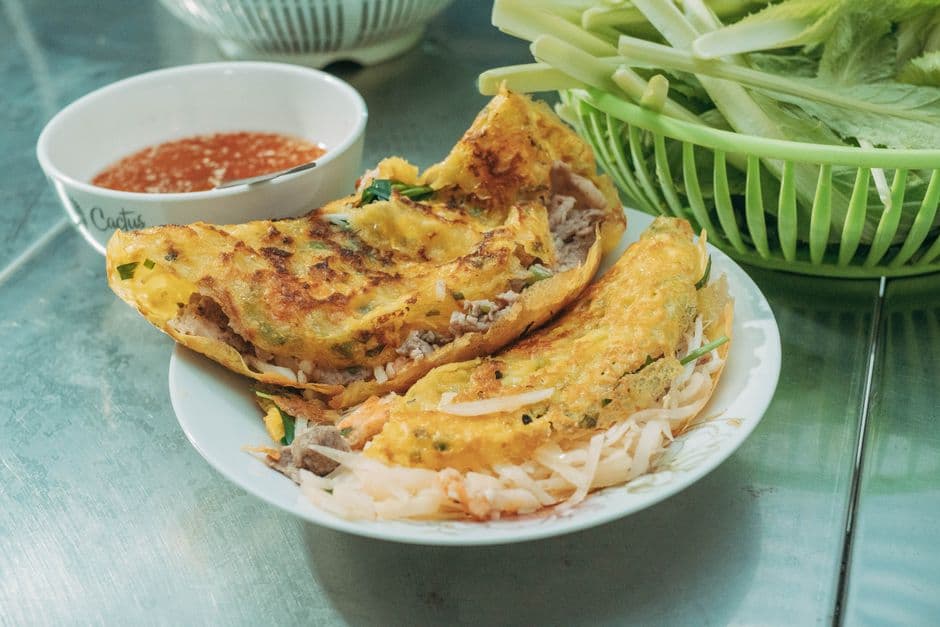
Vietnamese sizzling turmeric-coconut rice crepe stuffed with shrimp, pork, and beansprouts — wrapped in herbs.
Prep
25 min
Cook
30 min
Servings
4
Difficulty
Medium
4.9
Sign in to rate#vietnamese#mekong#crepe#shrimp
Vietnamese sizzling turmeric-coconut rice crepe stuffed with shrimp, pork, and beansprouts — wrapped in herbs.
Bánh xèo means 'sizzling cake' — the name comes from the sound the rice-and-coconut batter makes the second it hits a screaming-hot pan. The crepe is brilliant yellow from turmeric, lacy and crisp at the edges, soft in the middle, folded in half over a generous stuffing of poached shrimp, sliced pork belly, scallion, and a tangle of fresh beansprouts. The dish is eaten in the traditional Vietnamese herb-wrap style: tear off a piece of crepe, lay it on a leaf of crisp lettuce, top with mint, perilla, basil, and cilantro, roll up, and dip into nuoc cham (lime-chili-fish-sauce). It is fresh, hot, crackling, herbaceous, and balanced — Mekong Delta cooking at its most vivid.
Serves 4
In a wide bowl, whisk rice flour, cornflour, turmeric, and salt. Slowly whisk in water and coconut milk until smooth. Stir in sliced scallions. Rest 30 minutes — this is essential for crisp crepes.
Whisk fish sauce, lime juice, sugar, water, garlic, and chili until the sugar fully dissolves. Taste; adjust for balance — it should be sweet, salty, sour, and gently hot.
Wash lettuce and herbs and dry them thoroughly. Arrange on a large platter for the table.
Slice pork belly into thin strips. Salt and pepper the shrimp lightly.
Heat 1 tbsp oil in a wide nonstick skillet over high heat. Add a small handful of sliced onion, a few pork belly strips, and a few shrimp. Sear 90 seconds until pork is browned and shrimp is pink.
Stir the batter (it separates as it rests). Pour about 100 ml of batter into the hot pan in a quick circular motion, tilting to coat. It will hiss loudly — that is the bánh xèo.
Immediately scatter a generous handful of beansprouts over half of the crepe. Cover the pan with a lid for 30 seconds — this steams the beansprouts.
Uncover. Drizzle 1 tsp more oil around the edges of the crepe. Cook 1 minute more until the edges are deeply crisp and the bottom is lacy gold. Use a spatula to fold the empty half over the filled half.
Slide onto a warm plate. Continue with remaining batter and filling. Bring crepes, herb platter, lettuce, and nuoc cham to the table.
Tear off a piece of crepe with chopsticks. Lay on a lettuce leaf, top with herbs. Roll up. Dip in nuoc cham. Eat with hands. Repeat until everything is gone.
Everything you need to plan your week — free
Cook this hands-free
Get AI meal plans, step-by-step cooking mode, and your saved recipes in the free Bento app.
Rest the batter at least 30 minutes — 2 hours is even better. Hydrated rice flour makes crisper crepes.
Cook hotter than you'd think — the bánh xèo should sizzle violently when batter hits the pan.
Don't skip the lid step — it steams the beansprouts so they soften just enough.
Vegetarian bánh xèo: use sliced tofu and oyster mushrooms instead of pork and shrimp.
Bánh khọt: tiny coin-sized cousins cooked in molded pans, popular in Vung Tau.
Northern Vietnamese style: smaller, thicker, less coconut.
Eat fresh — the crisp doesn't survive. Batter and fillings keep separately 1 day refrigerated. Cook each crepe to order.
Bánh xèo evolved in southern Vietnam, taking influence from southern Indian dosa via Cham traders along the spice route. The southern version with coconut milk is the most popular; central Vietnam's bánh khoái is smaller and richer; northern bánh xèo is plainer.
Pan wasn't hot enough, or batter wasn't rested. Both ruin the lace-crisp edge.
They already are — rice flour and cornflour have no gluten. Double check your fish sauce label.
Per serving (380g / 13.4 oz) · 4 servings total
Ask our AI cooking assistant anything about this recipe — substitutions, techniques, scaling.
Chat with AI Chef →This recipe is featured in the following curated guides:
Join the conversation
Sign in to leave a comment and save your favourite recipes
Everything you need to plan your week — free
Have feedback or need help?
We read every email and reply within 1–2 business days.
© 2026 MyCookingCalendar. All rights reserved.