
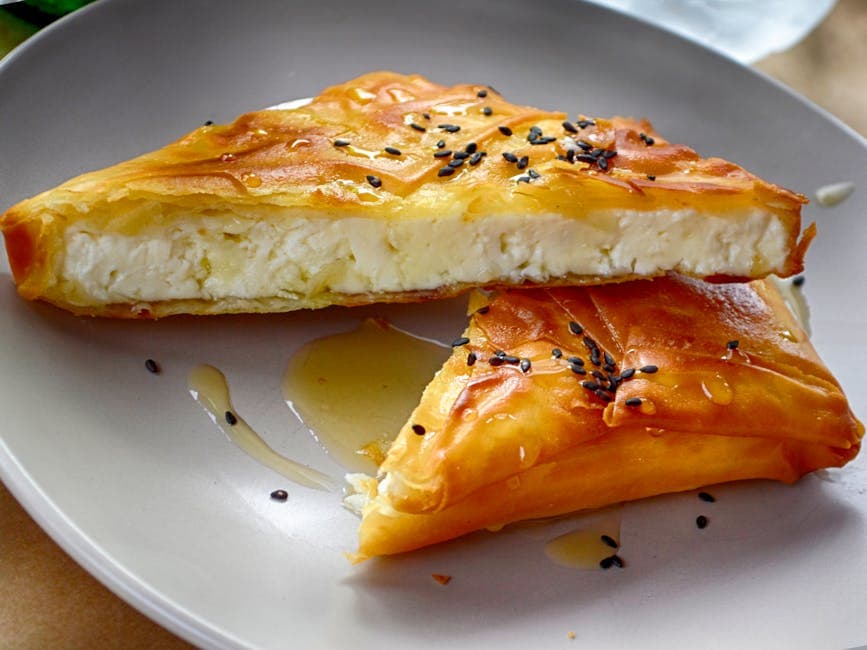
Banitsa (Bulgarian Cheese Phyllo Pastry)
Bulgarian breakfast classic — coiled phyllo layered with sirene cheese, eggs, and yogurt, baked until golden and shattering.
About This Recipe
Banitsa is the breakfast and feast pastry of Bulgaria — a coil of buttered phyllo sheets layered with crumbled sirene (Bulgarian brined white cheese), beaten eggs, and tangy yogurt, then baked until the surface crackles in shards. The classic 'banitsa sas sirene' is everyday breakfast bakery fare across the country; the New Year's Eve version (banitsa s kasmeti) hides paper fortunes inside the coils and is broken open at midnight to read everyone's prophecy. The technique resembles Bosnian burek but the filling is uniquely Bulgarian — the sour yogurt-cheese combo gives banitsa a creaminess that fresh-cheese phyllo pies elsewhere don't have. Served warm with boza (a fermented millet drink) or ayran for breakfast, or cold from a paper bag eaten on the way to work.
Ingredients
Serves 8
- 500 gphyllo pastry sheets (about 12 sheets), thawed
- 400 gsirene or feta cheese, crumbled
- 4 largeeggs
- 300 gthick Bulgarian or Greek yogurt
- 150 gunsalted butter, melted
- 100 mlsunflower oil
- 1 tspbaking soda
- 0.5 tspwhite pepper
- 100 mlsparkling water, for finishing splash
Instructions
- 1
Prepare filling
In a large bowl whisk eggs until smooth. Stir in yogurt, baking soda (it will foam slightly — that's expected), white pepper, and crumbled cheese. Mix to a thick, lumpy batter.
- 2
Combine fats
Mix melted butter with sunflower oil in a small bowl — half-and-half gives the right balance of flavor and crispness.
- 3
Layer the first sheet
Unroll phyllo on a damp tea towel (keeps it from drying out). Place 1 sheet flat. Brush lightly with butter-oil mix. Spread 3 tbsp of cheese filling along one long edge in a thin strip.
- 4
Roll into a rope
Roll the sheet away from you into a loose, long tube. Don't squeeze tight — looser rolls puff better.
- 5
Coil into the pan
Lightly oil a 26 cm round baking pan. Coil the first rope from the center outward. Repeat with all remaining sheets, joining ropes seamlessly until the pan is filled in one continuous spiral.
- 6
Brush top
Brush the top of the entire coil generously with the remaining butter-oil. Don't leave any phyllo dry.
- 7
Bake
Bake at 200°C for 35–40 minutes until deeply golden and the top crackles when tapped. Halfway through, splash 100 ml sparkling water over the surface — this Bulgarian bakery trick creates extra blistering.
- 8
Rest
Cool 10 minutes before cutting — straight from the oven the layers are too steamy to slice cleanly.
- 9
Serve
Cut into wedges. Serve warm with cold ayran or boza, or pack into a paper bag for breakfast on the go.
Did you make this?
Rate it and help other cooks find the recipes that actually work.
One tap to sign in, and we'll save the rating you just picked.
Everything you need to plan your week — free
- Meal calendar
- Grocery list
- AI recipe ideas
Cook this hands-free
Get AI meal plans, step-by-step cooking mode, and your saved recipes in the free Bento app.
Pro Tips
- →
Keep phyllo covered with a damp towel always — a single dry minute and the sheets crack into uselessness.
- →
Bulgarian sirene is sharper and crumblier than feta; if using feta, add 1 tsp lemon juice to the yogurt to mimic the tang.
- →
The baking soda in the filling makes the mixture puff slightly inside the layers — don't omit it.
Variations
- •
Tikvenik — winter pumpkin version with grated pumpkin, walnuts, and cinnamon instead of cheese.
- •
Banitsa s praz — leek and cheese version popular in Plovdiv.
- •
New Year banitsa — fold paper fortunes (wrapped in foil) into the coils before baking.
Storage
Best the day baked. Refrigerate 3 days; reheat at 180°C for 7 minutes to re-crisp. Freezes well baked.
History & Origin
Banitsa traces back to medieval Bulgarian kitchens, mentioned in church documents from the 12th century. The modern coiled form developed in the 18th and 19th centuries alongside the spread of paper-thin phyllo from Ottoman-influenced Greek and Turkish baking, while the sirene-yogurt filling remained distinctly Bulgarian.
Frequently Asked Questions
Why is my banitsa soggy in the middle?
Two reasons — too much filling per sheet (use a thin strip), or you sliced before it rested. Always cool 10 minutes; steam needs to escape.
Can I make banitsa without yogurt?
Yogurt is essential for tang and tenderness. Sour cream is the closest substitute. Plain milk will make it bland and slightly dry.
How is banitsa different from börek?
Banitsa is always coiled, always contains yogurt in the filling, and is distinctly Bulgarian. Börek is a broader Turkish family of phyllo pastries with many shapes and fillings.
Nutrition Facts
Per serving (160g / 5.6 oz) · 8 servings total
Time Summary
Have Questions?
Ask our AI cooking assistant anything about this recipe — substitutions, techniques, scaling.
Chat with AI Chef →Featured in Guides
This recipe is featured in the following curated guides:
More Bulgarian Recipes
You Might Also Like
Similar dishes from other cuisines around the world.
Free Kitchen Tools
Calculators and converters that pair with this page — no signup needed.
Put This Into a Plan
Schedule it, shop for it, and track what you already have.
Read Next
Longer reads that go deeper on the ideas behind this dish.
Community
Join the conversation
Sign in to leave a comment and save your favourite recipes