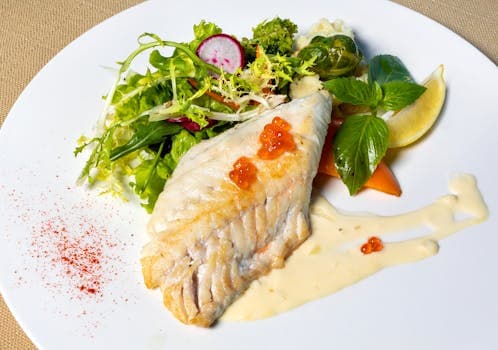
Crispy-skinned barramundi fillets in a golden lemon butter sauce — Australia's most prized native fish made perfectly.
Barramundi (Lates calcarifer) is Australia's most iconic native fish — a large, meaty species found in the rivers and coastal waters of northern Australia. Its thick, white flesh is mild, slightly sweet and holds together beautifully when pan-fried, developing a brilliantly crispy skin. Finished in a simple lemon butter sauce with capers, this is Australian restaurant cooking at its most elegant and unfussy.
Serves 4
Pat the fillets dry with paper towels. Score the skin lightly with a sharp knife in 3–4 places to prevent curling. Season with salt and white pepper.
Dry skin is the key to a crispy result. Pat thoroughly.
Heat the olive oil in a large non-stick or stainless steel pan over high heat until shimmering. Place the fillets skin-side down. Immediately press gently with a spatula for 30 seconds to prevent curling. Fry for 4–5 minutes without moving until the skin is golden and crispy.
Flip the fillets and add the butter to the pan. Cook for 2–3 minutes, basting the fish with the foaming butter. The flesh should be opaque all the way through.
Remove fish and keep warm. Add garlic to the pan and fry in the butter for 30 seconds until golden. Add capers, lemon juice and zest. Stir, scraping any bits from the pan. Add parsley.
Place fillets skin-side up on plates. Spoon the lemon butter sauce generously over the fish. Serve immediately with steamed broccolini, roasted potatoes or a simple green salad.
Don't move the fish while the skin is cooking — leave it undisturbed until it releases naturally.
Press the fillet flat for the first 30 seconds to get even skin contact with the pan.
Snapper, sea bass or any white-fleshed fish can substitute if barramundi isn't available.
Thai-Style: replace the lemon butter with a Thai-inspired sauce of fish sauce, lime juice, chilli and palm sugar.
Mediterranean: cook with olives, cherry tomatoes and basil instead of the lemon butter.
Best eaten immediately. Refrigerate cooked fish for up to 1 day but the skin loses crispiness.
Barramundi has been a staple food for Indigenous Australians for tens of thousands of years, highly prized for its size and eating quality. The word 'barramundi' comes from the Rockhampton language meaning 'large-scaled river fish'. Today it is farmed extensively across Australia and exported globally.
Barramundi is now farmed and exported globally. Look for it in Asian supermarkets or quality fishmongers. Sea bass or snapper make excellent substitutes.
Ensure the fish is completely dry, the pan is very hot, and the oil is shimmering before adding the fish. Don't move it for the first few minutes.
Per serving (250g / 8.8 oz) · 4 servings total
Ask our AI cooking assistant anything about this recipe — substitutions, techniques, scaling.
Chat with AI Chef →Join the conversation
Sign in to leave a comment and save your favourite recipes