
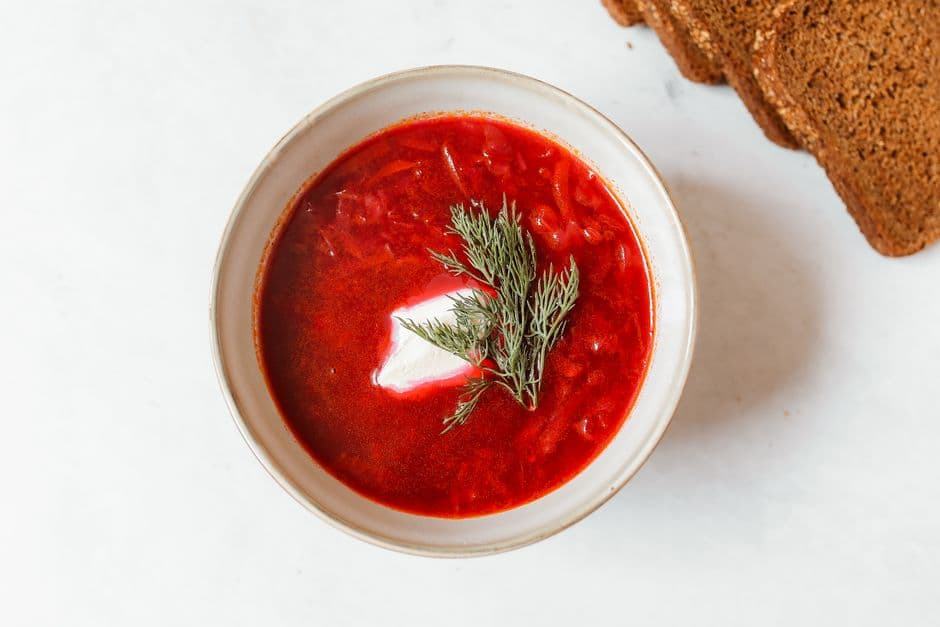
Barszcz — Polish Beetroot Soup
A brilliant crimson, intensely flavoured beetroot consommé with a clean, sweet-sour taste — Poland's Christmas Eve soup, served with mushroom dumplings.
About This Recipe
Polish barszcz is one of the most visually stunning soups in the world: a jewel-clear, deeply crimson beetroot broth with an intense, sweet-earthy flavour balanced by wine vinegar and a touch of sugar. Unlike Ukrainian borscht (which is thick with vegetables), Polish barszcz czerwony is a clear consommé — strained until perfectly transparent — served on Christmas Eve as the first course of the Wigilia supper alongside small mushroom-filled dumplings called uszka ('little ears'). The beetroot is never boiled but oven-roasted for maximum flavour before the soup is made. The result is a soup of extraordinary elegance — simple to describe, revelatory to eat.
Ingredients
Serves 6
- 1 kgraw beetroot(roasted in foil until tender)
- 1.5 litresvegetable or meat stock
- 1 mediumonion(halved and charred)
- 1 smallcarrot(roughly chopped)
- 3 clovesgarlic
- 3 tablespoonsred wine vinegar
- 1 tablespoonsugar
- 1 teaspoonsalt
- 3 tablespoonslemon juice
Instructions
- 1
Roast the beetroot
Wrap whole beetroot tightly in foil. Roast at 200°C for 60–75 minutes until completely tender. Cool, peel and grate or slice.
- 2
Make the broth
Bring stock to a simmer with charred onion, carrot and garlic for 20 minutes. Add grated roasted beetroot. Simmer very gently for 15 minutes — do not boil hard, which dulls the colour.
Never boil barszcz vigorously — it destroys the brilliant red colour, which turns muddy brown.
- 3
Season and strain
Add vinegar, lemon juice, sugar and salt. Taste — it should be noticeably sweet-sour. Strain through a fine sieve or muslin until the broth is completely clear and brilliantly red.
- 4
Serve
Serve in cups or deep bowls, very hot, with small mushroom uszka dumplings floating in it.
Did you make this?
Rate it and help other cooks find the recipes that actually work.
One tap to sign in, and we'll save the rating you just picked.
Everything you need to plan your week — free
- Meal calendar
- Grocery list
- AI recipe ideas
Track what you eat
Snap your meal to log calories and macros, run fasting timers and track water in the free SnapCal app.
Pro Tips
- →
Roasting rather than boiling the beetroot gives far more flavour and a deeper colour.
- →
The sweet-sour balance is the soul of barszcz — adjust vinegar and sugar to your taste.
- →
If the colour looks dull, add a few tablespoons of freshly grated raw beetroot to the hot strained broth.
- →
Taste and adjust salt at the very end — flavors concentrate as liquids reduce, and a final pinch of flaky salt sharpens the whole dish.
Variations
- •
Barszcz z uszkami: with small mushroom-filled dumplings (the Christmas Eve version).
- •
Cold barszcz with kefir (chłodnik) is a summer version served cold.
- •
Vegetarian: swap the protein for roasted king oyster mushrooms, smoked tofu or cooked chickpeas — adjust seasoning slightly upward to compensate.
- •
Spicier: add a finely chopped fresh chile or a teaspoon of crushed Aleppo/Urfa pepper to the aromatics for warm, layered heat instead of a single sharp hit.
Storage
Refrigerate for up to 4 days — the colour may darken. Reheat gently.
History & Origin
Beetroot soup appears in Polish and broader Slavic cuisine from at least the Middle Ages, when beetroot was one of the most important cultivated vegetables in the region. The Christmas Eve (Wigilia) version of barszcz has been eaten in Poland for centuries as part of the traditional meatless supper. Polish barszcz is deliberately clear and refined to distinguish it from Ukrainian borscht, which is considered a more rustic, vegetable-laden preparation.
Frequently Asked Questions
Why did my barszcz turn brown?
Boiling the soup vigorously destroys the betalain pigments in beetroot that give it its red colour. Simmer gently and add a splash of vinegar or lemon juice to preserve the colour.
Can I make this ahead of time?
Yes — most of the components can be prepared up to a day in advance and refrigerated separately. Reheat gently and assemble just before serving so textures stay distinct.
What can I substitute if I don't have all the ingredients?
Stay close to the role each ingredient plays: swap aromatics for similar ones (shallot for onion, lime for lemon), and keep the fat-acid-salt balance intact. Spice blends can usually be approximated with what's in the cupboard.
How do I know it's authentic?
Authenticity sits on a spectrum — what matters more is honoring the technique and balance of flavors. If the dish tastes harmonious and respects how cooks in its home region would build it, you're on solid ground.
Nutrition Facts
Per serving (280g / 9.9 oz) · 6 servings total
Time Summary
Have Questions?
Ask our AI cooking assistant anything about this recipe — substitutions, techniques, scaling.
Chat with AI Chef →Featured in Guides
This recipe is featured in the following curated guides:
More Polish Recipes
You Might Also Like
Similar dishes from other cuisines around the world.
Browse by Ingredient
More recipes built around the same core ingredients.
Free Kitchen Tools
Calculators and converters that pair with this page — no signup needed.
Put This Into a Plan
Schedule it, shop for it, and track what you already have.
Read Next
Longer reads that go deeper on the ideas behind this dish.
Community
Join the conversation
Sign in to leave a comment and save your favourite recipes