
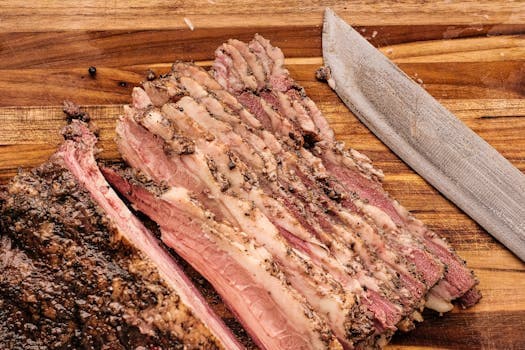
Beef Brisket
Classic American Beef Brisket recipe.
About This Recipe
Beef brisket is the patience-rewarding centerpiece of American barbecue and Sunday dinners alike: a tough, hardworking cut from the steer's chest that low, slow heat transforms into spoon-tender slices laced with rendered fat. Whether smoked Texas-style with nothing but salt and pepper or braised in the oven with onions and stock, the principle is the same — hold the meat at gentle temperatures long enough for collagen to melt into gelatin. The payoff is deep, beefy flavor, a rosy interior, and slices that bend without falling apart. This recipe walks the oven-braised route, the most reliable path for home cooks without a smoker.
Ingredients
Serves 4
- 4 lbsbeef brisket flat(fat cap trimmed to 0.25 inch)
- 1.5 tspcoarse kosher salt
- 1.5 tspcoarse black pepper
- 1 tspsmoked paprika
- 1 tbspvegetable oil
- 2 largeyellow onions(sliced)
- 4 clovesgarlic(smashed)
- 2 cupsbeef stock
- 1 tbsptomato paste
- 1 tspWorcestershire sauce
Instructions
- 1
Prepare
Trim the brisket fat cap to about a quarter inch, then season generously on all sides with coarse salt, black pepper, and paprika. Let it sit at room temperature for 45 minutes so the seasoning penetrates and the meat cooks evenly.
- 2
Cook
Sear the brisket in a roasting pan or Dutch oven over medium-high heat for 4 to 5 minutes per side until deeply browned. Remove it, then soften sliced onions and garlic in the drippings before deglazing with stock.
- 3
Combine
Return the brisket fat-side up, cover tightly with foil or a lid, and braise at 300°F for 3 to 4 hours until a fork twists easily in the thickest part, roughly 200°F internal. Baste with pan juices every hour.
Tenderness, not time, is the test: the brisket is done when a fork slides in with no resistance.
- 4
Serve
Rest the brisket, loosely tented, for at least 30 minutes before carving. Slice against the grain into pencil-thick slices and serve moistened with the defatted pan juices.
The grain changes direction between the flat and the point; rotate the meat as you carve so every slice is cut across it.
Did you make this?
Rate it and help other cooks find the recipes that actually work.
One tap to sign in, and we'll save the rating you just picked.
Everything you need to plan your week — free
- Meal calendar
- Grocery list
- AI recipe ideas
Track what you eat
Snap your meal to log calories and macros, run fasting timers and track water in the free SnapCal app.
Pro Tips
- →
Buy a brisket flat with an even thickness so the thin end does not dry out before the thick end is tender.
- →
Cook to feel, not the clock; briskets vary, and probe-tender around 200°F is the real finish line.
- →
Resting at least 30 minutes lets juices redistribute; slicing hot pours them onto the board instead.
- →
Always slice against the grain, or even perfect brisket will chew like rope.
- →
Make it a day ahead: chilled brisket slices cleanly and reheats in its own gelled juices.
Variations
- •
Texas smoked style: rub with equal parts salt and coarse pepper and smoke at 250°F over oak for 10 to 12 hours.
- •
Jewish holiday braise: add carrots, tomato paste, and a splash of red wine, then braise covered until falling apart.
- •
Barbecue-sauce finish: brush slices with sauce and broil 3 minutes for a sticky glaze.
- •
Smoky oven cheat: add a tablespoon of smoked paprika and a few drops of liquid smoke to the braising liquid.
Storage
Refrigerate sliced brisket submerged in its juices for up to 4 days; the flavor improves overnight. Freeze portions with juices for up to 3 months and reheat covered at 300°F until warmed through.
History & Origin
Brisket entered American barbecue through Texas meat markets run by German and Czech immigrants in the late 1800s, who smoked the cheap, tough cut to sell to farmhands. In parallel, Jewish American families made braised brisket the centerpiece of Rosh Hashanah and Passover tables, a tradition carried from Eastern Europe. The two lineages still define how Americans cook the cut today: smoke and salt in the South, onions and braising liquid up North.
Frequently Asked Questions
Why is my brisket tough even after hours of cooking?
Counterintuitively, tough brisket is usually undercooked, not overcooked. The collagen that makes the cut chewy only fully melts around 195°F to 205°F internal. If a fork meets resistance, cover it and keep cooking; another hour often transforms it completely.
Should I cook brisket fat-side up or down?
Fat-side up in the oven, so rendering fat bastes the meat as it cooks. On a smoker with heat from below, many pitmasters go fat-side down to shield the flesh. Either way, leave about a quarter inch of fat cap for moisture.
What is the difference between the flat and the point?
The flat is the leaner, rectangular muscle that slices neatly, while the point is the fattier, more marbled end used for burnt ends and chopped brisket. Whole packer briskets include both; grocery stores usually sell just the flat.
Can I make brisket ahead of time?
Brisket is genuinely better the next day. Chill it whole in its braising liquid, then slice cold, where it cuts cleanly, and reheat the slices in the juices at 300°F. The rest in the refrigerator deepens flavor and makes serving stress-free.
Nutrition Facts
Per serving (300g / 10.6 oz) · 4 servings total
Time Summary
Have Questions?
Ask our AI cooking assistant anything about this recipe — substitutions, techniques, scaling.
Chat with AI Chef →Featured in Guides
This recipe is featured in the following curated guides:
More American Recipes
You Might Also Like
Similar dishes from other cuisines around the world.
Browse by Ingredient
More recipes built around the same core ingredients.
Free Kitchen Tools
Calculators and converters that pair with this page — no signup needed.
Put This Into a Plan
Schedule it, shop for it, and track what you already have.
Read Next
Longer reads that go deeper on the ideas behind this dish.
Community
Join the conversation
Sign in to leave a comment and save your favourite recipes