
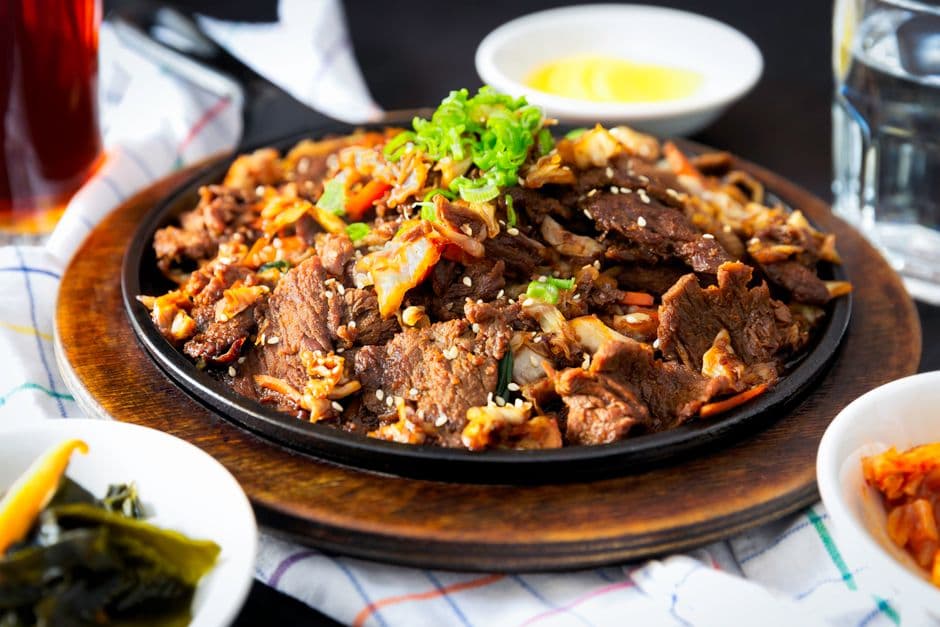
Beef Bulgogi
Thinly sliced beef marinated in a sweet-savoury soy and pear sauce, then quickly grilled or pan-fried to smoky perfection.
About This Recipe
Bulgogi — literally meaning 'fire meat' in Korean — is one of Korea's most internationally celebrated dishes. Thin slices of beef are marinated in a mixture featuring soy sauce, sesame oil and Asian pear, which acts as a natural tenderiser through the enzyme bromelin. The dish was historically associated with Korean royalty and nobility before becoming a beloved everyday meal. While traditionally cooked over a charcoal grill at the table, bulgogi adapts beautifully to a very hot cast-iron skillet or griddle pan at home, delivering the characteristic caramelised edges and juicy interior that define the dish. Rooted in the everyday cooking of Korean kitchens, Beef Bulgogi balances technique and tradition: the beef ribeye or sirloin is treated with care, drawing on time-honoured ratios that locals have refined across generations. The dish carries an unmistakable sensory signature — aromas that fill the kitchen as it cooks, layered textures that reveal themselves bite by bite, and a depth of flavour that comes from patient seasoning rather than shortcuts. Whether served as a weeknight dinner or as the centrepiece of a celebratory table, it reflects a regional pantry where local produce, seasoning habits and cooking vessels shape the final result. Home cooks who make this dish often note how forgiving it is once the core method is understood, and how a few small choices — the freshness of the beef ribeye or sirloin, the order of additions, the resting time at the end — separate a good version from a memorable one. This recipe walks through those choices so the dish arrives with the character it has on its home turf.
Ingredients
Serves 4
- 600 gbeef ribeye or sirloin(sliced very thin (2–3 mm))
- 0.5Asian pear or kiwi(grated)
- 4 tbspsoy sauce
- 2 tbspsesame oil
- 1.5 tbspbrown sugar
- 4 clovesgarlic(minced)
- 1 tspfresh ginger(grated)
- 2spring onions(finely sliced)
- 1 tbspsesame seeds(toasted)
- 1medium onion(thinly sliced)
- 1 tbspvegetable oil(for cooking)
- 2spring onions(for garnish)
Instructions
- 1
Slice the beef
If your butcher has not sliced the beef, partially freeze it for 1 hour until firm but not solid. Slice across the grain as thinly as possible — 2 to 3 mm. Thin slices are the most important factor for authentic bulgogi texture.
- 2
Make the marinade
Combine grated pear (or kiwi), soy sauce, sesame oil, brown sugar, garlic and ginger in a bowl. Stir until sugar dissolves. The pear provides natural meat-tenderising enzymes and subtle sweetness.
Asian pear is traditional and most effective. Kiwi is more widely available and works well. Avoid pineapple — it is too aggressive and can make the meat mushy if marinated too long.
- 3
Marinate
Add sliced beef and sliced onion to the marinade. Mix well so every piece is coated. Marinate for at least 30 minutes at room temperature, or up to 4 hours in the refrigerator.
- 4
Cook in batches
Heat a cast-iron skillet, griddle pan or wide frying pan over the highest heat until smoking. Add vegetable oil and cook the beef in thin, uncrowded batches. Leave undisturbed for 60 seconds to caramelise, then toss and cook for another 30–60 seconds. The beef should have charred edges and be cooked through.
Overcrowding is the enemy of bulgogi — too many slices release moisture and the meat steams instead of caramelising. Work in 3–4 small batches.
- 5
Garnish and serve
Transfer to a serving platter. Scatter toasted sesame seeds and sliced spring onions over the top. Serve immediately with steamed rice, kimchi, and lettuce leaves for wrapping.
Did you make this?
Rate it and help other cooks find the recipes that actually work.
One tap to sign in, and we'll save the rating you just picked.
Everything you need to plan your week — free
- Meal calendar
- Grocery list
- AI recipe ideas
Track what you eat
Snap your meal to log calories and macros, run fasting timers and track water in the free SnapCal app.
Pro Tips
- →
The thinner the beef, the better — if slicing at home, a brief freeze and a very sharp knife are essential.
- →
Ask your butcher to slice ribeye paper-thin for bulgogi — many Korean butchers offer this as a standard service.
- →
Serve with ssam — a selection of lettuce leaves, perilla leaves, rice, kimchi and gochujang paste for each diner to assemble their own wraps at the table.
- →
Leftover bulgogi makes exceptional fried rice the next day — stir it into fried rice with kimchi and a fried egg on top.
- →
Source the freshest beef ribeye or sirloin you can find — it is the flavour anchor of the dish.
Variations
- •
Dwaeji bulgogi: Substitute pork shoulder, sliced thin, and add 1 tbsp gochujang paste to the marinade for a spicy pork version.
- •
Chicken bulgogi: Use thinly sliced chicken thigh and marinate for only 30 minutes, as chicken tenderises faster than beef.
- •
Mushroom bulgogi: Replace meat with king oyster and shiitake mushrooms, sliced into strips. Reduce marinating time to 15 minutes.
- •
Vegetarian: replace the main protein with mushrooms, paneer, tofu or hearty beans for a meat-free version.
- •
Spicier: add fresh chilli, a chilli paste or a pinch of cayenne with the aromatics for a warmer profile.
Storage
Raw marinated bulgogi keeps refrigerated for up to 24 hours — the acidity of the pear continues to break down the protein. Cooked bulgogi keeps for 3 days; reheat in a hot pan to restore caramelisation.
History & Origin
Bulgogi's origins trace back to the Goguryeo kingdom (37 BCE–668 CE), where a dish called maekjeok — spiced meat grilled on skewers — is recorded in historical texts. It evolved through the Joseon Dynasty into neobiabi and eventually the modern marinade-based bulgogi. Historically a royal and aristocratic dish due to the expense of beef, it became accessible to all Koreans during the 20th century economic development and is now Korea's most internationally recognised dish.
Frequently Asked Questions
Can I make Beef Bulgogi ahead of time?
Yes — most components hold well in the fridge for a day or two. Reheat gently with a splash of liquid to bring it back to life.
What can I substitute for beef ribeye or sirloin?
If beef ribeye or sirloin is hard to find, the closest substitutes share its texture and water content. Adjust seasoning slightly since substitutes often carry less character of their own.
Is this recipe authentic to Korean cooking?
It follows the most widely accepted home-cook template. Regional variants exist and we note the main ones in the variations section.
Why did my version turn out bland?
Usually under-seasoning or rushing the aromatic stage. Build flavour in layers, taste as you go, and finish with a touch of acid or salt to brighten the dish.
Nutrition Facts
Per serving (250g / 8.8 oz) · 4 servings total
Time Summary
Have Questions?
Ask our AI cooking assistant anything about this recipe — substitutions, techniques, scaling.
Chat with AI Chef →Featured in Guides
This recipe is featured in the following curated guides:
More Korean Recipes
You Might Also Like
Similar dishes from other cuisines around the world.
Browse by Ingredient
More recipes built around the same core ingredients.
Free Kitchen Tools
Calculators and converters that pair with this page — no signup needed.
Put This Into a Plan
Schedule it, shop for it, and track what you already have.
Read Next
Longer reads that go deeper on the ideas behind this dish.
Community
Join the conversation
Sign in to leave a comment and save your favourite recipes