
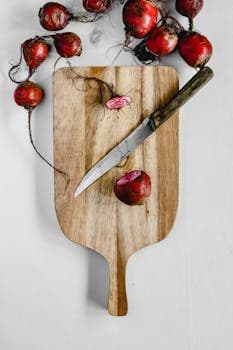
Beets Tibs
Ethiopian sautéed beets with onions and spiced butter — sweet, earthy, vibrant.
About This Recipe
Key sir — beets — bring a jolt of magenta to the earth-toned Ethiopian platter, and this tibs treatment is the liveliest way to serve them. Pre-boiled beet cubes are tossed over high heat with onions, green pepper, ginger, and niter kibbeh until their edges caramelize, concentrating their sweetness against the chili and spiced butter. On a beyaynetu platter the beets sit alongside golden kik alicha and deep-red misir wat, eaten by tearing injera and pinching up a little of everything; made with oil instead of butter, the dish is fully vegan and a regular on Orthodox fasting (tsom) menus. It is simple, fast, and almost impossible to make look unappetizing.
Ingredients
Serves 4
- 600 gbeets, boiled, peeled, and cubed
- 3 tbspniter kibbeh
- 1 largeonion, diced
- 1 greenbell pepper, diced
- 1 tbspfresh ginger, grated
- 2 clovesgarlic, minced
- 1/2 tspground chili
- 1 tspsalt
Instructions
- 1
Sauté aromatics
Heat the niter kibbeh in a wide skillet over medium-high heat and cook the onion for about 8 minutes, stirring occasionally, until golden at the edges and sweet. Stir in the garlic, ginger, and ground chili and cook 1 minute more, just until the spices bloom in the fat without scorching.
Boil the beets whole and unpeeled up to two days ahead — the skins slip off under cold water and the dish becomes a 15-minute job.
- 2
Add beets
Add the cubed beets and diced bell pepper and spread them across the pan in a rough single layer. Sauté over high heat for 5–7 minutes, tossing only every minute or so — letting the cubes sit undisturbed between stirs is what builds the caramelized, lightly crisped edges that define tibs.
Make sure the beet cubes are dry before they hit the pan; wet beets steam and never caramelize.
- 3
Season and serve
Season with salt, toss once more, and taste — the balance should be sweet from the beets, warm from the ginger, with a low hum of chili. Serve hot or at room temperature on injera, where the magenta juices bleeding into the bread are part of the charm.
Did you make this?
Rate it and help other cooks find the recipes that actually work.
One tap to sign in, and we'll save the rating you just picked.
Everything you need to plan your week — free
- Meal calendar
- Grocery list
- AI recipe ideas
Track what you eat
Snap your meal to log calories and macros, run fasting timers and track water in the free SnapCal app.
Pro Tips
- →
Boil the beets whole with skins on until a knife slides in easily (30–40 minutes), then peel under cold running water — the skins slip right off and your hands stain less.
- →
High heat plus a not-too-crowded pan is what caramelizes the cubes; over low heat they just stew in their own juice.
- →
Dry the boiled beet cubes on a towel before frying — surface moisture is the enemy of browning.
- →
For a vegan fasting-day version, use vegetable oil instead of niter kibbeh and add a pinch of extra ginger.
- →
Leftovers are excellent at room temperature, tossed into a salad with crumbled ayib or feta.
Variations
- •
Key sir dinich: the classic combination — add boiled potato and carrot cubes with the beets for Ethiopia's most popular beet dish.
- •
Add a squeeze of lemon and a handful of chopped cilantro off the heat for a brighter, salad-like finish.
- •
Spice it up with half a teaspoon of berbere instead of plain chili for smoky complexity.
- •
Cold beet salad style: toss the cooked beets with raw red onion, lime juice, and a spoon of the spiced butter, then chill.
Storage
Refrigerate in an airtight container up to 3 days; the flavor actually improves overnight. Serve cold, at room temperature, or quickly reheated in a hot pan.
History & Origin
Beets arrived in Ethiopia relatively recently through trade and Italian influence in the late nineteenth and twentieth centuries, but Ethiopian cooks absorbed them seamlessly into the tibs and alicha repertoire. Key sir, usually paired with potatoes and carrots, is now standard on fasting menus and beyaynetu platters across the country and the diaspora — a textbook example of how Ethiopian cuisine adapts new ingredients to old techniques.
Frequently Asked Questions
Can I use raw beets?
Not directly — raw beets need 40-plus minutes to soften, far longer than a quick tibs sauté allows, and they'd burn outside before tenderizing inside. Boil or steam them whole until knife-tender first, or use vacuum-packed pre-cooked beets, which work surprisingly well here.
Can I roast the beets instead of boiling?
Yes, and many cooks prefer it: wrap whole beets in foil and roast at 200°C for about an hour until tender. Roasting concentrates their sweetness rather than leaching it into water, giving a deeper-flavored tibs. Peel, cube, and proceed exactly as written.
Is this dish vegan?
As written, no — niter kibbeh is spiced butter. But the fasting-day version made with vegetable oil is completely vegan and entirely traditional, since beet dishes are a staple of Ethiopian Orthodox fasting menus. Bloom the garlic, ginger, and chili in the oil to compensate for the butter's aroma.
How do I keep beets from staining everything?
Boil them whole and unpeeled so the color stays sealed inside, then peel under cold running water. Use a plastic cutting board (wood holds stains), and rub your hands with lemon juice or oil before handling. On the plate, embrace it — the pink-stained injera is considered part of the dish's appeal.
Nutrition Facts
Per serving (250g / 8.8 oz) · 4 servings total
Time Summary
Have Questions?
Ask our AI cooking assistant anything about this recipe — substitutions, techniques, scaling.
Chat with AI Chef →More Ethiopian Recipes
You Might Also Like
Similar dishes from other cuisines around the world.
Browse by Ingredient
More recipes built around the same core ingredients.
Free Kitchen Tools
Calculators and converters that pair with this page — no signup needed.
Put This Into a Plan
Schedule it, shop for it, and track what you already have.
Read Next
Longer reads that go deeper on the ideas behind this dish.
Community
Join the conversation
Sign in to leave a comment and save your favourite recipes