
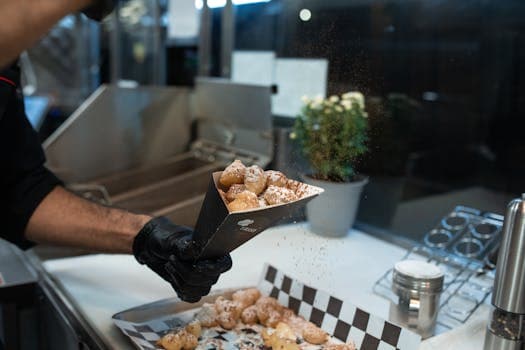
Beignets
Classic American Beignets recipe.
About This Recipe
Beignets are New Orleans' pillow-shaped doughnuts: squares of soft, yeasted dough fried until they balloon hollow and golden, then buried under an avalanche of powdered sugar and eaten scorching hot with café au lait. The dough is enriched with evaporated milk and a little butter, rolled thin, and cut into rough squares — no rings, no holes, no glaze. At Café du Monde they have been served around the clock since 1862, three to an order, sugar drifting onto every table in the French Market. At home the keys are a well-rested dough, oil held at 350°F, and the discipline to sugar and serve them within minutes of frying.
Ingredients
Serves 4
- 2.5 cupsall-purpose flour(plus more for dusting)
- 1 tspinstant yeast
- 0.25 cupwarm water (110°F)
- 2 tbspgranulated sugar
- 0.5 tspkosher salt
- 0.5 cupevaporated milk
- 1 largeegg(beaten)
- 2 tbspunsalted butter(softened)
- 1 qtneutral oil (cottonseed or vegetable)(for frying)
- 1 cuppowdered sugar(be absurdly generous at service)
Instructions
- 1
Prepare
Dissolve yeast in warm water with a spoon of sugar and let it foam for 5 to 10 minutes. Mix in evaporated milk, egg, sugar, salt, and flour, then knead in softened butter until you have a soft, slightly sticky dough.
- 2
Cook
Place the dough in a greased bowl, cover, and let it rise 1 to 2 hours at room temperature until doubled, or refrigerate overnight for deeper flavor and easier rolling.
- 3
Combine
Roll the dough on a floured surface to a quarter inch thick and cut into 2½-inch squares; do not reroll scraps more than once. Heat 3 inches of oil to 350°F in a heavy pot.
If the squares do not puff, the oil is too cool or the dough was rolled too thick — check both before the next batch.
- 4
Serve
Fry 3 or 4 squares at a time, flipping every 30 seconds, for about 2 minutes total until puffed and golden on both sides. Drain briefly, then shower immediately and generously with powdered sugar and serve hot.
Flipping early and often is the secret to even puffing; dough left on one side balloons lopsided.
Did you make this?
Rate it and help other cooks find the recipes that actually work.
One tap to sign in, and we'll save the rating you just picked.
Everything you need to plan your week — free
- Meal calendar
- Grocery list
- AI recipe ideas
Track what you eat
Snap your meal to log calories and macros, run fasting timers and track water in the free SnapCal app.
Pro Tips
- →
Keep the oil at a steady 350°F; cooler oil makes greasy, flat beignets and hotter oil browns them raw inside.
- →
An overnight cold rise improves flavor and makes the soft dough far easier to roll.
- →
Be absurdly generous with the powdered sugar; restraint misses the point.
- →
Serve within 5 minutes of frying — beignets wait for no one.
- →
Cottonseed oil is the Café du Monde tradition, but any neutral oil works.
Variations
- •
Chocolate-stuffed: seal a square of dark chocolate inside each pillow before frying.
- •
Savory beignets: skip the sugar dough and fill with crawfish or crab, a popular Louisiana appetizer.
- •
Praline drizzle: finish with warm pecan-caramel sauce over the powdered sugar.
- •
Cinnamon-sugar tossed: swap the powdered sugar for cinnamon sugar while hot.
Storage
Beignets are best within minutes and decent within hours; store leftovers loosely covered at room temperature for a day and revive in a 350°F oven for 4 minutes, re-dusting with fresh sugar. The unrolled dough keeps refrigerated up to 24 hours.
History & Origin
Beignets came to Louisiana with French colonists in the eighteenth century, descendants of French fritter traditions, and some food historians credit Ursuline nuns with bringing early recipes to New Orleans. Café du Monde, opened in the French Market in 1862, made the square, powdered-sugar version the city's icon, pairing it with chicory café au lait. In 1986 the beignet was named the official state doughnut of Louisiana — a Creole city treat through and through.
Frequently Asked Questions
Why didn't my beignets puff up?
The usual culprits are oil below 350°F, dough rolled thicker than a quarter inch, or a tired rise. The steam that inflates the hollow center needs hot oil and a thin, even sheet of dough. Test one square first and adjust before frying the batch.
Can I make the dough ahead of time?
Yes — the dough actually improves with an overnight rest in the refrigerator, developing flavor and becoming much easier to roll. Punch it down, wrap it well, and use it within 24 hours. Roll and cut straight from the fridge; cold dough handles beautifully.
What is the difference between a beignet and a doughnut?
Beignets are square, hole-less, and fried so they puff hollow rather than cake-like, then finished only with powdered sugar — never glaze or filling in the classic form. The dough is a lightly sweetened yeast dough enriched with evaporated milk, lighter than standard doughnut dough.
What do you serve with beignets?
Café au lait made with chicory coffee and hot milk is the inseparable New Orleans partner; the slightly bitter brew balances the sugar. Hot chocolate is the traditional choice for children. Beyond drinks, they need nothing — beignets are the entire event.
Nutrition Facts
Per serving (300g / 10.6 oz) · 4 servings total
Time Summary
Have Questions?
Ask our AI cooking assistant anything about this recipe — substitutions, techniques, scaling.
Chat with AI Chef →Featured in Guides
This recipe is featured in the following curated guides:
More American Recipes
You Might Also Like
Similar dishes from other cuisines around the world.
Free Kitchen Tools
Calculators and converters that pair with this page — no signup needed.
Put This Into a Plan
Schedule it, shop for it, and track what you already have.
Read Next
Longer reads that go deeper on the ideas behind this dish.
Community
Join the conversation
Sign in to leave a comment and save your favourite recipes