
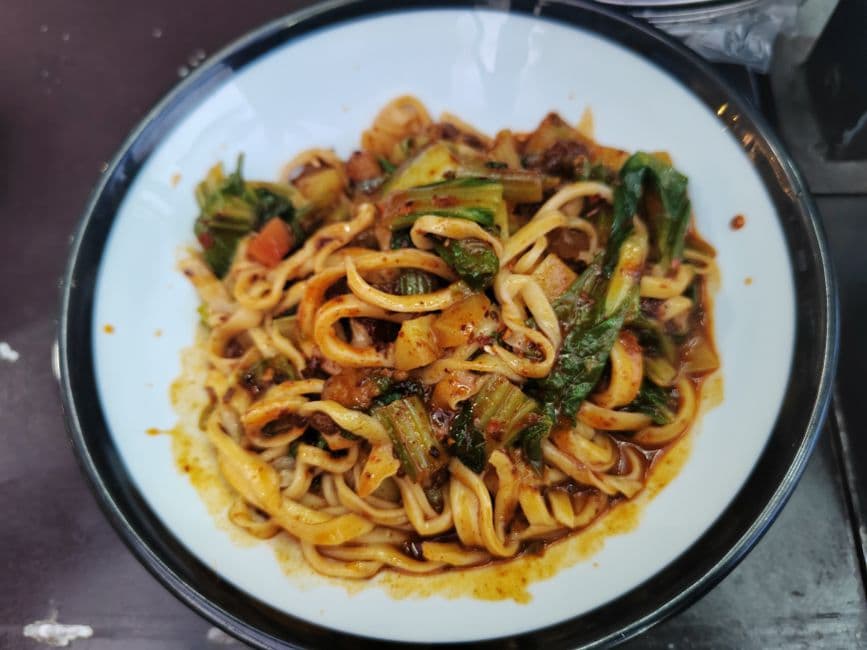
Beijing Zhajiangmian (Fried Sauce Noodles)
Beijing's hearty noodle bowl — thick wheat noodles tossed with deeply savory fermented bean sauce and pork, finished with a rainbow of crunchy raw vegetables.
About This Recipe
Zhajiangmian — 'fried sauce noodles' — is the defining noodle dish of Beijing, eaten in every hutong household and served in steaming clay bowls at lao Beijing restaurants from Qianmen to Wangfujing. The soul of the dish is the sauce: a paste of huangjiang (yellow soybean paste) and tianmianjiang (sweet wheat-flour paste) cooked patiently with minced pork and aromatics until the oil separates and the sauce turns mahogany-dark, salty-sweet, and intensely umami. It's spooned generously over a mound of thick hand-cut wheat noodles still hot from the pot, then crowned with a Beijing-classic 'eight treasures' garnish: julienned cucumber, radish, blanched soybeans, raw garlic, scallion, fresh chili, blanched bean sprouts, and shredded celery. The diner mixes everything at the table — bā jiàng noodles must be tossed at least 30 times so every strand wears a coat of sauce and the vegetables crackle with every bite. The contrast is the genius: hot soft noodles, salty-rich sauce, cold crunchy raw vegetables, fresh garlic punch. Cheap, fast, deeply satisfying, and unmistakably Beijing — every emigré from the capital craves it within a week of leaving.
Ingredients
Serves 4
- 400 gminced pork belly (or pork shoulder, 25 percent fat)
- 120 ghuangjiang (yellow soybean paste)
- 80 gtianmianjiang (sweet wheat-flour paste)
- 40 mlneutral oil
- 30 gfresh ginger, minced
- 4scallions, white parts minced, greens reserved
- 30 mlShaoxing wine
- 20 gsugar
- 200 mlwater
- 500 gfresh thick wheat noodles (or 350 g dried)
- 1cucumber, julienned
- 1white radish or daikon, julienned
- 100 gfresh edamame or soybeans, blanched
- 100 gbean sprouts, blanched 30 seconds
- 3 clovesgarlic, finely chopped (for topping)
- 2fresh red chillies, sliced (optional)
Instructions
- 1
Combine the pastes
Whisk huangjiang and tianmianjiang together in a bowl with 100 ml water until smooth and pourable. The two pastes balance each other — huangjiang for salt and umami, tianmianjiang for sweetness and color.
- 2
Render the pork
Heat oil in a wok or heavy pan over medium-high. Add minced pork and stir-fry 6 minutes, breaking up clumps, until fat renders and meat is golden and slightly crispy at edges. This is critical — undercooked pork tastes pale.
- 3
Build aromatics
Push pork to one side, add ginger and scallion whites to the rendered fat. Stir-fry 90 seconds until fragrant, then deglaze with Shaoxing wine and let it bubble off (45 seconds).
- 4
Add the sauces and simmer
Pour in the combined bean pastes and sugar. Reduce heat to medium-low and cook, stirring constantly, 12–15 minutes. The sauce should darken to deep brown and oil should pool on the surface — this 'oil-out' stage is when zhajiang is done. Add remaining water if it gets too thick.
- 5
Prep the toppings
While the sauce simmers, julienne cucumber and radish, blanch bean sprouts and edamame, slice scallion greens, mince garlic, and slice chillies. Arrange all in small bowls on the table.
- 6
Cook the noodles
Bring a large pot of unsalted water to a rolling boil. Cook noodles per package directions (fresh: 3 minutes; dried: 6–7 minutes) until just tender. Drain in a colander, do not rinse — the starchy surface helps sauce cling.
- 7
Assemble bowls
Divide hot noodles among 4 deep bowls. Spoon a generous 4 tablespoons of zhajiang sauce on top, then arrange a small mound of each vegetable around the edge like a color wheel.
- 8
Mix and eat
Bring to the table. Each diner tosses their own bowl vigorously with chopsticks — at least 30 strokes — until every noodle is sauced and every vegetable is distributed. Eat immediately.
Did you make this?
Rate it and help other cooks find the recipes that actually work.
One tap to sign in, and we'll save the rating you just picked.
Everything you need to plan your week — free
- Meal calendar
- Grocery list
- AI recipe ideas
Track what you eat
Snap your meal to log calories and macros, run fasting timers and track water in the free SnapCal app.
Pro Tips
- →
The two pastes (huangjiang and tianmianjiang) are sold at Chinese grocers — substitute miso (white for huangjiang) and hoisin (for tianmianjiang) in a pinch, but the flavor will be different.
- →
Cook the sauce until you see oil separating — that's the Beijing 'oil-out' standard and indicates the bean paste raw notes are cooked off.
- →
Use thick noodles — thin noodles (like Japanese ramen) get drowned. Look for 'thick wheat noodles' or 'lao Beijing mian' frozen in Asian groceries.
- →
Toss vigorously at the table — at least 30 strokes. Under-tossed bowls give bland mouthfuls of plain noodle then sauce-bomb mouthfuls.
Variations
- •
Vegetarian: replace pork with crumbled extra-firm tofu and add diced shiitake for umami.
- •
Korean jjajangmyeon: Korean offshoot using chunjang (a darker, sweeter paste) and adding potato, onion, and zucchini cubes; sauce is darker and sweeter.
- •
Cold zhajiangmian — popular in summer; rinse noodles in ice water before topping; sauce served at room temperature.
- •
Spicy Sichuan-style: add 2 tbsp doubanjiang (broad bean chili paste) to the sauce for a fiery non-traditional version.
Storage
Zhajiang sauce keeps refrigerated 1 week (improves with age) and freezes 3 months in portion-size containers. Cook noodles fresh each time — leftover sauced noodles turn gluey.
History & Origin
Zhajiangmian originated in Shandong province but became iconic in Beijing during the Qing dynasty, where the imperial court and ordinary citizens both ate versions. The 'eight treasure' garnish style was codified in late-Qing Beijing and remains the standard against which all zhajiangmian is judged.
Frequently Asked Questions
What's the difference between zhajiangmian and jjajangmyeon?
Zhajiangmian is the Chinese original with a salty-savory yellow-bean sauce. Korean jjajangmyeon (created by Chinese immigrants in Incheon ~1905) uses a different paste called chunjang — darker, sweeter, with caramelized onion and potato. Different dishes with shared ancestry.
Can I use a food processor for the sauce?
No — the texture comes from cooking minced pork until the bits crisp slightly. Processed sauce becomes pasty and lacks the chunk-meat character.
Is huangjiang the same as miso?
They're related (both fermented soybean pastes) but huangjiang is coarser, saltier, and tastes more strongly of soybean. White miso can substitute at a pinch but lacks depth.
Why are the vegetables raw?
Cold, crunchy raw vegetables are the textural counterpoint to hot, soft sauced noodles — that's the whole concept of the dish. Cooking them defeats the purpose.
Nutrition Facts
Per serving (420g / 14.8 oz) · 4 servings total
Time Summary
Have Questions?
Ask our AI cooking assistant anything about this recipe — substitutions, techniques, scaling.
Chat with AI Chef →Featured in Guides
This recipe is featured in the following curated guides:
More Chinese Recipes
You Might Also Like
Similar dishes from other cuisines around the world.
Browse by Ingredient
More recipes built around the same core ingredients.
Free Kitchen Tools
Calculators and converters that pair with this page — no signup needed.
Put This Into a Plan
Schedule it, shop for it, and track what you already have.
Read Next
Longer reads that go deeper on the ideas behind this dish.
Community
Join the conversation
Sign in to leave a comment and save your favourite recipes