
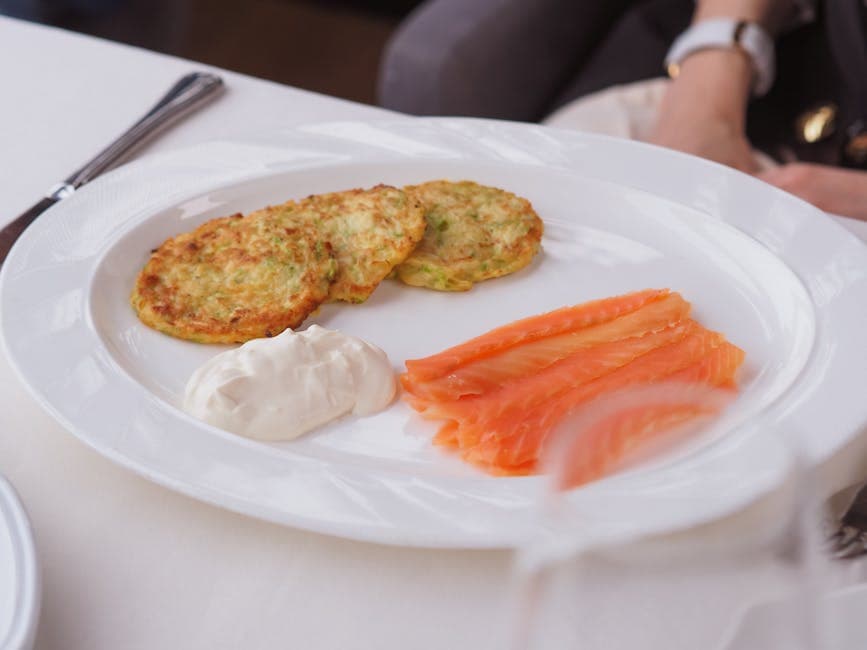
Draniki (Belarusian Potato Pancakes with Sour Cream)
Belarus's national dish: lacy fried potato pancakes from hand-grated raw potato, served hot with cold sour cream and dill.
About This Recipe
Draniki are the national dish of Belarus and the country's defining act of culinary self-identification — to the point that Belarusians call themselves 'bulbashy' (potato people) with affection. The technique is uncompromising: raw potatoes must be grated by hand on the finest holes of a box grater, drained of their liquid (which is reserved for the starch settling at the bottom), then mixed with a small amount of onion, egg, and a tablespoon of flour, and fried in hot lard or sunflower oil until lace-edged, deeply golden, and shatteringly crisp on the outside while staying creamy inside. They are served immediately, blistering hot, with a cold dollop of smetana (Slavic sour cream), a sprinkling of fresh dill, and often a side of mushroom-and-onion gravy or shkvarki (pork cracklings). Every Belarusian grandmother claims her draniki are the best, and the differences come down to potato variety, draining time, and frying fat.
Ingredients
Serves 4
- 1 kgstarchy potatoes (Maris Piper or Russet)
- 1 mediumyellow onion, peeled
- 2 largeeggs
- 2 tbspall-purpose flour
- 1.5 tspfine salt
- 0.5 tspfreshly ground black pepper
- 120 mlsunflower oil or rendered lard, for frying
- 200 gsmetana (Slavic sour cream) or full-fat sour cream, for serving
- 3 tbspfresh dill, chopped, for serving
- 2scallions, sliced, for serving
Instructions
- 1
Grate the potatoes
Peel the potatoes. Grate by hand on the finest holes of a box grater into a bowl. (A food processor's finest disk is acceptable but the texture is noticeably different — hand-grating gives the lacy edges.)
Work quickly so the potato doesn't oxidize and grey. If it does, the draniki will look dingy though they'll still taste fine.
- 2
Grate the onion
Grate the onion onto the same pile — the onion juice contains enzymes that prevent the potato from browning further.
- 3
Drain and save starch
Tip the grated mixture into a clean kitchen towel. Gather and squeeze hard over a bowl, releasing all the liquid. Let the liquid stand 5 minutes — a layer of pure white starch will settle at the bottom. Pour off the liquid and scrape the starch back into the potato.
This reserved starch is what binds the pancakes. Don't skip the settling step.
- 4
Mix the batter
Return the squeezed potato and reclaimed starch to a bowl. Add the eggs, flour, salt, and pepper. Mix well — the batter should be loose but cohesive, with no free water.
- 5
Heat the oil
Heat oil or lard in a heavy skillet over medium-high until shimmering hot. The oil should be 1 cm deep and at about 180°C — drop a small piece of potato in to test; it should sizzle vigorously immediately.
- 6
Fry in batches
Drop heaping tablespoons of batter into the oil, flattening gently to about 8 cm rounds. Don't crowd — 3 to 4 at a time. Fry 3 minutes per side until deeply golden brown with lacy frilly edges.
- 7
Drain and hold warm
Lift to a wire rack (not paper towels — they steam the underside). Keep warm in a 100°C oven while you fry the rest.
- 8
Serve immediately
Pile draniki on a warm plate. Top each with a generous spoon of cold smetana, a shower of dill and scallions. Eat at once — draniki lose their crispness fast.
Did you make this?
Rate it and help other cooks find the recipes that actually work.
One tap to sign in, and we'll save the rating you just picked.
Everything you need to plan your week — free
- Meal calendar
- Grocery list
- AI recipe ideas
Cook this hands-free
Get AI meal plans, step-by-step cooking mode, and your saved recipes in the free Bento app.
Pro Tips
- →
Use only starchy potatoes — Maris Piper, Russet, or King Edward. Waxy potatoes (Yukon Gold, red potatoes) won't bind and will fall apart in the pan.
- →
The reserved starch from the drained liquid is what holds draniki together — if you skip the settling step, you'll need to add an extra tablespoon of flour, but the result is less authentic.
- →
Frying in rendered pork lard rather than oil gives the truest Belarusian flavor — bacon fat works as a substitute, sunflower oil is the everyday choice.
Variations
- •
Draniki s myasom: stuff each pancake with a teaspoon of cooked seasoned ground pork before frying — a hearty winter dish.
- •
Add 2 tablespoons of finely grated cheese to the batter for richer pancakes.
- •
Lithuanian-style (žemaičių blynai): use the same batter but stuff with sautéed onion-and-mushroom before frying.
Storage
Best eaten within 15 minutes of frying. Leftovers keep refrigerated up to 2 days; reheat on a dry skillet (never microwave) for 90 seconds per side to restore crispness.
History & Origin
Potato pancakes are common across the Slavic and Baltic world (latkes in Jewish cuisine, placki in Polish, deruny in Ukrainian), but draniki are particularly identified with Belarus, where potatoes became the dominant peasant crop after Catherine the Great's late-18th-century policy of expanding potato cultivation. By the late 19th century draniki were eaten daily across the Belarusian countryside, and they survived the 20th century as a national emblem.
Frequently Asked Questions
Can I use a food processor to grate?
Yes, but use the finest grating disk and the result will be slightly different — the food processor over-shreds and you lose the lacy edge. Hand-grating gives the authentic look.
Why are my draniki falling apart?
Either your potatoes were too waxy, or you didn't drain enough liquid. Squeeze the grated potato until you genuinely can't release more water, and reclaim the starch from the settled liquid.
What's the difference between draniki and latkes?
Draniki are Belarusian and traditionally have onion and only egg + a touch of flour as binder. Latkes are Jewish/Ashkenazi and often have more flour or matzo meal — a slightly different texture and tradition.
Nutrition Facts
Per serving (280g / 9.9 oz) · 4 servings total
Time Summary
Have Questions?
Ask our AI cooking assistant anything about this recipe — substitutions, techniques, scaling.
Chat with AI Chef →Featured in Guides
This recipe is featured in the following curated guides:
More Belarusian Recipes
You Might Also Like
Similar dishes from other cuisines around the world.
Free Kitchen Tools
Calculators and converters that pair with this page — no signup needed.
Put This Into a Plan
Schedule it, shop for it, and track what you already have.
Read Next
Longer reads that go deeper on the ideas behind this dish.
Community
Join the conversation
Sign in to leave a comment and save your favourite recipes