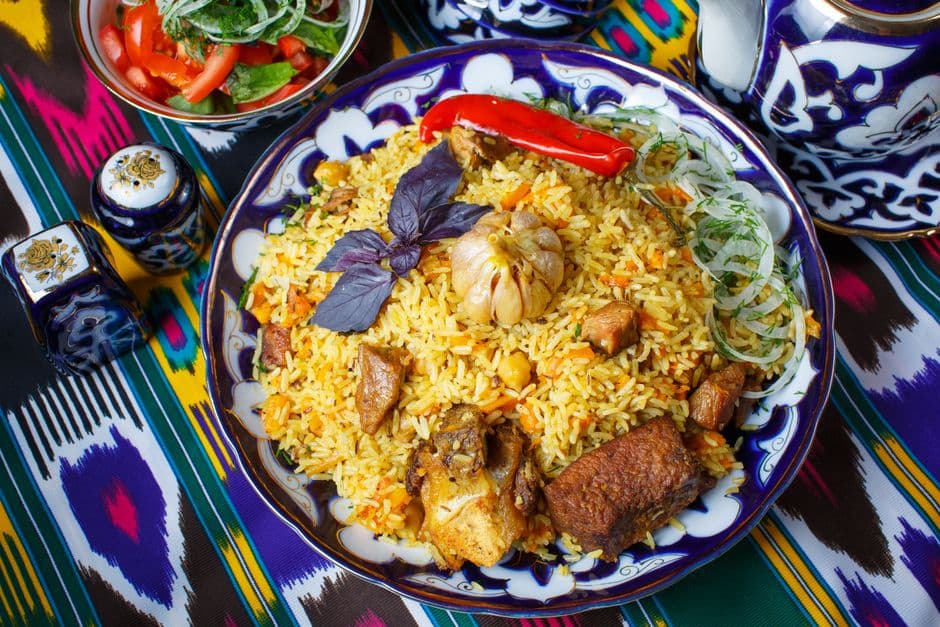
Kazakhstan's national dish — tender boiled lamb on wide flat noodles with caramelised onion broth, eaten with the hands.
Beshbarmak (meaning 'five fingers' in Kazakh) is the national dish of Kazakhstan and a symbol of Kazakh hospitality and nomadic pastoral culture. It is the dish served to honoured guests, at weddings and celebrations, and its preparation follows a ceremony: the most honoured guest receives the sheep's head; the ears go to children who should listen well; the eyes to those who should be observant. The dish is traditionally eaten with the hands (hence 'five fingers'). It consists of wide, flat hand-made noodles (the best approximation is pappardelle) topped with boiled lamb and a silky onion sauce (tuzdyk) poured generously over everything. The cooking broth (sorpa) is served alongside in small bowls as a digestif. It is the purest expression of Central Asian nomadic cooking.
Serves 6
Place lamb in a large pot. Cover with cold water. Bring to a boil, skim thoroughly. Add whole onion, bay leaves and peppercorns. Simmer 1.5–2 hours until very tender. Remove lamb, shred or slice off the bone.
Cook noodles in the lamb broth until tender. Remove with tongs and toss with a little butter.
Fry sliced onion in butter over medium heat until softened, about 10 minutes. Add black pepper and 3–4 ladles of the strained lamb broth. Simmer 5 minutes until slightly reduced.
The tuzdyk is the soul of beshbarmak — a generous amount is essential.
Pile noodles on a large communal plate. Arrange lamb pieces over the noodles. Pour the tuzdyk generously over everything. Garnish with dill.
Ladle the remaining strained lamb broth into small bowls or cups to serve alongside as sorpa (digestif broth).
Skimming the broth thoroughly at the start gives a clear, beautiful sorpa
The tuzdyk must be generous — this is not a lightly sauced dish
Traditionally eaten from a communal platter with the hands, which enhances the communal spirit of the dish
Taste and adjust salt at the very end — flavors concentrate as liquids reduce, and a final pinch of flaky salt sharpens the whole dish.
In northern Kazakhstan, horse meat (beshbarmak ot zhyly eti) is the most prestigious version.
Beef is used when lamb is unavailable — equally traditional in some Kazakh families.
Vegetarian: swap the protein for roasted king oyster mushrooms, smoked tofu or cooked chickpeas — adjust seasoning slightly upward to compensate.
Spicier: add a finely chopped fresh chile or a teaspoon of crushed Aleppo/Urfa pepper to the aromatics for warm, layered heat instead of a single sharp hit.
Lamb and broth keep 4 days refrigerated. Cook noodles fresh each time.
Beshbarmak is rooted in the nomadic pastoral culture of the Kazakh steppe, where lamb and horse were the primary food sources. The dish has been central to Kazakh social ritual for at least 500 years.
Yes — the name means 'five fingers' in Kazakh. Using hands is traditional and symbolic of the hospitality and communal nature of the dish.
Yes — most of the components can be prepared up to a day in advance and refrigerated separately. Reheat gently and assemble just before serving so textures stay distinct.
Stay close to the role each ingredient plays: swap aromatics for similar ones (shallot for onion, lime for lemon), and keep the fat-acid-salt balance intact. Spice blends can usually be approximated with what's in the cupboard.
Authenticity sits on a spectrum — what matters more is honoring the technique and balance of flavors. If the dish tastes harmonious and respects how cooks in its home region would build it, you're on solid ground.
Per serving · 6 servings total
Ask our AI cooking assistant anything about this recipe — substitutions, techniques, scaling.
Chat with AI Chef →Join the conversation
Sign in to leave a comment and save your favourite recipes