
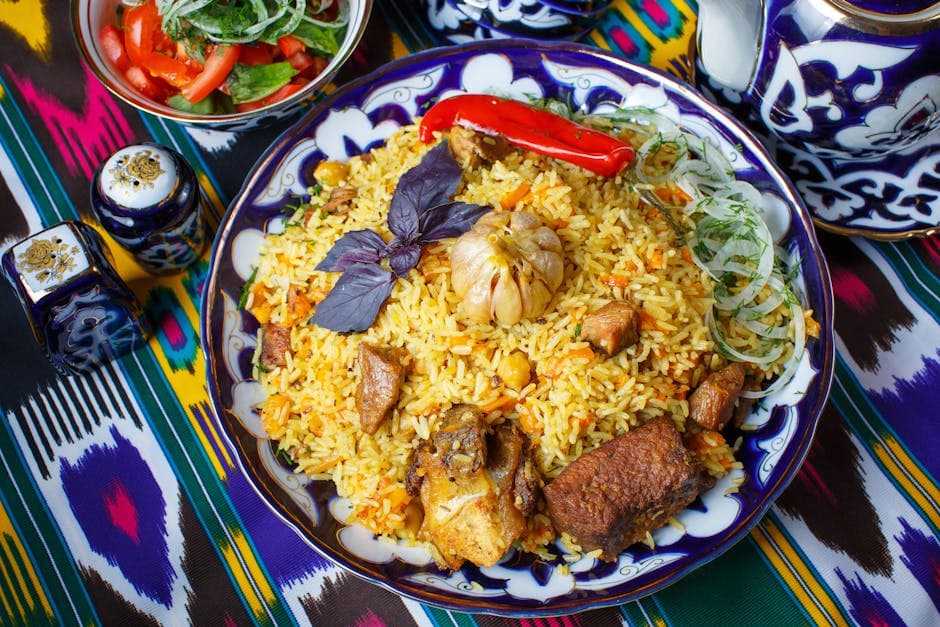
Beshbarmak (Five Fingers)
Kazakhstan's national dish — sheets of hand-rolled noodles bathed in lamb-and-horse-meat broth, eaten with the fingers.
About This Recipe
Beshbarmak literally means 'five fingers' — the dish is eaten without cutlery, scooped up by hand from a shared platter. At its heart is a long, gentle simmer of fatty lamb shoulder and, when available, cured horse meat (kazy), which yields a clear, deeply aromatic sorpa broth. Wide squares of fresh egg-noodle dough are boiled in that same broth so they soak up the meat fat, then layered with the sliced meats and a topping of onions softened in skimmed broth fat (tuzdyk). The eldest guest receives the sheep's head; everyone else gets a portion proportional to their seniority. It is the centrepiece of every Kazakh and Kyrgyz wedding, funeral, and naming ceremony — slow food, communal food, identity food.
Ingredients
Serves 6
- 1.2 kgfatty lamb shoulder, bone-in
- 400 gkazy (cured horse sausage) or beef brisket
- 3 Lcold water
- 2bay leaves
- 10black peppercorns
- 1 tbspsalt, plus more for dough
- 500 gall-purpose flour
- 2 largeeggs
- 150 mlcold water (for dough)
- 3 largeyellow onions, thinly sliced
- 1 tspfreshly ground black pepper
- 1 small bunchfresh parsley or dill, chopped
Instructions
- 1
Start the broth
Place lamb and kazy in a tall pot, cover with cold water, and bring slowly to a simmer. Skim the grey foam off the surface for the first 15 minutes — a clear sorpa is the test of a good cook.
- 2
Long, slow simmer
Add bay, peppercorns, and salt. Cover partially and simmer on the lowest possible heat for 2 hours until the lamb pulls from the bone. Never let it boil hard.
- 3
Make the dough
While meat cooks, mound flour on a board. Crack in eggs, add water and a pinch of salt. Knead 10 minutes to a firm, smooth dough. Wrap and rest 30 minutes.
- 4
Roll and cut
Divide dough in 4. Roll each piece paper-thin (you should almost see through it). Cut into 8 cm squares or diamonds. Dust generously with flour and spread out — they must not stick.
- 5
Skim and make tuzdyk
Ladle 300 ml of the fattiest broth from the surface into a wide pan. Add sliced onions and a generous pinch of pepper. Simmer 10 minutes until onions are translucent and slick — this is tuzdyk.
- 6
Cook the noodles
Lift meat onto a board and tent with foil. Bring broth back to a strong simmer. Drop noodles in batches and cook 4 minutes each — they should still have bite. Lift out with a spider.
- 7
Assemble the platter
Spread the cooked noodles across a large warmed platter. Slice the lamb and kazy thinly and arrange over the noodles. Spoon the tuzdyk onions and their broth fat all over. Sprinkle with parsley.
- 8
Serve sorpa
Strain the remaining broth, ladle into small bowls, and serve alongside the platter as a drinking soup. Eat the beshbarmak by hand, the sorpa by spoon.
Did you make this?
Rate it and help other cooks find the recipes that actually work.
One tap to sign in, and we'll save the rating you just picked.
Everything you need to plan your week — free
- Meal calendar
- Grocery list
- AI recipe ideas
Track what you eat
Snap your meal to log calories and macros, run fasting timers and track water in the free SnapCal app.
Pro Tips
- →
Roll the noodles thinner than feels right — they puff slightly when boiled in fat-rich broth.
- →
Skim the broth obsessively in the first 20 minutes; cloudy sorpa is a sign of an inexperienced cook.
- →
If you can't find kazy, ask a Turkish or Halal butcher for sucuk or use plain beef brisket plus 1 tsp coriander seed.
- →
Serve broth in small handle-less bowls (kese) — it's drunk between bites, not after.
Variations
- •
Kyrgyz version (besh barmak) often uses beef and adds a splash of vinegar to the onions.
- •
Festive Kazakh weddings include zhal (smoked horse-mane fat) sliced over the top.
- •
Modern home cooks sometimes use store-bought lasagna sheets cut into squares for speed.
Storage
Best assembled fresh. Keep components separate up to 2 days; refresh noodles in hot broth for 1 minute before plating.
History & Origin
Beshbarmak descends from the nomadic kitchens of the Kazakh steppe, where boiled meat and grain-paste sheets were the practical answer to mobile cooking on the yurt fire. It became formally codified as Kazakhstan's national dish during the Soviet period and was added to the national cultural heritage list in 2014.
Frequently Asked Questions
Why is it called five fingers?
Traditionally it is eaten by hand from a shared platter, scooping meat and noodles with all five fingers — no forks or spoons except for the sorpa broth bowl.
Can I make it without horse meat?
Yes — most modern home cooks use lamb shoulder alone, or lamb plus beef brisket. The crucial element is fatty, bone-in meat for a rich broth.
What if my noodles stick together?
Make sure they're dusted heavily with flour before cooking, and drop them into the broth in small batches with a swirling motion. Sticking usually means the broth wasn't at a strong enough simmer.
Is beshbarmak the same as Kyrgyz beshbarmak?
Very similar — both share the noodles-meat-onion structure. Kyrgyz versions tend toward beef and a slightly sharper onion sauce; Kazakh versions emphasise lamb and kazy.
Nutrition Facts
Per serving (420g / 14.8 oz) · 6 servings total
Time Summary
Have Questions?
Ask our AI cooking assistant anything about this recipe — substitutions, techniques, scaling.
Chat with AI Chef →Featured in Guides
This recipe is featured in the following curated guides:
More Kazakh Recipes
You Might Also Like
Similar dishes from other cuisines around the world.
Browse by Ingredient
More recipes built around the same core ingredients.
Free Kitchen Tools
Calculators and converters that pair with this page — no signup needed.
Put This Into a Plan
Schedule it, shop for it, and track what you already have.
Read Next
Longer reads that go deeper on the ideas behind this dish.
Community
Join the conversation
Sign in to leave a comment and save your favourite recipes