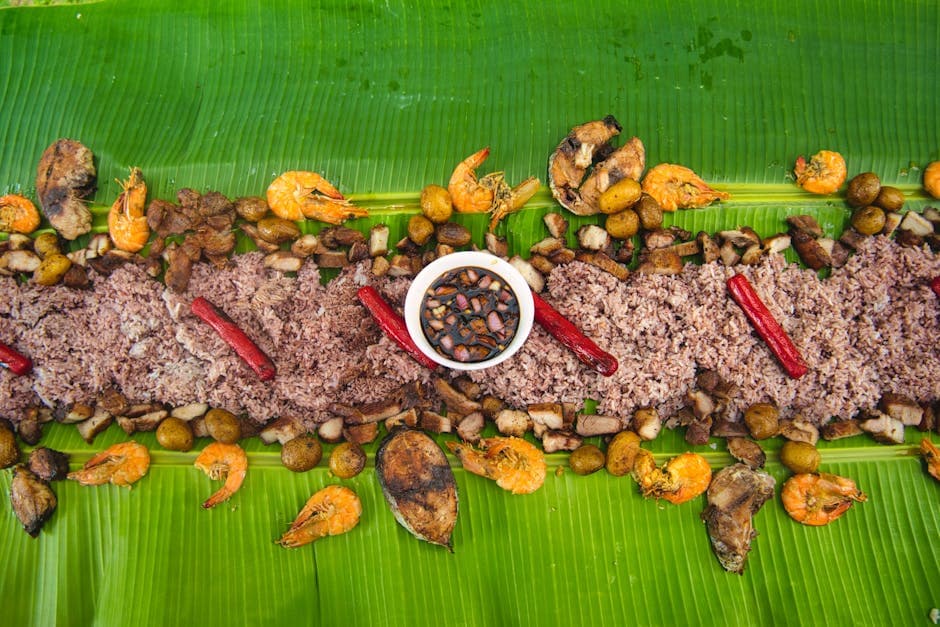
A fiery Filipino pork and coconut milk stew from the Bicol region — tender pork cooked with chilies, shrimp paste, and coconut milk until the sauce is rich and intensely spicy.
Bicol Express was named after the passenger train that ran from Manila to Bicol, a region in southeastern Luzon famous for two things: the perfect cone of Mayon Volcano and the love of fiery, coconut-rich food. The dish was created in Malate, Manila in the 1970s by a cook from Bicol who adapted a traditional Bicolano pork and chili dish for Manila audiences. The name references both the train and the speed with which it arrives — like a train, the heat of the chilies hits you fast. Despite its reputation for heat, Bicol Express has become beloved nationwide and is now a staple of Filipino cuisine.
Serves 4
Fry pork belly in oil until fat is rendered and edges begin to brown.
Add onion and garlic. Cook until softened. Add bagoong and stir to coat the pork.
Add coconut milk, both types of chilies. Bring to a simmer and cook 20 minutes, stirring occasionally.
Add coconut cream. Simmer 10 more minutes until the sauce is thick and rich and oil begins to separate.
Adjust chili quantity to your heat preference — authentic Bicol Express is genuinely very spicy
The oil separating at the end signals the sauce has reduced properly
Taste and adjust salt at the very end — flavors concentrate as liquids reduce, and a final pinch of flaky salt sharpens the whole dish.
Mise en place pays for itself: chop, measure and pre-mix everything before the heat goes on, especially for any step that moves fast.
Use laing (taro leaves with pork) for the original Bicolano version
Add shrimp instead of pork belly
Vegetarian: swap the protein for roasted king oyster mushrooms, smoked tofu or cooked chickpeas — adjust seasoning slightly upward to compensate.
Spicier: add a finely chopped fresh chile or a teaspoon of crushed Aleppo/Urfa pepper to the aromatics for warm, layered heat instead of a single sharp hit.
Keeps 3 days refrigerated and improves overnight. Reheat gently.
Created in the 1970s in Manila by a Bicolana cook, named after the Manila-Bicol train. The dish popularized Bicolano spicy-coconut cooking nationwide.
Authentic Bicol Express is very hot by most standards. Start with fewer bird's eye chilies and adjust — the heat from siling labuyo builds slowly.
Yes — most of the components can be prepared up to a day in advance and refrigerated separately. Reheat gently and assemble just before serving so textures stay distinct.
Stay close to the role each ingredient plays: swap aromatics for similar ones (shallot for onion, lime for lemon), and keep the fat-acid-salt balance intact. Spice blends can usually be approximated with what's in the cupboard.
Authenticity sits on a spectrum — what matters more is honoring the technique and balance of flavors. If the dish tastes harmonious and respects how cooks in its home region would build it, you're on solid ground.
Per serving · 4 servings total
Ask our AI cooking assistant anything about this recipe — substitutions, techniques, scaling.
Chat with AI Chef →Join the conversation
Sign in to leave a comment and save your favourite recipes