
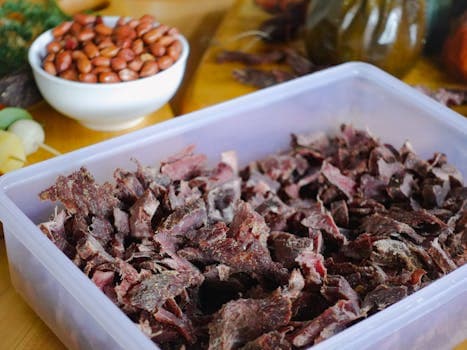
Biltong
Air-dried, vinegar-cured spiced beef — South Africa's iconic cured meat snack.
About This Recipe
Biltong is South Africa's answer to jerky, but richer and more complex. Thick strips of beef are marinated in vinegar, then coated in coriander, black pepper, and salt before being air-dried for several days. The result is tender, deeply savoury, and unlike anything else.
Ingredients
Serves 8
- 1 kgbeef silverside or topside, sliced 2 cm thick with the grain
- 60 mlapple cider vinegar
- 2 tbspcoarse salt
- 2 tbspwhole coriander seeds, lightly crushed
- 1 tspcoarsely ground black pepper
- 1 tspbrown sugar
Instructions
- 1
Marinate
Lay beef strips in a dish, pour vinegar over and turn to coat. Leave 1 hour at room temperature.
- 2
Season
Combine salt, coriander, pepper, and sugar. Remove beef from vinegar, shake off excess, then press the spice mix firmly onto all sides.
- 3
Hang to dry
Hook each strip with a paper clip or butcher's hook and hang in a well-ventilated, cool spot (18–22 °C) out of direct sunlight. A small fan speeds drying.
- 4
Wait
Dry for 3–5 days depending on thickness and preferred wetness. Slice against the grain to serve.
Did you make this?
Rate it and help other cooks find the recipes that actually work.
One tap to sign in, and we'll save the rating you just picked.
Everything you need to plan your week — free
- Meal calendar
- Grocery list
- AI recipe ideas
Cook this hands-free
Get AI meal plans, step-by-step cooking mode, and your saved recipes in the free Bento app.
Pro Tips
- →
Slice with the grain before drying; cut against the grain to eat.
- →
A biltong box or dehydrator set to 40 °C makes reliable results.
- →
Taste and adjust salt at the very end — flavors concentrate as liquids reduce, and a final pinch of flaky salt sharpens the whole dish.
- →
Mise en place pays for itself: chop, measure and pre-mix everything before the heat goes on, especially for any step that moves fast.
Variations
- •
Droëwors uses the same cure applied to thin sausage.
- •
Game biltong (kudu, springbok) is prized for its lean, intense flavour.
- •
Vegetarian: swap the protein for roasted king oyster mushrooms, smoked tofu or cooked chickpeas — adjust seasoning slightly upward to compensate.
- •
Spicier: add a finely chopped fresh chile or a teaspoon of crushed Aleppo/Urfa pepper to the aromatics for warm, layered heat instead of a single sharp hit.
Storage
Store in a paper bag or breathable container for up to 2 weeks. Avoid plastic — it causes sweating.
History & Origin
Biltong evolved from the curing methods of indigenous San and Khoikhoi peoples, refined by Voortrekker settlers who needed preserved meat during the Great Trek of the 1830s.
Frequently Asked Questions
Is biltong the same as jerky?
No — biltong is air-dried rather than oven-dried, uses vinegar, and is typically thicker and moister.
Can I use a dehydrator?
Yes, set it to 40 °C (no higher) and check after 24 hours.
Can I make this ahead of time?
Yes — most of the components can be prepared up to a day in advance and refrigerated separately. Reheat gently and assemble just before serving so textures stay distinct.
What can I substitute if I don't have all the ingredients?
Stay close to the role each ingredient plays: swap aromatics for similar ones (shallot for onion, lime for lemon), and keep the fat-acid-salt balance intact. Spice blends can usually be approximated with what's in the cupboard.
Nutrition Facts
Per serving (60g / 2.1 oz) · 8 servings total
Time Summary
Have Questions?
Ask our AI cooking assistant anything about this recipe — substitutions, techniques, scaling.
Chat with AI Chef →Featured in Guides
This recipe is featured in the following curated guides:
More South-african Recipes
You Might Also Like
Similar dishes from other cuisines around the world.
Free Kitchen Tools
Calculators and converters that pair with this page — no signup needed.
Put This Into a Plan
Schedule it, shop for it, and track what you already have.
Read Next
Longer reads that go deeper on the ideas behind this dish.
Community
Join the conversation
Sign in to leave a comment and save your favourite recipes