
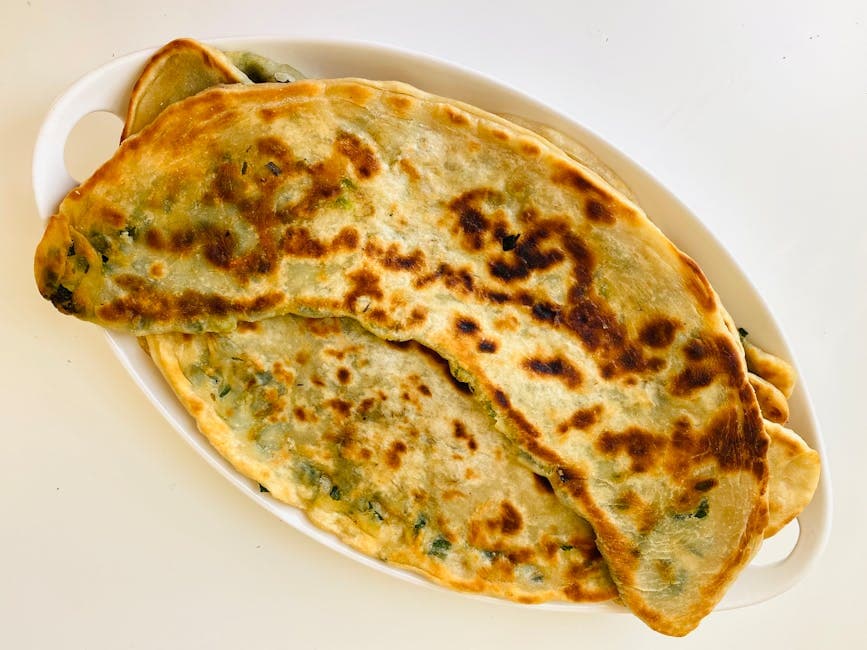
Bolani (Afghan Stuffed Flatbread)
Afghanistan's beloved stuffed flatbread — thin rounds of unleavened dough filled with spiced potato, leek or pumpkin, pan-fried until golden and flaky. The street food of Kabul.
About This Recipe
Bolani is one of Afghanistan's most popular street foods and a staple of Afghan home cooking. It belongs to the same tradition as Georgian lobiani and Indian paratha — a flatbread stuffed with vegetables then pan-fried in oil until golden and crispy. The most common filling is a mashed potato mixture with spring onion and cilantro; gandana (Afghan garlic chives) bolani is the most prized. The dough is unleavened and rolled very thin, giving a crunchy, layered exterior. Bolani is sold at every Afghan bazaar, eaten for breakfast and lunch, and carried to picnics (maidas). It is always served with a dip — yogurt with garlic, or the traditional chatni of fresh cilantro and green chilli.
Ingredients
Serves 4
- 2 cupsplain flour
- 0.5 tspsalt
- 150 mlwater
- 2 tbspvegetable oil(for dough)
- 400 gfloury potatoes(boiled and mashed)
- 3spring onions(finely sliced)
- 3 tbspfresh cilantro(chopped)
- 1green chilli(finely diced)
- 1 tspground coriander
- 0.5 tspblack pepper
- 1 tspsalt(for filling)
- vegetable oilfor frying
- 200 gyogurt with garlic(to serve)
Instructions
- 1
Make dough
Mix flour, salt, oil and water into a smooth, firm dough. Knead 5 min. Rest covered 20 min.
- 2
Make filling
Mix mashed potato with spring onions, cilantro, green chilli, coriander, pepper and salt. Cool completely.
- 3
Shape bolani
Divide dough into 8 balls. Roll each into a very thin 20cm circle. Spread filling over one half of each circle, leaving a 1cm border. Fold the empty half over the filling and press edges firmly to seal.
- 4
Pan-fry
Heat a generous amount of oil in a frying pan over medium-high heat. Fry bolani 2–3 min per side until deep golden and lightly blistered.
Enough oil to shallow-fry (3mm depth) is important — too little oil and they won't crisp properly.
- 5
Serve
Serve immediately with garlic yogurt dip and fresh cilantro-green chilli chutney.
Did you make this?
Rate it and help other cooks find the recipes that actually work.
One tap to sign in, and we'll save the rating you just picked.
Everything you need to plan your week — free
- Meal calendar
- Grocery list
- AI recipe ideas
Track what you eat
Snap your meal to log calories and macros, run fasting timers and track water in the free SnapCal app.
Pro Tips
- →
The dough must be rolled very thin — thick bolani is doughy and heavy, not crispy.
- →
Cool filling is essential — warm filling makes the dough go limp before frying.
- →
Taste and adjust salt at the very end — flavors concentrate as liquids reduce, and a final pinch of flaky salt sharpens the whole dish.
- →
Mise en place pays for itself: chop, measure and pre-mix everything before the heat goes on, especially for any step that moves fast.
Variations
- •
Pumpkin bolani (kaddo bolani): roasted and spiced butternut squash filling
- •
Leek and cheese bolani: Afghan-style with gandana chives and crumbled white cheese
- •
Spinach filling: blanched spinach with garlic and dried chilli
- •
Vegetarian: swap the protein for roasted king oyster mushrooms, smoked tofu or cooked chickpeas — adjust seasoning slightly upward to compensate.
Storage
Best eaten fresh. Leftover bolani reheat well in a dry pan or toaster.
History & Origin
Bolani is part of the ancient Central Asian stuffed flatbread tradition that spans Afghanistan, Iran, the Caucasus and Central Asia. The Afghan version is distinguished by the unleavened thin dough and the prominent use of cilantro and spring onion in the filling. In Kabul's old city (Shar-e-Kona), bolani vendors have operated from the same spots for generations.
Frequently Asked Questions
What is gandana (Afghan garlic chives)?
Gandana is a variety of chives with flat, wide leaves and a stronger garlic-onion flavour than Western chives. It is used throughout Afghan cooking, especially in bolani. Outside Afghanistan, regular chives mixed with a little crushed garlic is the closest substitute, or use Chinese garlic chives (jiucai) which are botanically identical.
Can I make this ahead of time?
Yes — most of the components can be prepared up to a day in advance and refrigerated separately. Reheat gently and assemble just before serving so textures stay distinct.
What can I substitute if I don't have all the ingredients?
Stay close to the role each ingredient plays: swap aromatics for similar ones (shallot for onion, lime for lemon), and keep the fat-acid-salt balance intact. Spice blends can usually be approximated with what's in the cupboard.
How do I know it's authentic?
Authenticity sits on a spectrum — what matters more is honoring the technique and balance of flavors. If the dish tastes harmonious and respects how cooks in its home region would build it, you're on solid ground.
Nutrition Facts
Per serving · 4 servings total
Time Summary
Have Questions?
Ask our AI cooking assistant anything about this recipe — substitutions, techniques, scaling.
Chat with AI Chef →Featured in Guides
This recipe is featured in the following curated guides:
More Afghan Recipes
You Might Also Like
Similar dishes from other cuisines around the world.
Browse by Ingredient
More recipes built around the same core ingredients.
Free Kitchen Tools
Calculators and converters that pair with this page — no signup needed.
Put This Into a Plan
Schedule it, shop for it, and track what you already have.
Read Next
Longer reads that go deeper on the ideas behind this dish.
Community
Join the conversation
Sign in to leave a comment and save your favourite recipes