
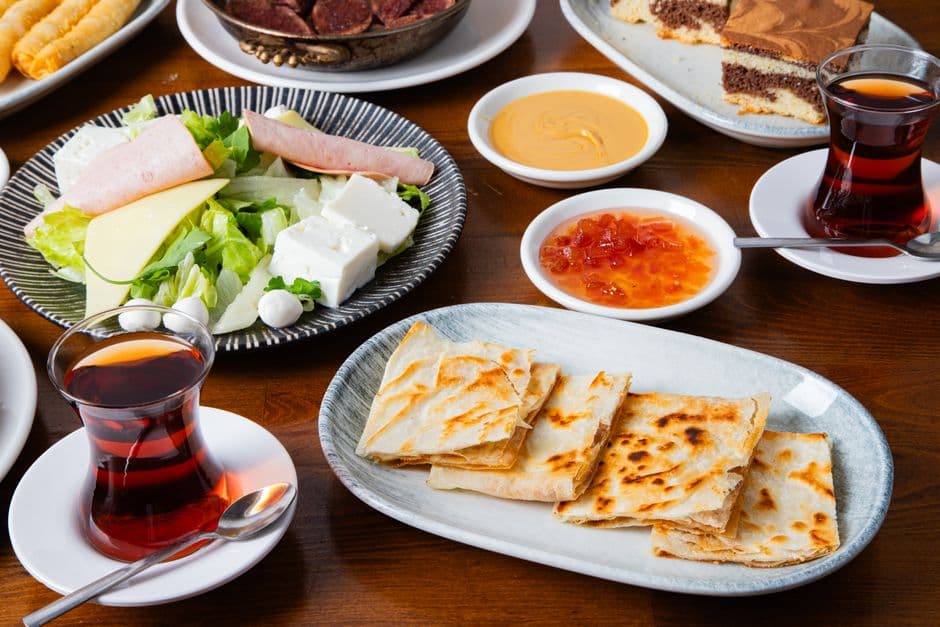
Borek (Turkish Cheese Pastry)
Crispy fried or baked pastry parcels stuffed with creamy cheese and herbs — a Turkish staple served warm as an appetizer.
About This Recipe
Borek (also spelled börek) is perhaps the most beloved pastry in Turkish cuisine, a fried or baked parcel of thin dough filled with savory ingredients like cheese, ground meat, or spinach. The classic version is cheese borek (peynir borek), made from phyllo-like dough (yufka) wrapped around a crumbly white cheese (feta or a Turkish cheese like beyaz peynir) and fresh herbs, then fried until crispy and golden. The borek is served hot, often with a squeeze of lemon and a dollop of yogurt. The pastry is so prized in Turkey that regional variations exist — some are rolled into cylinders, some are folded into triangles, some are layered in a baking dish and sliced, and some are cooked in oil, others baked. The filling is always simple — the pastry and cheese are the stars. Borek is served at breakfast, as a snack (meze), at celebrations, and in specialized borek shops (börekçi) where they're made fresh throughout the day. A plate of hot borek with yogurt and lemon is comfort food in Turkey, equally at home on a breakfast table or in the evening with raki (an anise spirit).
Ingredients
Serves 6
- 400 gphyllo pastry sheets (or Turkish yufka if you can find it)
- 300 gcrumbly white cheese (Turkish beyaz peynir or feta)
- 100 gricotta or fresh farmer's cheese (for creaminess)
- 1 small bunchfresh dill, finely chopped
- 1 small bunchfresh mint, finely chopped
- 2 tbspfresh parsley, finely chopped
- 1 largeegg, beaten (for sealing)
- 1 pinchsea salt
- 1 pinchfreshly ground black pepper
- for fryingvegetable oil (about 500 ml)
- 1lemon, cut into wedges
- 300 gplain yogurt (for serving)
Instructions
- 1
Make the filling
In a bowl, combine crumbled white cheese, ricotta, fresh dill, mint, parsley, salt, and pepper. Mix until well combined. The filling should taste herby and salty — taste and adjust. Divide into 12 portions (for 6 large boreks).
- 2
Prepare the phyllo
Remove phyllo from packaging and lay flat on a clean work surface. Cover unused sheets with a damp towel to prevent drying.
- 3
Fill and roll
Take one sheet of phyllo and lay it on the work surface. Place a portion of filling along the bottom edge, leaving a 2 cm border on the sides. Fold the sides over the filling, then roll tightly away from you, creating a cylinder about 12 cm long and 3 cm wide. Seal the seam with a tiny dab of beaten egg.
- 4
Repeat
Repeat with remaining phyllo and filling, working quickly so the dough doesn't dry out. You should have 12 borek rolls.
- 5
Heat the oil
Pour vegetable oil into a deep saucepan or pot to a depth of 5 cm. Heat to 160°C (320°F). Use a thermometer — the oil must be hot enough to fry without being so hot it burns the pastry.
- 6
Fry the borek
Carefully place borek rolls into the hot oil, a few at a time. Fry for 2–3 minutes per side until deep golden brown on all surfaces. The pastry should sound crispy and be a rich mahogany color. Do not rush or let them brown too quickly. Transfer to paper towels.
- 7
Serve hot
Serve borek immediately while still hot and crispy, with lemon wedges and a small bowl of yogurt. The traditional way to eat is: squeeze lemon on the borek, dip in yogurt, and bite while hot.
Did you make this?
Rate it and help other cooks find the recipes that actually work.
One tap to sign in, and we'll save the rating you just picked.
Everything you need to plan your week — free
- Meal calendar
- Grocery list
- AI recipe ideas
Track what you eat
Snap your meal to log calories and macros, run fasting timers and track water in the free SnapCal app.
Pro Tips
- →
The key to good borek is a generous filling and quick, confident rolling. Too little filling makes boring borek; too much makes it burst in the oil.
- →
Keep unused phyllo covered with a damp towel at all times — even a minute of exposure will make it brittle and hard to work with.
- →
The oil temperature is critical — if too hot, the exterior burns before the inside cooks; if too cool, the borek absorbs oil and becomes greasy.
- →
Eat borek within 5 minutes of frying. They start to soften as they cool and are best when the pastry is still crispy.
Variations
- •
Spinach and cheese (ispanak borek) — use sautéed spinach (squeezed very dry) mixed with cheese instead of cheese alone.
- •
Meat borek (kıymalı borek) — use spiced ground lamb or beef mixed with onions instead of cheese.
- •
Baked borek — brush assembled borek with melted butter and bake at 190°C (375°F) for 25–30 minutes instead of frying (lighter, though less crispy).
- •
Large layered borek — layer phyllo and filling in a 9x13 inch baking dish, cut into squares, and bake for a less laborious version.
Storage
Unbaked, filled borek can be frozen for up to 3 months — fry from frozen, adding 1–2 minutes to cooking time. Cooked borek can be reheated in a 160°C (320°F) oven for 5–8 minutes, though they taste best fresh. Do not refrigerate cooked borek; they become soggy quickly.
History & Origin
Borek is a staple of Ottoman and Turkish cuisine with roots in Central Asian pastry traditions. The word 'borek' comes from the Turkic 'böri' (meaning wrapped). The dish spread throughout the Ottoman Empire and beyond — variations exist in Greek (böreká), Arab, and Balkan cuisines. In Turkey, borek is prepared in specialized shops (börekçi) and is eaten at any time of day, reflecting its cultural importance.
Frequently Asked Questions
What's the best cheese to use if I can't find Turkish beyaz peynir?
Feta works well, though it's slightly tangier. Ricotta mixed with feta also works. Look for a crumbly, salty white cheese at Middle Eastern or specialty markets.
Why did my borek split open in the oil?
The filling was too wet, or the oil wasn't hot enough. Make sure to squeeze any excess moisture from herbs and cheese. Also, use a thermometer to ensure the oil reaches 160°C (320°F).
Can I bake borek instead of frying?
Yes, brush with melted butter and bake at 190°C (375°F) for 25–30 minutes. The result is lighter and less crispy but still delicious.
What should I serve with borek?
Traditionally: lemon wedges and plain yogurt. Some people add a sprinkle of sumac or a drizzle of hot chili oil.
Nutrition Facts
Per serving (110g / 3.9 oz) · 6 servings total
Time Summary
Have Questions?
Ask our AI cooking assistant anything about this recipe — substitutions, techniques, scaling.
Chat with AI Chef →Featured in Guides
This recipe is featured in the following curated guides:
More Turkish Recipes
You Might Also Like
Similar dishes from other cuisines around the world.
Browse by Ingredient
More recipes built around the same core ingredients.
Free Kitchen Tools
Calculators and converters that pair with this page — no signup needed.
Put This Into a Plan
Schedule it, shop for it, and track what you already have.
Read Next
Longer reads that go deeper on the ideas behind this dish.
Community
Join the conversation
Sign in to leave a comment and save your favourite recipes