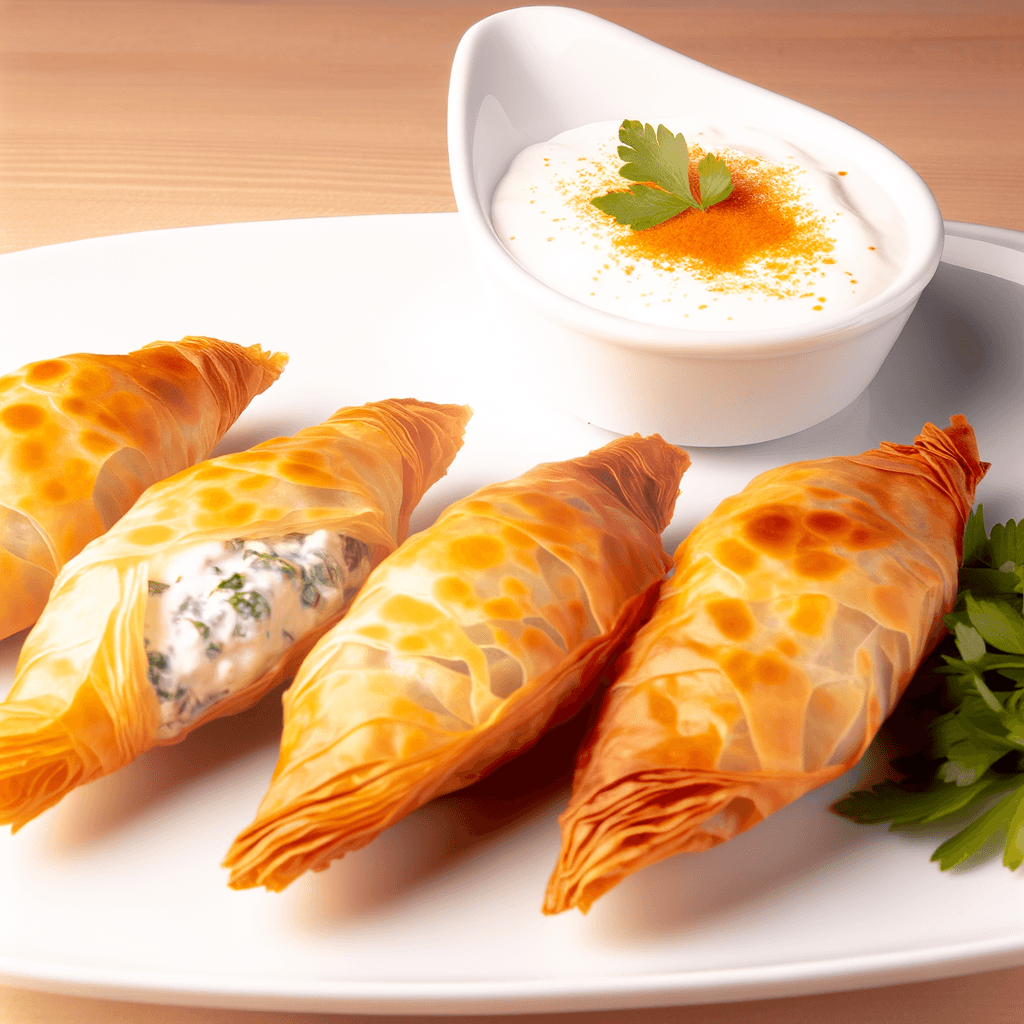
Börek is the crown jewel of Turkish pastry-making: layers of paper-thin yufka or phyllo dough, each sheet brushed with melted butter, enclosing a filling of crumbled white cheese brightened with dill and parsley. Baked until the top shatters and the inside stays tender and almost custardy from the egg-bound cheese, it occupies a central place in Turkish life — eaten at breakfast with sweet black tea, packed for picnics, and offered to guests as a point of household pride. This tray-baked version, layered rather than rolled, is the most forgiving for home cooks: no shaping skills required, just patience with the delicate sheets and a generous hand with the butter. Cut into squares, it disappears fast.
Serves 12
Crumble the feta into a bowl, leaving some texture rather than mashing it smooth, then fold in the grated kasseri, parsley, dill, and most of the beaten egg, reserving a tablespoon of egg for glazing the top. The mixture should be moist but not wet.
If your feta is very salty, soak it in cold water for 10 minutes first.
Butter a baking dish, then lay in your first phyllo sheet and brush it generously with melted butter using a soft pastry brush. Let edges climb the sides of the dish and fold overhang back in — slightly crumpled sheets actually bake up crispier than flat ones.
After 4-5 buttered base sheets, scatter half the cheese filling evenly across the surface, leaving a small border. Cover with two more buttered sheets, pressing gently so the layers make contact without compressing the pastry.
Add the remaining filling, then finish with 4-5 more sheets, buttering each one and tucking the edges down the sides of the dish. Brush the top with the reserved egg mixed into the last of the butter, and score the top layers into squares with a sharp knife.
Scoring before baking gives clean portions later without shattering the crisp crust.
Bake at 200°C (390°F) in the middle of the oven for about 25 minutes, until the top is deeply golden and the layers have visibly puffed. Rest 10 minutes before cutting along the score lines — the filling needs a moment to settle.
Everything you need to plan your week — free
Cook this hands-free
Get AI meal plans, step-by-step cooking mode, and your saved recipes in the free Bento app.
Keep the phyllo stack covered with a barely damp towel while you work — exposed sheets dry and crack within minutes.
Butter every single layer, right to the edges; skipped spots bake up pale, tough, and papery.
Thaw frozen phyllo overnight in the fridge, never at room temperature or in the microwave, to prevent sticking and tearing.
For an extra-tender börek, whisk a few tablespoons of milk or yogurt into the melted butter — a trick many Turkish home cooks swear by.
Rest the baked börek 10 minutes before cutting so the cheese sets and the squares lift out cleanly.
Ispanaklı börek: replace the cheese with sautéed spinach, onion, and a little feta for Turkey's other classic filling.
Kıymalı börek: fill with ground beef cooked down with onion, black pepper, and parsley.
Roll individual sheets around the filling into cigars (sigara böreği) and shallow-fry until golden.
Su böreği style: briefly dip each yufka sheet in hot water before layering for a softer, lasagna-like texture.
Refrigerate cooked börek, covered, up to 2 days and re-crisp in a 180°C oven for 8-10 minutes — never the microwave, which turns the layers soggy. Unbaked assembled börek freezes well for a month; bake from frozen, adding 10 minutes.
Börek descends from the layered pastries of the Ottoman palace kitchens, and the word likely traces to Turkic roots meaning 'to twist'. As the empire spread, so did the pastry — burek in the Balkans, bourekas in Israel, byrek in Albania all share its lineage. In Turkey today, dedicated börek shops (börekçi) open before dawn, serving fresh trays with tea as a cornerstone of breakfast culture.
Phyllo tears when it dries out or is handled roughly — keep the stack under a damp towel and lift sheets with both hands. Mid-stack tears genuinely don't matter; the surrounding buttered layers absorb them invisibly. Save your most intact sheets for the top layer, which is the only one anybody sees.
Yufka, the traditional Turkish dough, is rolled slightly thicker and sturdier than Greek-style phyllo, giving börek a chewier, more substantial bite. Phyllo produces a flakier, more shattering crust. Both work in this recipe; if you find yufka at a Turkish market, use 6-7 sheets instead of 12 since they're larger and thicker.
Yes — assemble it fully, cover tightly, and refrigerate up to a day before baking, or freeze it unbaked for up to a month. Bake straight from the fridge or freezer rather than letting it sit out, adding 5-10 extra minutes. The butter layers actually firm up and separate better, giving a flakier result.
Kasseri contributes melt and mild sweetness against the salty feta. Mozzarella with a little parmesan is the easiest substitute; Greek kasseri, kashkaval, or even a mild provolone also work well. Keep the feta as the backbone, though — an all-melting-cheese filling turns greasy and loses the characteristic salty tang of Turkish peynirli börek.
Per serving (80g / 2.8 oz) · 12 servings total
Ask our AI cooking assistant anything about this recipe — substitutions, techniques, scaling.
Chat with AI Chef →This recipe is featured in the following curated guides:
Join the conversation
Sign in to leave a comment and save your favourite recipes
Everything you need to plan your week — free
Have feedback or need help?
We read every email and reply within 1–2 business days.
© 2026 MyCookingCalendar. All rights reserved.