
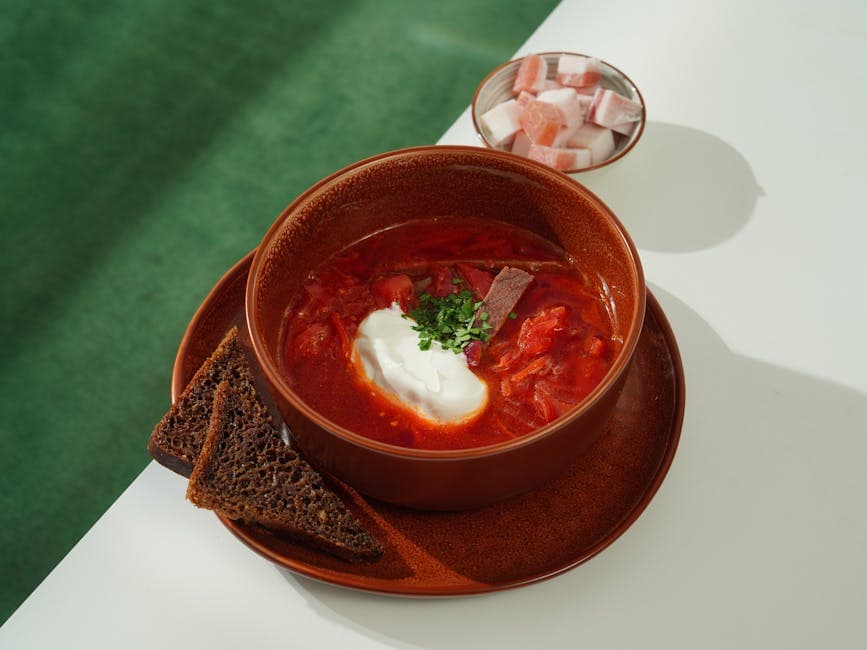
Ukrainian Red Borscht
Beet-and-cabbage soup with pork, beans, and dill — Ukraine's national dish, ladled deep with sour cream.
About This Recipe
Borscht is the most beloved soup of Ukraine — a vibrant ruby broth of beets, pork, cabbage, potatoes, and beans, slow-simmered with onion, carrot, and tomato, and finished with a fistful of fresh dill and a generous dollop of cool sour cream. Each Ukrainian family makes it differently, and arguments about whether to include garlic, beans, sweet pepper, or smoked meat can break friendships. In 2022 UNESCO inscribed Ukrainian borscht onto its intangible heritage list. Eaten with garlic-rubbed pampushky (small bread rolls) and a small glass of icy horilka, borscht is the dish that says home, winter, and Sunday afternoon all at once.
Ingredients
Serves 8
- 600 gpork ribs or beef short rib (or smoked ham hock for richer flavor)
- 3 Lwater
- 2bay leaves
- 10black peppercorns
- 5allspice berries
- 1 smallonion (whole, for stock)
- 3 mediumbeetroot, peeled and coarsely grated
- 2 tbsptomato paste
- 1 tbspwhite wine vinegar (or beet kvass)
- 1 tspsugar
- 3 tbspneutral oil
- 1 largeonion, finely diced
- 2carrots, grated
- 1red bell pepper, diced
- 4 mediumwaxy potatoes, peeled and cubed
- 1/4 headwhite or savoy cabbage, finely shredded
- 1 can (400 g)white beans, drained
- 5 clovesgarlic, minced
- 1.5 tspfine salt (or to taste)
- 1 tspfreshly ground black pepper
- 1 small bunchfresh dill, chopped
- 1 small bunchfresh flat-leaf parsley, chopped
- sour cream and rye bread to serve
Instructions
- 1
Make pork stock
Place pork ribs in a large pot. Cover with water. Bring to a boil and skim the scum carefully for 5 minutes. Reduce heat and add bay leaves, peppercorns, allspice, and the whole onion. Simmer covered for 75 minutes.
- 2
Lift meat
Lift the pork out. Cool slightly. Pick the meat off the bones, shred coarsely, and reserve. Strain the broth into a clean pot.
- 3
Cook the beet sofrito
While the stock simmers, heat oil in a wide skillet. Add the grated beets, tomato paste, vinegar, and sugar. Cook on medium-low for 15 minutes, stirring, until the beets are softened and the mixture is deeply red, glossy, and faintly sweet.
- 4
Sauté aromatics
Push beets to one side. Add diced onion and grated carrot to the pan. Cook 10 minutes until soft and lightly golden. Add red pepper, cook 3 more minutes.
- 5
Build the soup
Add potatoes to the strained broth. Bring to a simmer. Cook 8 minutes.
- 6
Add cabbage
Add shredded cabbage and white beans. Simmer 8 minutes until cabbage is tender.
- 7
Add the beet base
Stir in the beet-vegetable mixture and shredded pork. Simmer 10 minutes — the broth turns deep magenta and the kitchen begins to smell unmistakably of borscht.
- 8
Garlic and rest
Add minced garlic, salt, and pepper. Simmer 2 more minutes. Pull off the heat. Rest covered for at least 30 minutes — borscht's flavors marry with time.
- 9
Serve
Ladle into deep bowls. Top each with a heaping spoonful of cold sour cream, a shower of dill and parsley, and an extra crack of black pepper. Serve with rye bread or garlic pampushky.
Did you make this?
Rate it and help other cooks find the recipes that actually work.
One tap to sign in, and we'll save the rating you just picked.
Everything you need to plan your week — free
- Meal calendar
- Grocery list
- AI recipe ideas
Cook this hands-free
Get AI meal plans, step-by-step cooking mode, and your saved recipes in the free Bento app.
Pro Tips
- →
Cook the beets separately in a skillet first — this preserves their deep red color, which boils out if added raw to broth.
- →
Vinegar isn't optional — it stabilizes the red color and adds the signature sour edge.
- →
Borscht is even better the next day. Make ahead and rest overnight; reheat gently.
Variations
- •
Lenten borscht: skip the pork and beans, add dried mushroom stock and pampushky on the side.
- •
Cold summer borscht (kholodnyk): served chilled with kefir, hard-boiled egg, and cucumber.
- •
Add smoked ham hock instead of pork ribs for a deeper, smokier broth.
Storage
Refrigerate up to 5 days; freezes 3 months. The flavor deepens for 48 hours; some say day-three borscht is the best.
History & Origin
Borscht's roots trace at least a thousand years to Slavic agricultural communities. The modern Ukrainian red borscht with beets and tomatoes came together in the 18th–19th century. In 2022 UNESCO recognized Ukrainian borscht-cooking as an element of intangible cultural heritage in urgent need of safeguarding.
Frequently Asked Questions
Beans or no beans?
Eastern Ukrainian families often add beans; western Ukraine and Kyiv tend to skip them. Either is correct.
Why is my borscht brown, not red?
Beets were boiled raw in the broth and oxidized. Always cook the beets separately in oil with a splash of vinegar first.
Nutrition Facts
Per serving (520g / 18.3 oz) · 8 servings total
Time Summary
Have Questions?
Ask our AI cooking assistant anything about this recipe — substitutions, techniques, scaling.
Chat with AI Chef →Featured in Guides
This recipe is featured in the following curated guides:
More Ukrainian Recipes
You Might Also Like
Similar dishes from other cuisines around the world.
Free Kitchen Tools
Calculators and converters that pair with this page — no signup needed.
Put This Into a Plan
Schedule it, shop for it, and track what you already have.
Read Next
Longer reads that go deeper on the ideas behind this dish.
Community
Join the conversation
Sign in to leave a comment and save your favourite recipes