
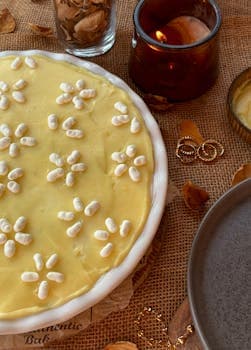
Boston Cream Pie
Vanilla cake with pastry cream filling and chocolate glaze.
About This Recipe
Boston Cream Pie is one of the great paradoxes of American baking — it is emphatically a cake, yet its name, its history, and its structure all belong to the 19th century, when the line between pies and cakes was blurred by the shared tin they were both baked in. The dessert was created in 1856 at Boston's Parker House Hotel — the same storied establishment that gave us Parker House dinner rolls — by French pastry chef M. Sanzian, who layered a light sponge with vanilla custard and finished it with a dark chocolate ganache glaze, a treatment that reflected the hotel's Continental aspirations. Massachusetts made it the official state dessert in 1996, cementing a legacy that had already spread far beyond New England through Dunkin' Donuts' beloved Boston Kreme donut and countless diner menu staples. The architecture of a great Boston Cream Pie is deceptively precise. The cake layer must be a genuine génoise or American butter cake — tender enough to absorb a whisper of simple syrup without turning soggy, sturdy enough to support a generous cap of pastry cream without sliding. The crème pâtissière filling should be set but yielding: thick enough to hold its shape when the cake is sliced, not so stiff it sits like rubber. The chocolate glaze is the dramatic finale — poured warm so it drapes over the edges in lazy, glossy drips. When every element is executed properly, a single slice delivers three distinct textures in one forkful: soft cake, silky cream, and a thin, bittersweet chocolate sheath that snaps faintly before yielding.
Ingredients
Serves 12
- 200 gflour
- 1 tspbaking powder
- ¼ tspsalt
- 120 gbutter
- 200 gsugar
- 2eggs
- 120 mlmilk
- 1 tspvanilla extract
- 500 mlwhole milk(for cream)
- 100 gsugar(for cream)
- 4egg yolks
- 40 gcornstarch
- 2 tspvanilla
- 200 gdark chocolate
- 2 tbspbutter
Instructions
- 1
Cream butter and sugar
Beat softened butter and sugar together with an electric mixer on medium-high for 4–5 minutes until pale, fluffy, and almost doubled in volume. This aeration is what gives the cake its light crumb. Add eggs one at a time, beating 30 seconds between each, then add vanilla.
All ingredients must be at room temperature — cold butter won't cream properly and cold eggs can cause the batter to split.
- 2
Fold in flour and milk
Sift together the flour, baking powder, and salt. With the mixer on low, add one-third of the flour mixture, then half the milk, alternating and finishing with the last of the flour. Stir only until just combined — overworking activates gluten and toughens the crumb.
- 3
Bake the cake
Pour batter into a greased and parchment-lined 23 cm round pan and smooth the top. Bake at 175°C (350°F) for 35–40 minutes until a skewer inserted at the centre comes out clean and the top springs back when lightly pressed. Cool in the pan 10 minutes, then unmould onto a rack.
Don't open the oven before the 30-minute mark — the temperature drop can cause the centre to sink.
- 4
Make pastry cream
In a heavy saucepan, bring the 500 ml whole milk to a gentle simmer. In a bowl, whisk egg yolks with sugar until pale and thick, then whisk in cornstarch until no lumps remain. Pour roughly one-third of the hot milk into the yolk mixture in a thin stream, whisking constantly (this tempering prevents scrambling). Pour the tempered yolks back into the pan and cook over medium heat, whisking constantly, until the cream thickens noticeably and large bubbles pop at the surface — about 2 minutes. Off heat, stir in vanilla and 30 g of unsalted butter for gloss and richness.
The cream is done when it holds a ribbon for 3 seconds when you lift the whisk. Undercooking leaves it thin and runny.
- 5
Chill the pastry cream
Transfer the pastry cream to a bowl and press a sheet of cling film directly onto the surface to prevent a skin from forming. Refrigerate at least 2 hours until completely cold and firm. It will thicken further as it chills.
- 6
Make the chocolate glaze
Chop the dark chocolate finely and place in a heatproof bowl. Heat the remaining butter and 3 tablespoons of heavy cream until steaming, pour over the chocolate, and let stand 1 minute before stirring from the centre outward until smooth and glossy. Let cool until it thickens to a slowly flowing consistency — about 10 minutes at room temperature.
- 7
Assemble and glaze
Using a long serrated knife, split the cooled cake horizontally into two even layers. Place the bottom layer cut-side up on a serving plate. Spread the chilled pastry cream generously to within 1 cm of the edge — it should be about 2 cm thick. Set the top layer cut-side down over the cream and press gently to level. Pour the warm chocolate glaze over the top and let it drip decoratively down the sides. Refrigerate 30 minutes to set the glaze before slicing.
Did you make this?
Rate it and help other cooks find the recipes that actually work.
One tap to sign in, and we'll save the rating you just picked.
Everything you need to plan your week — free
- Meal calendar
- Grocery list
- AI recipe ideas
Track what you eat
Snap your meal to log calories and macros, run fasting timers and track water in the free SnapCal app.
Pro Tips
- →
Make the pastry cream one day ahead — it sets firmer and slices cleanly, whereas freshly made cream can ooze.
- →
To split the cake evenly, insert toothpicks all the way around the circumference at the midpoint, then use them as a visual guide for your serrated knife.
- →
Dip the knife in hot water and wipe dry between each slice for clean, professional-looking cuts through the chocolate layer.
- →
Use a high-quality dark chocolate with 60–70% cocoa solids for the glaze; anything lower tastes flat after the sweetness of the cake and cream.
- →
If your pastry cream developed lumps during cooking, strain it immediately through a fine-mesh sieve before chilling — it will be perfectly smooth.
Variations
- •
Grand Marnier pastry cream: fold 2 tablespoons of Grand Marnier into the finished custard before chilling for a citrus-orange complexity.
- •
Chocolate génoise version: replace 25 g of flour in the cake with cocoa powder for a mocha undertone that pairs beautifully with the chocolate glaze.
- •
Mini Boston Cream cupcakes: fill standard cupcakes with pastry cream using a piping tip and dip the tops in warm ganache for a party-friendly version.
- •
Lighter whipped-cream filling: if you want a less rich result, fold 250 ml of stiffly whipped cream into the cooled pastry cream before assembling.
Storage
Assembled Boston Cream Pie keeps covered in the refrigerator for up to 3 days; the pastry cream firms further over time and slices become even cleaner by day two. Do not freeze once assembled — the pastry cream weeps on thawing. The unfilled cake layers can be frozen individually, wrapped tightly, for up to 1 month.
History & Origin
Boston Cream Pie was created in 1856 at the Parker House Hotel in Boston by French-trained chef M. Sanzian, making it one of the oldest and most precisely dated American dessert creations on record. The Parker House — now the Omni Parker House — remains open today and still serves the original recipe. The dessert was known as 'Parker House Chocolate Cream Pie' in early menus, and the 'pie' designation reflects 19th-century baking conventions where pie tins and cake tins were used interchangeably. Massachusetts formally designated it the state dessert in 1996, and it has been immortalized in American culture through the Dunkin' Donuts Boston Kreme filled doughnut, introduced in the 1960s.
Frequently Asked Questions
Why is it called a pie if it's clearly a cake?
In 19th-century American kitchens, 'pie' and 'cake' were not as sharply differentiated as today — both were baked in the same shallow round tins, and recipes moved freely between the two categories. The Parker House Hotel simply called it a cream pie because of the tin it was baked in, and the name stuck through 170 years of culinary history. Nobody has successfully campaigned to rename it.
Can I make the pastry cream ahead of time?
Yes, and you should — pastry cream improves with an overnight rest in the refrigerator. Make it up to 48 hours ahead, press cling film directly onto the surface, and keep it cold. Stir it briefly before spreading; it will be thick and smooth. Never freeze pastry cream, as the starch structure breaks down on thawing and the cream turns grainy and watery.
Why did my pastry cream turn out lumpy?
Lumps form when the egg yolk mixture is added too quickly to the hot milk and the eggs begin to scramble, or when the cream is not whisked constantly during the final cooking stage. Always temper slowly and whisk without stopping once the mixture returns to the heat. If lumps appear, strain the hot cream immediately through a fine sieve before it cools.
Can I use store-bought sponge cake to save time?
A good quality store-bought vanilla sponge works perfectly well for a quick weeknight version. The pastry cream and chocolate glaze are the soul of the dessert, and homemade components there matter far more than the cake itself. Focus your effort on the custard.
How do I get the chocolate glaze to drip neatly down the sides?
Temperature is everything. The glaze must be poured when it is warm but not hot — around 35°C — so it flows slowly over the edge rather than running off immediately or setting before it drips. If it sets too quickly, warm it very gently over a water bath. If it runs off completely, cool it a few more minutes and try again.
Nutrition Facts
Per serving (120g / 4.2 oz) · 12 servings total
Time Summary
Have Questions?
Ask our AI cooking assistant anything about this recipe — substitutions, techniques, scaling.
Chat with AI Chef →Featured in Guides
This recipe is featured in the following curated guides:
More American Recipes
You Might Also Like
Similar dishes from other cuisines around the world.
Browse by Ingredient
More recipes built around the same core ingredients.
Free Kitchen Tools
Calculators and converters that pair with this page — no signup needed.
Put This Into a Plan
Schedule it, shop for it, and track what you already have.
Read Next
Longer reads that go deeper on the ideas behind this dish.
Community
Join the conversation
Sign in to leave a comment and save your favourite recipes