
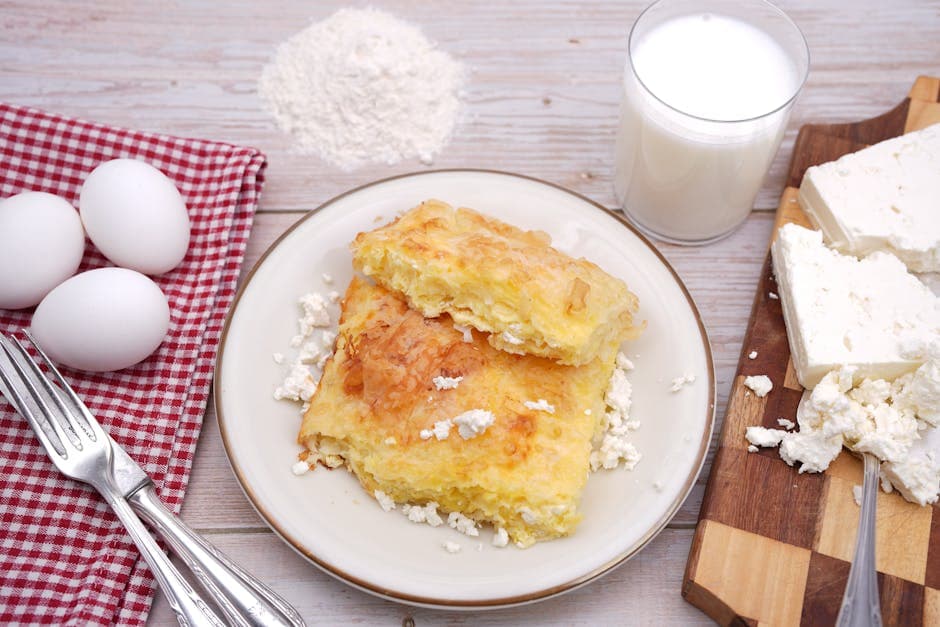
Tunisian Brik à l'Œuf (Crispy Tuna and Egg Pastry)
Tunisia's iconic street snack — a folded triangle of paper-thin malsouka pastry hiding a runny egg, tuna, capers and parsley, deep-fried golden and eaten with your fingers.
About This Recipe
Brik à l'œuf is the dish every Tunisian knows how to make and every visitor falls in love with — a triangular pastry of paper-thin malsouka (similar to filo or brick pastry) folded around a raw egg, flaked tuna, capers, harissa, lemon zest and chopped parsley, then deep-fried for ninety seconds until the pastry is shatteringly crisp and the egg yolk is just barely set inside. You eat it with your fingers, biting into the corner; the trick is to catch the molten yolk on the second bite before it runs down your wrist. Tunisians say a brik is judged by two things: whether the pastry shatters audibly when you bite, and whether the yolk stays liquid all the way to the table. Both demand exact timing — too long in the oil and you have a hard-boiled egg in a pastry case, too short and the pastry is greasy. It is essential street food in Tunis, served at every market stall and home iftar during Ramadan, and the dish that almost every Tunisian living abroad makes when they're homesick. The closest cousins are Algerian bourek and Moroccan briouats, but neither matches the brik for the singular drama of breaking open hot pastry to a runny yolk. This recipe uses easily-available filo or brick pastry sheets; if you have access to malsouka in a North African grocery, all the better.
Ingredients
Serves 4
- 4 sheetsmalsouka pastry (or 4 sheets of brick pastry, or 8 filo sheets stacked in pairs)
- 4 largevery fresh eggs, kept whole until ready to use
- 1 tin (160g)good-quality oil-packed tuna, drained well and flaked
- 2 tbspcapers, rinsed and roughly chopped
- 1 smallboiled potato, mashed with a fork (about 100 g — adds body)
- 1 small handfulflat-leaf parsley, finely chopped
- 1 tspharissa paste (more if you like heat)
- 1 tsplemon zest, plus salt and pepper
- 750 mlneutral oil for frying (sunflower or peanut)
- to serve:lemon wedges, extra harissa, salt
Instructions
- 1
Make the filling
In a bowl, mix the drained flaked tuna, mashed potato, chopped capers, parsley, harissa, lemon zest, a pinch of salt and a grind of pepper. Mash gently with a fork to combine but keep some texture. Divide into 4 equal portions and shape each into a small disc that will sit inside one triangle of pastry.
- 2
Prepare the workstation
Set up an assembly line: pastry sheets covered with a damp tea towel, bowl of filling, eggs in a small bowl each (crack one at a time as you fold — you do not want to crack four eggs and then start folding), small bowl of water for sealing edges, frying pan or wok with 3 cm of oil heating to 180°C (350°F).
- 3
Fold the first brik
Lay one pastry sheet flat on the workstation. Place a portion of the filling in the center of the lower half, leaving a 3 cm border. Press a hollow into the middle of the filling with the back of a spoon — this is where the yolk will sit.
If using filo, stack two sheets together brushed lightly with oil to mimic the thicker malsouka. Single filo sheets tear at the egg.
- 4
Add the egg
Working fast, crack one egg into the hollow in the filling. The white may spill a little — that's fine, it helps seal. Immediately fold the top half of the pastry down over the filling to form a rectangle. Tuck and fold the left and right sides in to form a triangle or neat envelope, pressing the edges firmly to seal.
- 5
Fry immediately
Lift the brik on a spatula and slide gently into the hot oil. Fry 60–90 seconds per side, spooning hot oil over the top to puff the pastry. The pastry should be deep gold and bubbled, the egg white set but the yolk still runny inside. Lift out with a slotted spatula and drain on paper towels for 10 seconds.
- 6
Repeat for the rest
Work one brik at a time — start to finish per brik takes about 3 minutes including frying. Don't crack the next egg until the previous brik is in the oil; raw eggs left sitting in folded pastry sheets will leak and turn the pastry soggy.
- 7
Serve immediately
Move briks to a serving plate while still molten. Serve with lemon wedges and a small bowl of harissa for those who want extra heat. Eat with your hands — bite into one corner, catch the running yolk with the bread-like crispy edge, and proceed. Briks wait for no one.
Did you make this?
Rate it and help other cooks find the recipes that actually work.
One tap to sign in, and we'll save the rating you just picked.
Everything you need to plan your week — free
- Meal calendar
- Grocery list
- AI recipe ideas
Track what you eat
Snap your meal to log calories and macros, run fasting timers and track water in the free SnapCal app.
Pro Tips
- →
Speed is everything. The window between raw and overdone egg is about 30 seconds. Mise en place and one-at-a-time assembly is critical.
- →
Oil temperature matters — too cool and the pastry goes greasy and pale, too hot and the outside burns before the egg sets. A frying thermometer is worth the investment.
- →
Malsouka pastry from North African shops is the gold standard; brick pastry from a French supermarket is the next best; doubled filo is the universal substitute.
- →
Use only very fresh eggs — they hold their shape better when cracked into the pastry and the runny yolk is the whole point.
Variations
- •
Brik à la viande — replace tuna with seasoned ground lamb or beef cooked with onion and cumin.
- •
Brik fruits de mer — use a mix of cooked prawns and crab in place of tuna for a luxurious version.
- •
Vegetarian brik — replace tuna with mashed spiced chickpeas or crumbled feta.
- •
Baked brik — for a lighter version, brush both sides with oil and bake at 220°C for 8 minutes. Texture is less spectacular but still good.
Storage
Briks must be eaten within minutes of frying — they are not a make-ahead food. You can prepare the filling up to 24 hours in advance and refrigerate; fold and fry only when ready to eat. Leftover fried briks reheat poorly; if you must, 180°C oven for 5 minutes restores some crispness but the yolk is long gone.
History & Origin
Brik likely descends from Ottoman börek brought to Tunisia during the 16th-century Ottoman expansion across North Africa; the egg-and-tuna filling is a Tunisian innovation, reflecting both the country's strong Mediterranean fishing tradition and French colonial influence on egg-forward street food. It is now a recognized cultural symbol and one of the most-Googled Tunisian foods worldwide.
Frequently Asked Questions
How do I avoid breaking the yolk while folding?
Make a real well in the filling to cradle the egg, and fold gently from the back. If you do break the yolk, just fry it anyway — it's still delicious, just less dramatic.
Can I make it in an air fryer?
Yes — brush both sides with oil and air-fry at 200°C for 6–7 minutes. The pastry is crisper than oven-baked but slightly less spectacular than deep-fried. The egg still sets to runny if you time it right.
What is malsouka and where can I get it?
A paper-thin Tunisian pastry similar to filo but more elastic. Find it in North African and Middle Eastern grocers labeled 'malsouka' or 'feuilles de brick'. Frozen brick pastry from French supermarkets is the next-best alternative.
Is the runny egg safe?
Same precautions as any soft-cooked egg. Use the freshest eggs you can find, ideally pasteurized in-shell or from a known producer. Pregnant women, young children and immunocompromised diners should cook the brik longer to fully set the yolk.
Nutrition Facts
Per serving (180g / 6.3 oz) · 4 servings total
Time Summary
Have Questions?
Ask our AI cooking assistant anything about this recipe — substitutions, techniques, scaling.
Chat with AI Chef →More Tunisian Recipes
You Might Also Like
Similar dishes from other cuisines around the world.
Browse by Ingredient
More recipes built around the same core ingredients.
Free Kitchen Tools
Calculators and converters that pair with this page — no signup needed.
Put This Into a Plan
Schedule it, shop for it, and track what you already have.
Read Next
Longer reads that go deeper on the ideas behind this dish.
Community
Join the conversation
Sign in to leave a comment and save your favourite recipes