
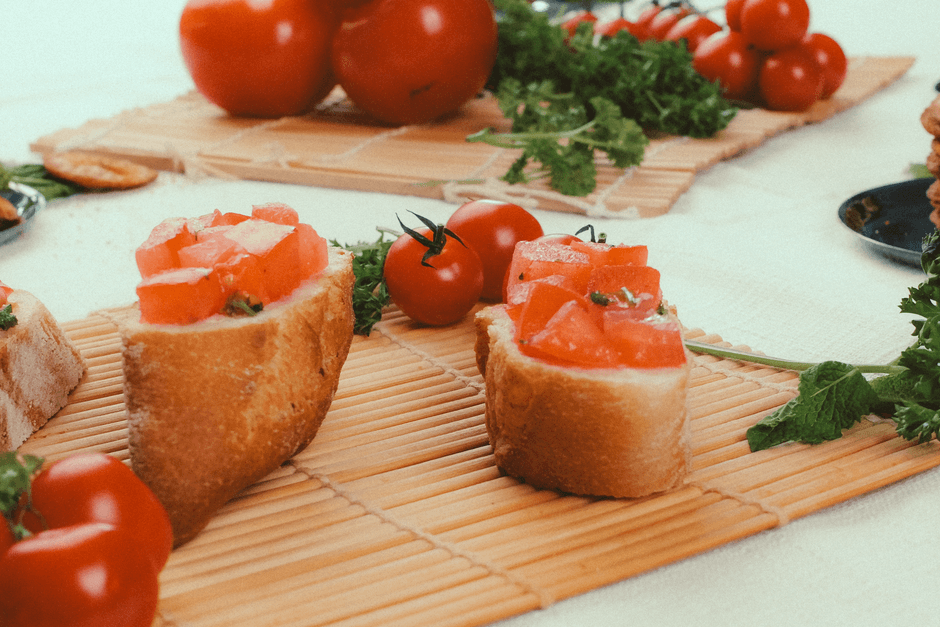
Bruschetta al Pomodoro (Italian Tomato Bruschetta)
Toasted bread rubbed with garlic and topped with diced tomato, basil, and olive oil — summer's simplest, most perfect appetizer.
About This Recipe
Bruschetta al pomodoro is Italian cuisine at its most elegant in its simplicity: crusty bread toasted until the edges blacken slightly, rubbed while still hot with a cut garlic clove, topped with diced ripe tomato (the quality of which determines everything), fresh basil, the finest extra-virgin olive oil, and a pinch of salt. The dish is essentially a vehicle for tomato flavor and is therefore only as good as the tomatoes used — in summer when tomatoes are at their peak, bruschetta is transcendent; in winter, it is forgettable. In Italy, particularly in Tuscany and Rome, bruschetta (or crostini in other regions) is ubiquitous at aperitivos, on restaurant menus, and at home during tomato season. The preparation is so simple that technique barely matters, but the sourcing of ingredients is everything: an excellent rustic bread, fresh Roma tomatoes or heirloom varieties, fresh basil from the garden, and the best olive oil you own. Any fussiness is considered a betrayal of the dish's honesty.
Ingredients
Serves 4
- 1 large loafrustic Italian bread (like ciabatta or pane toscano), sliced diagonally 1 cm thick
- 4 mediumripe tomatoes (Roma, heirloom, or San Marzano varieties), finely diced
- 3 clovesgarlic
- 1 small bunchfresh basil (about 15–20 leaves), torn by hand
- 80 mlextra-virgin olive oil (the best you own)
- 1 pinchflaky sea salt (Maldon if possible)
- 1 pinchfreshly ground black pepper
Instructions
- 1
Prepare the tomatoes
Core the tomatoes and dice them into roughly 1 cm pieces. Place in a colander or sieve and let drain for 5–10 minutes so excess liquid drains (this prevents the toast from becoming soggy). Reserve any drained juice.
- 2
Toast the bread
Heat a grill pan, outdoor grill, or oven broiler until hot. Place bread slices on the grill or under the broiler and toast for 1–2 minutes per side until the edges are lightly charred and the inside is toasted but still has some chew. The bread should be crispy on the outside, tender inside.
- 3
Rub with garlic
While the bread is still hot, rub the cut side of a garlic clove firmly across the toasted surface. The clove will leave a thin layer of garlic and some small pieces will stick to the bread. Repeat with all slices, using one clove per 4–5 slices.
- 4
Assemble the bruschetta
Arrange toasted bread on a serving platter. Top each slice with a small handful of drained diced tomato. Scatter basil leaves over the tomato. Drizzle each slice with a teaspoon of the finest olive oil. Finish with a tiny pinch of salt and a crack of black pepper.
- 5
Serve immediately
Serve the bruschetta within 5 minutes of assembly, while the bread is still warm and crispy. If served too late, the bread will absorb the tomato juice and become soggy.
Did you make this?
Rate it and help other cooks find the recipes that actually work.
One tap to sign in, and we'll save the rating you just picked.
Everything you need to plan your week — free
- Meal calendar
- Grocery list
- AI recipe ideas
Track what you eat
Snap your meal to log calories and macros, run fasting timers and track water in the free SnapCal app.
Pro Tips
- →
The quality of the tomatoes is everything. Use only ripe, flavorful tomatoes — pale supermarket tomatoes will make disappointing bruschetta. Wait for summer or grow your own.
- →
Do not peel or seed the tomatoes for this dish — the skins add texture and the seeds are part of the tomato flavor.
- →
Allowing the tomato to drain is important — it prevents the bread from becoming soggy. But save the drained juice; it's flavorful and can be used for soup.
- →
Tear the basil by hand, don't cut it with a knife. Cutting bruises the basil and causes it to brown; tearing keeps the leaves whole and bright.
Variations
- •
Bruschetta con ricotta — spread ricotta on the toast before the tomato for a creamier version.
- •
Bruschetta con balsamic — add a tiny drizzle of aged balsamic vinegar to the tomato topping for acidity.
- •
Bruschetta nera — top with diced black olives, tomato, and basil for a Sicilian variation.
- •
Bruschetta con mozzarella — add a small ball of fresh mozzarella (buffalo or fior di latte) on top of the tomato.
Storage
Bruschetta must be assembled just before serving — the toast will absorb moisture and become soggy within 5–10 minutes. You can prepare the components ahead: toast the bread up to 2 hours ahead and store in an airtight container; dice the tomato up to 2 hours ahead and drain just before assembly. Do not make bruschetta more than 5 minutes before serving.
History & Origin
Bruschetta comes from the word 'bruscare,' which means 'to roast over coals.' The dish is Roman in origin, a way to use stale bread — rubbing it with garlic was a way to add flavor to cheap peasant food. In the 1980s and 1990s, bruschetta al pomodoro became trendy in upscale restaurants and was sometimes made more elaborate (with added ingredients like balsamic or exotic preparations), but the traditional version remains the simplest and best.
Frequently Asked Questions
Can I make bruschetta if I don't have fresh basil?
Fresh basil is essential to the dish. Do not use dried basil — it has a completely different flavor. If you don't have fresh basil, make a different bruschetta (olive-based, cheese-based, etc.) or wait until basil is available.
What type of bread should I use?
Use a rustic, crusty Italian bread like ciabatta, pane toscano, or a good sourdough. Avoid soft breads (like sandwich bread) or overly chewy breads (like focaccia). The bread must be sturdy enough to support the topping without falling apart.
Can I make bruschetta ahead?
Toast the bread up to 2 hours ahead and store in an airtight container. Dice the tomato up to 2 hours ahead. Assemble no more than 5 minutes before serving, or the bread will become soggy.
What olive oil should I use?
The finest extra-virgin olive oil you can afford — this is the final seasoning of the dish. Use a robust, peppery oil (like a Tuscan or Umbrian) that will add flavor. Do not use light or refined olive oil.
Nutrition Facts
Per serving (110g / 3.9 oz) · 4 servings total
Time Summary
Have Questions?
Ask our AI cooking assistant anything about this recipe — substitutions, techniques, scaling.
Chat with AI Chef →Featured in Guides
This recipe is featured in the following curated guides:
More Italian Recipes
You Might Also Like
Similar dishes from other cuisines around the world.
Browse by Ingredient
More recipes built around the same core ingredients.
Free Kitchen Tools
Calculators and converters that pair with this page — no signup needed.
Put This Into a Plan
Schedule it, shop for it, and track what you already have.
Read Next
Longer reads that go deeper on the ideas behind this dish.
Community
Join the conversation
Sign in to leave a comment and save your favourite recipes