
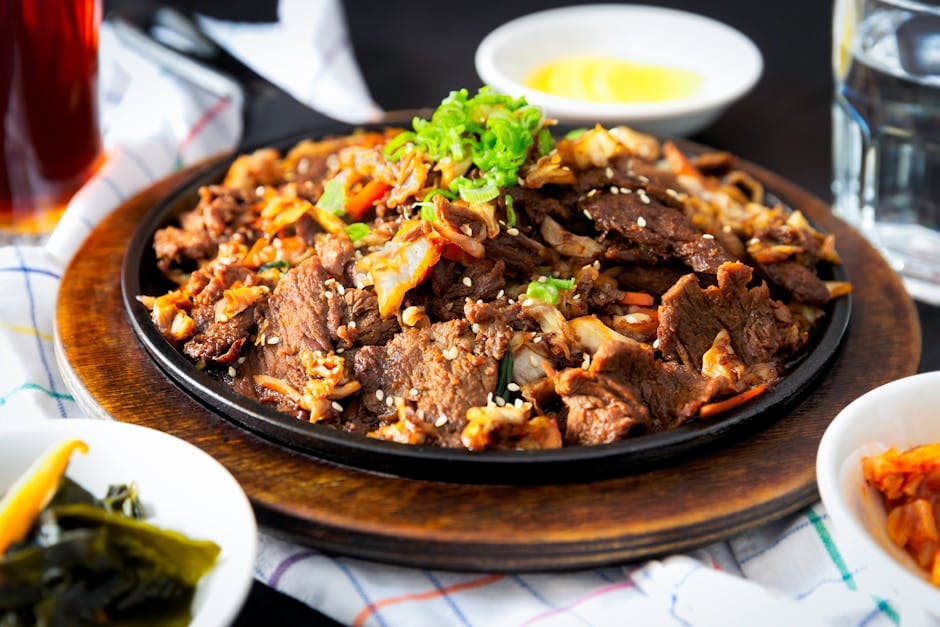
Korean Bulgogi (불고기)
Korean fire-meat — paper-thin sirloin marinated in soy, pear, garlic, sesame, then grilled on a hot pan or BBQ.
About This Recipe
Bulgogi (literally 'fire meat') is Korea's most-loved beef dish — paper-thin slices of sirloin or rib-eye marinated in a sweet-savory bath of soy sauce, pureed Asian pear (the natural meat tenderizer), sesame oil, garlic, ginger, and rice wine, then grilled on a high heat or pan-seared in batches. The marinade does double duty: the pear enzymes tenderize the beef, while the sugars caramelize on contact with high heat. Served wrapped in lettuce leaves (ssam) with rice, gochujang, sliced garlic, and a few aromatic herbs — assembled bite by bite at the table. A favorite of both Korean home cooks and the world's Korean BBQ restaurants, bulgogi was originally a royal court dish during the Goryeo dynasty (10th century), then democratized in the 20th.
Ingredients
Serves 4
- 700 gbeef sirloin or rib-eye, thinly sliced (2-3 mm)
- 1 smallAsian pear (or 1 small apple), grated
- 1/2 smallyellow onion, grated
- 80 mlsoy sauce
- 3 tbspbrown sugar
- 2 tbsptoasted sesame oil
- 2 tbsprice wine (mirin or Shaoxing)
- 8 clovesgarlic, minced
- 1 thumbginger, grated
- 1 tbsptoasted sesame seeds
- 1 tspfreshly ground black pepper
- 1 tbspneutral oil for cooking
- 3scallions, sliced (garnish)
- 1 tsptoasted sesame seeds (garnish)
- lettuce leaves, sliced raw garlic, ssamjang, hot rice to serve
Instructions
- 1
Make the marinade
Whisk grated pear, grated onion, soy sauce, brown sugar, sesame oil, rice wine, garlic, ginger, sesame seeds, and black pepper in a wide bowl.
- 2
Marinate the beef
Add the sliced beef. Mix gently to coat each slice. Marinate refrigerated for at least 4 hours, ideally overnight. The pear enzymes tenderize the beef gradually.
- 3
Heat the pan very hot
Heat a wide cast-iron skillet, carbon steel pan, or grill pan over high heat for 3 minutes. Brush with a little oil.
- 4
Sear in single layer
Lift beef slices from the marinade (shake off excess) and lay in a single layer in the screaming-hot pan. Do not crowd. Sear 60-90 seconds per side until the edges char and the surface lacquers. Lift onto a plate.
- 5
Continue in batches
Cook remaining beef in 2-3 more batches. Each batch should leave a thin layer of caramelized marinade on the pan — don't scrape it off; it adds flavor to the next batch.
- 6
Optional pan sauce reduction
After the last batch, pour the remaining marinade into the hot pan. Boil hard 2 minutes until reduced to a glossy sauce. Pour over the cooked beef.
- 7
Plate and garnish
Pile the bulgogi onto a wide platter. Top with scallions and sesame seeds.
- 8
Serve as ssam
Bring the platter to the table with lettuce leaves, sliced raw garlic, ssamjang (Korean spicy soybean paste), hot steamed rice, and kimchi. Each diner builds wraps: lettuce, rice, beef, garlic slice, dab of ssamjang, fold and eat in one bite.
Did you make this?
Rate it and help other cooks find the recipes that actually work.
One tap to sign in, and we'll save the rating you just picked.
Everything you need to plan your week — free
- Meal calendar
- Grocery list
- AI recipe ideas
Track what you eat
Snap your meal to log calories and macros, run fasting timers and track water in the free SnapCal app.
Pro Tips
- →
Asian pear is the tenderizer — its enzyme (papain-like) breaks down beef proteins. If unavailable, kiwi or pineapple work (less time — 1 hour max, or beef gets mushy).
- →
Cast-iron pan + max heat = the caramelization you want. Don't crowd or the beef steams.
- →
Slice thin — 2-3 mm. Freeze the meat 30 min first if your butcher won't slice for you.
Variations
- •
Spicy bulgogi (dwaeji bulgogi): use pork shoulder + gochujang in the marinade.
- •
Bulgogi jeongol: stewed bulgogi in a pot with vegetables, mushrooms, and glass noodles — table-side hot pot.
- •
Chicken bulgogi (dak bulgogi): swap beef for chicken thighs.
Storage
Marinade keeps with raw beef 24 hours. Cooked bulgogi refrigerates 3 days; reheat in a hot pan with a splash of water.
History & Origin
Bulgogi descends from maekjeok, a skewered grilled meat eaten during the Goryeo dynasty (10th-14th century). The modern marinated form, called neobiani, was a royal court dish in the Joseon era. Post-Korean-War urbanization and the rise of Korean BBQ restaurants in the 1960s made bulgogi a national dish accessible to everyone.
Frequently Asked Questions
What if I can't find Asian pear?
A regular pear or apple works. Or use 2 tbsp pureed pineapple for stronger tenderizing (limit marinate time to 1 hour or beef gets mushy).
What's ssamjang?
A Korean dipping sauce made of doenjang (fermented soybean paste) + gochujang (chili paste) + garlic + sesame oil + sugar. Buy at Korean groceries or mix at home.
Nutrition Facts
Per serving (280g / 9.9 oz) · 4 servings total
Time Summary
Have Questions?
Ask our AI cooking assistant anything about this recipe — substitutions, techniques, scaling.
Chat with AI Chef →Featured in Guides
This recipe is featured in the following curated guides:
More Korean Recipes
You Might Also Like
Similar dishes from other cuisines around the world.
Browse by Ingredient
More recipes built around the same core ingredients.
Free Kitchen Tools
Calculators and converters that pair with this page — no signup needed.
Put This Into a Plan
Schedule it, shop for it, and track what you already have.
Read Next
Longer reads that go deeper on the ideas behind this dish.
Community
Join the conversation
Sign in to leave a comment and save your favourite recipes