
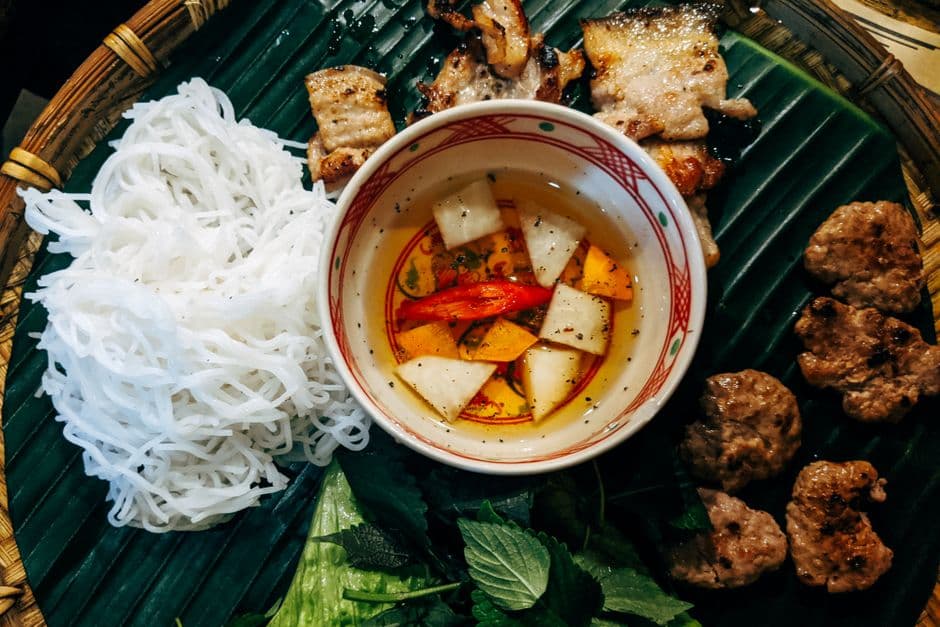
Bún Chả Hanoi (Vietnamese Grilled Pork with Noodles)
Smoky charcoal-grilled pork patties and belly slices in a sweet-tart fish sauce broth, served with cool rice vermicelli, lettuce and herbs — Hanoi's lunchtime icon.
About This Recipe
Bún chả is the signature lunch dish of Hanoi, a city where on every corner you can smell the unmistakable aroma of pork being grilled over charcoal in the late morning. The dish has three components served separately and assembled by the diner: smoky char-grilled pork (a mix of seasoned ground patties and thin marinated belly slices), a warm dipping broth of fish sauce, vinegar, sugar, garlic, chile and pickled green papaya or carrot, and a heaped plate of room-temperature rice vermicelli with a forest of fresh herbs — Thai basil, mint, perilla, cilantro and butter lettuce. To eat it, you dunk a tangle of noodles and a handful of herbs into the broth bowl, fish out a pork patty with your chopsticks, and slurp the whole construction. The dish was put on the global map in 2016 when Anthony Bourdain shared a plastic stool at Hanoi's Bún Chả Hương Liên with President Obama, but Hanoians have been eating it daily for at least a century. What makes a great bún chả is the char — the pork must touch real flame and pick up real smoke — and the balance of the broth, which should taste of fish sauce first, then sweet, then sour, then a slow chile burn at the end.
Ingredients
Serves 4
- 400 gpork belly, thinly sliced 3 mm thick
- 400 gground pork shoulder (not too lean — 25% fat ideal)
- 5 tbspfish sauce (Red Boat or Three Crabs), divided
- 5 tbsppalm sugar or brown sugar, divided
- 6shallots, finely minced (divided 4 for marinade, 2 for broth)
- 8garlic cloves, minced (divided)
- 1 tbspground black pepper
- 60 mlrice vinegar
- 1carrot and 1 green papaya (or daikon), thinly shaved into pickle slices
- 2Thai bird chiles, sliced; juice of 1 lime
- 400 gdried rice vermicelli (bún)
- 1 large bunch eachThai basil, mint, perilla (tía tô) and cilantro
- 1 headbutter or red leaf lettuce
Instructions
- 1
Marinate the pork
In two separate bowls (one for belly slices, one for ground pork), combine each with 2 tbsp fish sauce, 2 tbsp sugar, half the minced shallots, half the garlic and 1 tsp black pepper. Massage in thoroughly and rest 30 minutes at room temperature (or up to overnight refrigerated). The sugar helps caramelize on the grill.
- 2
Form the patties
Shape the ground pork into small, loose patties about 5 cm wide and 1 cm thick — flatten them so they char quickly. Wet your hands to prevent sticking. You should get about 16 patties.
Hanoian cooks don't add any binder — the patties are deliberately loose and crumbly, not like burgers.
- 3
Pickle the vegetables
Combine the shaved carrot and green papaya with 1 tbsp sugar and a generous pinch of salt. Massage 1 minute, then rinse and squeeze dry. Cover with the rice vinegar and let sit 20 minutes — the pickles should be tangy but still crunchy.
- 4
Make the dipping broth (nước chấm)
Combine 350 ml warm water, 1 tbsp fish sauce, 2 tbsp sugar, the juice of 1 lime, 2 tbsp pickle vinegar from the carrots, sliced chiles, 2 minced garlic cloves and the reserved shallots. Taste — it should be balanced: salty, sweet, sour, hot. Add a tablespoon of pickle vegetables to each serving bowl.
- 5
Cook the noodles
Bring a pot of water to the boil. Add bún and cook 4–5 minutes until just tender, then drain and rinse thoroughly under cold water until the strands are slippery and cool. Drain very well and divide into 4 small mounds on a serving platter.
- 6
Grill the pork
Light a charcoal grill (essential — the smoke is the soul of the dish) or use a very hot cast-iron grill pan. Grill the belly slices 90 seconds per side and the patties 2 minutes per side until deeply charred at the edges and just cooked through. Internal 71°C / 160°F. Work in batches so the pork sears rather than steams.
- 7
Serve and assemble
Drop the hot grilled pork directly into the bowls of warm dipping broth — the broth should warm the pork further and the pork should perfume the broth. Serve immediately with the noodles, the platter of herbs, and torn lettuce leaves. Each diner dunks noodles and herbs into the broth bowl and eats with chopsticks.
Did you make this?
Rate it and help other cooks find the recipes that actually work.
One tap to sign in, and we'll save the rating you just picked.
Everything you need to plan your week — free
- Meal calendar
- Grocery list
- AI recipe ideas
Track what you eat
Snap your meal to log calories and macros, run fasting timers and track water in the free SnapCal app.
Pro Tips
- →
Real charcoal is non-negotiable — gas grills don't impart the smoke that defines bún chả. A small Japanese hibachi or a Weber kettle works beautifully.
- →
The pork belly should be thinly sliced — ask your butcher or partially freeze it 30 minutes for easier slicing at home.
- →
Don't skimp on herbs — Hanoian bún chả uses 4–5 different ones in big handfuls. Perilla (tía tô) is the signature; if you can't find it, double the mint and basil.
- →
Warm the dipping broth gently — it should be warm to the touch, not boiling. Hot broth scorches the herbs.
Variations
- •
Bún chả nem — add crispy fried Vietnamese pork spring rolls (nem rán) to the assembly, sliced into bite-sized pieces.
- •
Lemongrass version — add 2 tbsp finely minced lemongrass to the pork marinade for a more southern Vietnamese flavor.
- •
Vegetarian — use grilled marinated tofu and king oyster mushroom strips with a vegetarian fish sauce substitute.
- •
Bún chả Obama — add a side of bia Hà Nội (Hanoi beer) as Bourdain and Obama did in 2016.
Storage
Components keep separately: marinated raw pork up to 24 hours refrigerated; grilled pork 2 days refrigerated, reheated under a broiler 90 seconds; dipping broth 3 days refrigerated; noodles best fresh but acceptable refrigerated 1 day; herbs are eat-the-same-day. Freezing not recommended for any component.
History & Origin
Bún chả originated in Hanoi in the late 19th or early 20th century, evolving from earlier Vietnamese grilled pork dishes. The combination of vermicelli with grilled meat and dipping sauce became standardized in the colonial period, and the dish reached global fame in 2016 when Anthony Bourdain hosted Barack Obama at a Hanoi street-food stall on his show Parts Unknown.
Frequently Asked Questions
Can I use ground chicken or beef instead?
Ground chicken thigh works (use 20% fat); beef changes the dish completely and isn't recommended. Pork is fundamental to bún chả — even the broth depends on rendered pork fat for body.
What if I can't find Vietnamese herbs?
Perilla and Vietnamese coriander are hardest to find — substitute with extra Thai basil and mint. Asian groceries often have all five; mail-order from speciality herb farms is an option.
Why is my broth too salty?
Different fish sauces have different salt levels — Red Boat is moderate, Three Crabs is mild, Squid Brand is very salty. Always taste and adjust water and lime to balance.
Can I make this without a grill?
A cast-iron grill pan or even a heavy skillet over very high heat works for the pork — you'll miss some smoke but the dish is still excellent. A few drops of liquid smoke in the marinade is a tolerable cheat.
Nutrition Facts
Per serving (520g / 18.3 oz) · 4 servings total
Time Summary
Have Questions?
Ask our AI cooking assistant anything about this recipe — substitutions, techniques, scaling.
Chat with AI Chef →Featured in Guides
This recipe is featured in the following curated guides:
More Vietnamese Recipes
You Might Also Like
Similar dishes from other cuisines around the world.
Browse by Ingredient
More recipes built around the same core ingredients.
Free Kitchen Tools
Calculators and converters that pair with this page — no signup needed.
Put This Into a Plan
Schedule it, shop for it, and track what you already have.
Read Next
Longer reads that go deeper on the ideas behind this dish.
Community
Join the conversation
Sign in to leave a comment and save your favourite recipes